 JuicyTalk
What’s better than one perfect sci-fi novel? A flawless trilogy of sci-fi books, of course. In many ways, it’s fair to call science fiction the domain of the trilogy, and each of the sets of books explored in detail here highlight why. In each case, the authors behind these trilogies introduced mindblowing concepts in book one, and then managed to keep up that momentum through second and third installments.
This list features some of the most recognizable names in the genre from the last half-century. From cyberpunk pioneer William Gibson (who pulls double duty with two mesmerizing trilogies readers won’t be able to put down) to modern master of sci-fi ideas Cixin Liu, all the trilogies here are essential entries in the science fiction canon. Must-reads for anyone who is committed to the genre.
This list is full of Hugo and Nebula award winners; these aren’t deep-cuts, they’re widely recognized classics. And their status as sacred trilogies is part of their reputations. Sure, readers can stop at Red Mars, but the story isn’t complete until the third book. Yes, it’s possible to just read The Three-Body Problem, but that means missing out on the stunning turns its two sequels take.
No, we all know there is something unbeatable about a trilogy, and these are rightly lauded by generations of science fiction readers as unassailable, perfect three-book spans from start to finish.
The Bridge Trilogy By William Gibson
William Gibson rocked the foundation of sci-fi literature in the 1980s with his “Sprawl Trilogy.” (We’ll get there in due time, don’t worry.) In the 1990s, he proved he was still at the top of the game with his follow-up, the “Bridge Trilogy”: 1993’s Virtual Light, 1996’s Idoru, and All Tomorrow’s Parties in 1999. Together, the novels represent a clear continuation of Gibson’s core themes, as well as an evolution of his writing style.
That is, toward a more commercially digestible form. The thing is, this made sense for Gibson. The ideas in his “Sprawl” novels, starting with Neuromancer, were way ahead of their time, and the books’ prose matched. In the ’90s, tech and society started catching up to the cyberpunk author, and he adapted by setting Virtual Light and its sequels in the near-future (at the time) of 2006.
The “Bridge Trilogy” roughly follows the blueprint of the “Sprawl.” Each book is largely self-contained, but characters, concepts, and most crucially, settings all carry over. Each entry in the series is a gripping pageturner, with Virtual Light in particular standing out as a sci-fi thriller to rival Gibson’s earlier output.
The Mars Trilogy By Kim Stanley Robinson
Kim Stanley Robinson’s “Mars Trilogy” is one of the standard-bearers when it comes to “hard sci-fi.” That is, the kind of sci-fi that puts a detailed focus on realistic science and technology. Space isn’t just a setting in hard sci-fi, it’s a subject. In the “Mars Trilogy,” Robinson chronicles the speculative history of Martian colonization and, eventually, terraforming.
The trilogy started with Red Mars in 1992, which was followed by Green Mars the next year, and then Blue Mars in 1996. That means the completion of the trilogy is celebrating its 30th anniversary this year, and it holds up to this day as a marvel of sci-fi realism. In total, the series garnered multiple Hugo, Nebula, and Locus Award wins and nominations, making it one of the dominant sci-fi series of the 1990s.
10 Classic Sci-Fi Books You Should Read In 2026
From alien invasions to advanced technology, these classic science fiction novels tackled topics that are still worth exploring in 2026.
And there’s one more reason now is the perfect time for new readers to check out the “Mars Trilogy.” The book covers nearly 200 years of future history, ending in 2212. The year the novels kick off? That’s right. 2026. Meaning Kim Stanley Robinson’s fictional future is now officially an alternative present.
The Uplift Trilogy By David Brin
There are actually two trilogies in David Brin’s “Uplift Universe”; both are worth exploring, but readers have to start with the original “Uplift Trilogy” from the 1980s: Sundiver from ’80, Startide Rising from ’83, and ’87’s culminating Uplift War. In many ways, the trajectory of Brin’s career shares similarities to William Gibson’s, except while Gibson remained largely concerned with terrestrial matters, Brin went the extraterrestrial route.
“Uplift” is the central concept of Brin’s trilogy. In his cosmology, sentient races “Uplift” non-intelligent life in the galaxy, gifting them sentience in exchange for a long period of servitude. It’s a flawed system, but it works. Until humanity comes along, that is, and makes first contact with the wider universe after having seemingly not been Uplifted themselves, and even more controversially, having figured out the process and Uplifted both dolphins and chimpanzees.
Sundiver introduces this idea, and then Startide Rising and Uplift War deal with its galactic complications. Each book is better than the last, and readers will find that they can’t put the books down until they’ve devoured all three. And after that, Uplift War will leave fans of Brin’s work wanting more; thankfully, the author delivered.
Remembrance Of Earth’s Past Trilogy By Liu Cixin
Like the “Uplift Trilogy,” Cixin Liu’s “Remembrance of Earth’s Past Trilogy” is science-fiction at its wildest, but it also shares the “hard sci-fi” tendencies of the “Mars Trilogy.” Liu’s novels are among the defining works of 21st-century sci-fi. A wider audience has been exposed to the first volume, The Three-Body Problem, by Netflix’s flawed adaptation, and it remains TBD how the book’s sequels will be represented on screen. In any case, they’re absolute must-reads for sci-fi literature lovers.
The Three-Body Problem starts out as a mystery, but it eventually reveals itself to be a first contact story. Its sequel, The Dark Forest, is an extended treatise on the deadly implications of discovering alien life, which vaults the story out of contemporary times and into the distant future. Without spoiling the truly mindbending places the final installment, Death’s End, takes readers, it’s fair to say “Remembrance of Earth’s Past” has one of the widest scopes in literary history.
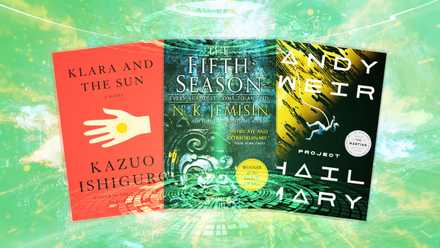
10 Best Sci-Fi Books Of The Last 10 Years
There are many excellent science fiction books released in the last decade, but there are 10 sci-fi books in particular that stand out as the best.
It’s an astounding journey, one that readers have to encounter for themselves to fully comprehend. The “Earth’s Past” novel trilogy pushes the limits of science fiction in the vein of the best of its forerunners. It is a gargantuan work of imagination that doesn’t ever disappoint.
The Sprawl Trilogy By William Gibson
Apple TV’s Neuromancer adaptation is one of the most hyped TV shows of 2026. And with good reason. William Gibson’s 1984 debut novel is one of the defining sci-fi works of its generation, and its sequels, 1986’s Count Zero and ’88’s Mona Lisa Overdrive, are equally beloved. Together, they represent the founding texts of the cyberpunk genre. The new breed of sci-fi that confronted the growth of real-world technologies.
Years before the internet and artificial intelligence were part of everyday life, Gibson was writing about these concepts, and the fallout from society’s embrace of them. Neuromancer’s story of superpowerful sentient AI feels more urgent than ever, 42 years later, as does his vision of out-of-control urban sprawl (the trilogy gets its name from the super-city spanning Boston to Atlanta) and corporations supplanting governments as the world’s dominant powers.
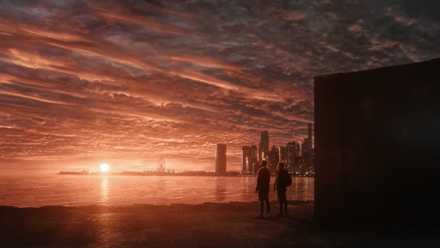
Apple TV’s Neuromancer Will Prove That No Book Is Unadaptable
Apple TV+ has quietly become a powerhouse for ambitious sci-fi storytelling, but one upcoming adaptation will be its most daring challenge yet.
Science fiction is the domain of the “loose trilogy,” books that exist in the same universe, and feature overlapping elements, but don’t present a direct narrative throughline. The “Sprawl Trilogy” is the perfect example of that. Each of its three novels stand alone as monumental sci-fi literature, but together, they transcend and become something else entirely.
Let’s hear it, readers. What other sci-fi trilogies deserve to be on this list?

- Network
-
Apple TV+
- Showrunner
-
Graham Roland
- Directors
-
J.D. Dillard


