JuicyTalk
Animated movies outside Disney’s empire have produced some of cinema’s most memorable villains, often because they are allowed to be stranger, darker, and more experimental than mainstream family animation usually permits. While Disney antagonists tend to balance menace with musical flamboyance, rival studios frequently leaned into horror imagery, psychological cruelty, or painfully believable greed.
The result is a lineup of villains who terrified generations of children while also giving their movies emotional weight that still holds up decades later. Indeed, the best animated villains are never evil just for the sake of it. Their motivations usually reveal something ugly but recognizable: environmental destruction driven by consumption, insecurity hidden beneath vanity, or raw obsession with control.
Great antagonists also elevate the heroes around them. Without a truly intimidating enemy, animated adventures can feel lightweight, but the villains on this list constantly push protagonists into impossible situations. Some are frightening because of their power, others because they feel disturbingly realistic, but all of them helped define their movies as classics. Few animated antagonists have aged quite as well as these iconic non-Disney villains.
Hexxus – FernGully: The Last Rainforest
Hexxus stands out because he represents environmental destruction fueled by industrial greed. Trapped inside a tree for centuries by the magical inhabitants of FernGully, the entity feeds on pollution, smoke, and deforestation until human logging operations accidentally release him.
The moment Hexxus escapes, FernGully: The Last Rainforest transforms into near-horror, with oily shadows, skeletal imagery, and one of the most unsettling musical performances in animated movie history. Hexxus does not pretend to have noble motives or tragic justification, he simply celebrates decay and ecological ruin.
His shape-shifting animation constantly changes between smoke, sludge, and demonic forms, making him feel impossible to defeat physically. Tim Curry’s theatrical voice performance only amplifies the menace, turning every scene into a mix of charm and nightmare fuel that children rarely forgot after watching FernGully.
Jenner – The Secret of NIMH

Unlike many animated villains, The Secret of NIMH’s Jenner is frightening because he operates through paranoia and manipulation. One of the intelligent rats created by NIMH experiments, Jenner opposes any attempt to leave the safety of the rose bush and return to a more peaceful existence. Deep down, his fear comes from losing power.
The advanced society the rats built gives him status, influence, and control, and he refuses to risk any change that might weaken his position. He spreads distrust, engineers conflict behind the scenes, and eventually resorts to outright murder to maintain authority.
Jenner’s rivalry with Nicodemus carries genuine political tension rather than cartoonish evil. The climactic sword fight with Justin remains one of the most intense sequences in 1980s animation because The Secret of NIMH treats Jenner’s threat with startling seriousness.
Mrs Tweedy – Chicken Run

Chicken Run’s Mrs Tweedy is simultaneously absurdly funny and genuinely terrifying. Running a failing Yorkshire chicken farm alongside her incompetent husband, she becomes obsessed with transforming the business into a profitable chicken pie operation. Her motivation is brutally practical: money.
The chickens are not her enemies, but inventory standing between her and financial success. That cold indifference makes her especially memorable. Mrs Tweedy treats mass slaughter like routine business management, which creates a dark undercurrent beneath Chicken Run’s comedy.
Her sharp features, narrowed eyes, and skeletal frame already make her visually intimidating, but the performance sells the character completely. Every line drips with irritation and ruthless ambition. She embodies bureaucratic cruelty in a way children understand immediately, while adults recognize uncomfortable parallels to real-world industrial exploitation.
The Fairy Godmother – Shrek 2

In Shrek 2, the Fairy Godmother is revealed not to be the glamorous magical fixer who grants happy endings. In reality, she carefully controls the kingdom’s social order to benefit herself and Prince Charming. Her real goal is not to spread happiness but to ensure Fiona marries her son so their family gains permanent royal power.
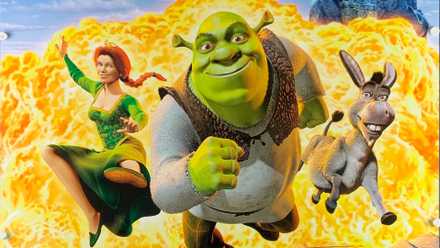
25 Years Later, See Shrek Voice Cast Side-by-Side With Their Animated Characters
The Shrek voice cast next to their animated counterparts, revealing the stars behind DreamWorks’ most iconic fairy tale heroes and villains.
The Fairy Godmother operates less like a witch and more like a media-savvy executive controlling public perception, political influence, and consumer fantasy all at once. Jennifer Saunders’ performance constantly shifts between warm maternal charm and icy menace, often within the same sentence.
Then there is her unforgettable rendition of “Holding Out for a Hero,” which transforms the climax of Shrek 2 into one of DreamWork’s greatest. The Fairy Godmother perfectly satirizes manufactured fairy-tale perfection while still functioning as a genuinely threatening antagonist.
King Haggard – The Last Unicorn

King Haggard is one of animation’s saddest villains because nearly everything he does comes from emotional emptiness rather than simple cruelty. Ruling a bleak kingdom beside the sea in The Last Unicorn, Haggard becomes obsessed with capturing every unicorn in existence after briefly experiencing happiness while watching them run through the waves beneath his castle.
That fleeting feeling consumes him completely. Christopher Lee’s cold, exhausted voice performance gives Haggard a haunting sense of despair. He rarely raises his voice, yet every line feels heavy with bitterness and regret. Unlike villains who enjoy power, Haggard barely seems alive.
Even Haggard’s castle is grey, silent, and decaying, mirroring his own, almost pitiable spirit. He understands that possessing beauty is not the same as truly feeling happiness, but he remains too broken and selfish to stop chasing it.
Feathers McGraw – The Wrong Trousers

Feathers McGraw proves that a villain does not need dramatic speeches or explosive outbursts to become iconic. The silent penguin from Wallace and Gromit: The Wrong Trousers barely says or does anything outwardly expressive, yet he somehow feels more sinister than most animated antagonists.
Part of what makes Feathers so effective is how methodical he is. He studies his targets, infiltrates their home, and carefully takes control of Wallace’s routines without attracting suspicion. Director Nick Park frames him almost like a noir criminal mastermind, often emphasizing his blank stare and stillness in contrast to Wallace’s frantic energy.
That lack of emotion becomes deeply unsettling. Feathers never appears angry, excited, or nervous because he always seems completely in control. The legendary train chase finale cements him as one of stop-motion animation’s greatest villains, balancing comedy and genuine suspense with incredible precision.
Lady Eboshi – Princess Mononoke

Lady Eboshi remains one of animation’s most compelling antagonists because Princess Mononoke refuses to portray her as entirely evil. As the leader of Iron Town, she destroys forests and wages war against the animal gods in pursuit of industrial progress. From the perspective of the forest spirits, she is unquestionably a villain responsible for environmental devastation.
Yet Princess Mononoke constantly complicates that image by showing the good she brings to marginalized people rejected by society. Her ambition genuinely improves human lives, even while it destroys nature around her. That moral complexity makes every conflict in Princess Mononoke more powerful because neither side is completely wrong.
Princess Mononoke’s central tragedy stems from her inability to recognize that humanity and nature do not need to annihilate one another, turning her into a deeply human villain rather than a monster.
Pharaoh Rameses II – The Prince Of Egypt

Rameses becomes such a powerful antagonist because his conflict with Moses in The Prince of Egypt is intensely personal long before it becomes biblical. Raised alongside Moses as brothers, Rameses spends his entire life struggling beneath the crushing expectations of his father, Seti. He desperately wants approval and strength, but he also fears appearing weak.
When Moses discovers his Hebrew heritage and rejects Egypt’s oppression, Rameses interprets it not only as a direct threat to his authority as Pharaoh. The tragedy of Rameses is that he genuinely loves Moses, even while hardening himself against him.
Each plague pushes him further into stubbornness because surrender would mean admitting failure both as ruler and as a brother. By the climax, Ramesses no longer feels like a traditional villain, but a man trapped by ego, fear, and generations of inherited power.
Joker – Batman: Mask of the Phantasm

Batman: Mask of the Phantasm arguably features the definitive animated version of the Joker because it fully embraces how chaotic and destructive the character truly is. Joker’s work as a mob enforcer before he became the Clown Prince of Crime comes under the spotlight when a new vigilante appears in Gotham.
6 Animated Movie Trilogies Where Every Entry Is Near-Perfect
These animated trilogies don’t drop the ball once, delivering strong storytelling, standout visuals, and consistent quality throughout.
The Joker is especially dangerous in Mask of the Phantasm because of how unpredictably he shifts between playful absurdity and horrifying violence. Mark Hamill’s performance constantly veers from theatrical jokes to explosive rage without warning, keeping every scene unstable.
Joker behaves almost like pure chaos invading a noir tragedy. Joker’s final confrontation with Batman and Andrea inside the abandoned theme park perfectly captures the character’s madness. Even surrounded by destruction and death, the Joker still treats everything like a giant joke, making him both entertaining and terrifying simultaneously.
Death – Puss In Boots: The Last Wish

Death instantly became one of animation’s greatest villains after Puss In Boots: The Last Wish. Taking the form of a red-eyed wolf, Death begins hunting Puss after growing disgusted with the cat wasting eight of his nine lives through reckless arrogance.
Every aspect of the character is designed to create dread. The whistling motif alone became instantly iconic because it signals unavoidable danger before Death even appears onscreen. His calm, restrained voice and deliberate movements make him terrifying precisely because he never needs to shout.
The glowing eyes and spinning sickles give him the presence of a supernatural slasher villain inside a family movie. Yet the brilliance of Death lies in what he represents narratively. He forces Puss to abandon selfish immortality fantasies and finally value the fragile life he still has left, making the conflict surprisingly emotional.


The Last Unicorn
- Release Date
-
November 19, 1982
- Director
-
Jules Bass, Arthur Rankin Jr.
-
Chicken Run
- Release Date
-
June 23, 2000
- Runtime
-
84 minutes