JuicyTalk
There is perhaps no manga and anime franchise more synonymous and foundational to the battle shonen genre as Dragon Ball. While creator Akira Toriyama certainly intended a more lighthearted, adventurous romp on the outset, the series quickly turned away from gags and more toward increasingly high-stakes fights including tournaments and deadly villains of scaling threat levels. This has since influenced four decades’ worth of battle shonen series, either in-house from Shueisha like Naruto and Black Clover, or competing publications with series like Gachiakuta.
While the latest pandemic-era anime boom led to immense popularity for new-gen all-timers like Demon Slayer and Jujutsu Kaisen, perhaps the most interesting, idiosyncratic Jump+ series only truly emerged to prominence after its anime’s debut. Featuring some wildly gorgeous artwork and released on a weekly basis, defying the odds by maintaining its quality every time, Yukinobu Tatsu’s Dandadan may be the most exciting cluster of genre infusions, character designs, and action to happen to battle shonen since Dragon Ball. The best part is, it doesn’t appear to be ending anytime soon.
The Future of Battle Shonen May Come from Yukinobu Tatsu’s Iconic 2021 Hit
There’s hardly a soul alive in the anime fandom who hasn’t heard of Dandadan at this point, doubtlessly due to its bonkers first two seasons and its particularly ludicrous plot. What essentially started as Ken Takakura (aka Okarun) and Momo Ayase’s quest to retrieve Okarun’s stolen family jewels, especially beyond the plot of season 2 in the anime, has evolved into a blend of a love story and nefarious plot to build the ultimate yokai. Dandadan’s an iconoclastic melting pot of genres as Yu Yu Hakusho-level power system sensibilities, JoJo’s Bizarre Adventure-level character designs, and Dragon Ball-level energy attacks. But in Dandadan’s chaotic nature, readers and viewers alike will find refreshment even in its more formulaic arcs.
While Dandadan hardly dodges a monster-of-the-week structure in its earliest days, it instead spices things up by infusing genres and tropes perhaps less common in battle shonen series. This includes a glorious variety of genre staples like supernatural horror including ghosts, and sci-fi including aliens, but also Japanese specialties like mecha and kaiju tropes, each frequently represented by Okarun and Momo’s growing roster of misfit friends. In addition to each of them frequently sporting different bombastic, extreme versions of their respective high school cliques, Dandadan’s characters each feature an impressive variety of strengths and roles as fighters, friends, and even love interests.
Tatsu has noted Dragon Ball as among his earliest influences per ABEMA, alongside Ultraman and Berserk. Having worked as an assistant to Tatsuki Fujimoto for both Fire Punch and Chainsaw Man, in addition to assisting Yuji Kaku for Hell’s Paradise, it’s not hard to see where Tatsu’s outlandish style and consistently strong visuals were inspired and later honed.
But perhaps most compelling is Dandadan’s proper integration of romance despite being a battle shonen series. Manga, such as Weekly Shonen Jump’s Blue Box (or even earlier series like I”s) make clear cases for romance having a place among young male readers. However, popular Shonen Jump authors have either intentionally avoided romance like Eiichiro Oda, or handled it with uneven effectiveness like the cases of Naruto or My Hero Academia. While other characters like Kinta Sakata or Jiji certainly vie for various female characters’ affections as a typical shonen trope, Okarun and Momo’s slow-burn romance is central to the plot, often a major source of tension both when they’re together or apart.
Dandadan Season 3 First Look Drops, Confirming Its 2027 Debut
Dandadan Season 3 is set to premiere in 2027, with a new key visual revealed at Jump Festa 2026. The anime will continue the story from the Kaiju Arc.
Dandadan doesn’t force this pairing, either, opting instead to include multiple romance tropes common in anime and K-dramas alike, from the suggestive collisions, loaded hand-holding moments, an accidental kiss, written and verbal love confessions, and more. But, in keeping with portraying these characters as high-schoolers, Tatsu appropriately keeps the tension alive by making them utterly unable to stay on the same page and acknowledge their feelings at the same time, with the Six Curses Arc indicating no ending in sight on that front. While seemingly minor, the romance on top of Dandadan’s wild genre infusions and an increasingly broadening world-building featuring the Black Paladins and one truly fascinating villain make the series truly captivating from week to week.
Dragon Ball Fans Will Find Plenty to Love About Dandadan
One doesn’t need to be very imaginative to spot hilariously common elements shared between Dandadan. A perhaps insultingly brief comparison shows that, within the first chapters of each series, both involve the adventures of a young boy and girl in search of balls containing mystical powers, coveted by an increasingly large roster of heroes and villains alike. By the era of Dragon Ball Z in particular and beyond, both series feature characters with distinctive transformations and crucial training arcs to maximize their efficiency in combat. Multiple amusing connections exist here, with Momo’s Moe-Moe Tri-Beam resembling Tien’s Tri-Beam, and Jiji’s Evil Gun reasonably resembling the Kamehameha.
But beyond wild character designs and varying forms that evolve over time, such as Rin Sawaki’s costume changes or Jiji’s Evil Eye, or a mutual power system based in large part on Ki, Dragon Ball fans will love the humor of Dandadan. If they still haven’t made the plunge, or if they’ve watched the anime but not read the manga, it’s strongly encouraged, as not only is Tatsu’s artwork and paneling superb, the character interactions are truly lovable. From Bamora’s hilarious imitation of Jiji’s cringiest poses, to Kinta’s Usopp-coded tall tales of grandeur, the entire cast of Dandadan’s peculiar heroes is great, especially when introducing increasingly elaborate ways to put Okarun’s balls back.
But it’s not just the heroes: Dragon Ball fans will find Dandadan’s rogues’ gallery appropriately absurd yet compelling as the story goes on. This includes ball-snatching yokai grannies, a legion of invasive Kur aliens, and humans with nefarious goals of their own. Dragon Ball fans don’t have to stretch to recognize their respective series as featuring similar threats, from demons, to conquest-hungry alien species, to threats at home like Dr. Gero, to even multiversal-scale threats.
This isn’t to say Dandadan should be considered derivative. Anything it does is pretty clearly an intentional pastiche, whether on series or entire genres. However, it’s also the most exciting genre mosaic offered by battle shonen, and perhaps its most exciting evolution since Dragon Ball solidified the formula over 40 years ago, and shows no signs of slowing down.

- Created by
-
Akira Toriyama
- First Film
-
Dragon Ball: Curse of the Blood Rubies
- Latest Film
-
Dragon Ball Super: Super Hero
- First TV Show
-
Dragon Ball
- Latest TV Show
-
Super Dragon Ball Heroes
- First Episode Air Date
-
April 26, 1989
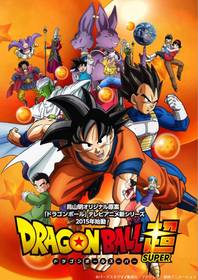
From the creative mind of Akira Toriyama, Dragon Ball is a mega multimedia franchise that spans back to the 1980s. Dragon Ball expanded quickly, starting as a serialized manga for Weekly Shonen Jump in Japan. It made its way overseas via manga and an anime adaptation that is enjoyed worldwide. Dragon Ball was the initial starting animated series that followed the adventures of the young Son Goku as he sought after the Dragon Balls. These mystical orbs would grant the wish of any who gathered them together. Then, the series would branch off into the immensely popular Dragon Ball Z, which followed Goku as an adult and featured high-intensity battles and Goku’s never-ending search to be the strongest. The series has also enjoyed several popular video game adaptations and continues to release several new animated series and theatrical films up to the recent popular Dragon Ball Super: Super Hero.