 JuicyTalk
India’s central bank revives push to isolate banks from crypto: Report
The Indian central bank reportedly urged lawmakers to keep banks insulated from crypto and private stablecoins while preserving room for regulated tokenization.
According to a report by The Economic Times, RBI Deputy Governor Rohit Jain and Executive Director P. Vasudevan presented the central bank’s position to the Parliamentary Standing Committee on Finance on Thursday.
In a background note submitted to the panel, the RBI reportedly said prohibition remained a recognized policy option and recommended preventing the use of crypto in payments and settlements while restricting banking-sector exposure.
The central bank reportedly warned that applying traditional regulation to crypto could legitimize speculative assets and create a false perception of safety among users. However, it urged policymakers to distinguish crypto from tokenized government securities, corporate bonds and other regulated financial instruments so that restrictions would not hinder tokenization.
Source: Chainalysis
Russia on track for digital ruble rollout on Sept. 1: Central bank governor
Russia’s central bank governor, Elvira Nabiullina, confirmed that the country was prepared to roll out its central bank digital currency (CBDC) in two months, following the timeline it laid out last year.
According to a Thursday report from Russian state media outlet RIA Novosti, Nabiullina said that “everyone is ready” for a Sept. 1 digital ruble launch. The CBDC will launch as a complement to Russia’s fiat currency, the ruble, and will initially be accepted by financial and credit institutions.
The digital ruble has already been targeted by preemptive sanctions from European Union authorities, which announced restrictions on the CBDC in April in response to Russia’s “war of aggression against Ukraine.”
SBI Crypto shuts Bitcoin mining pool after 5-year run
SBI Crypto, a cryptocurrency-focused division of Japanese financial conglomerate SBI, is shutting down its Bitcoin mining pool after a five-year run.
Data from SimpleMining shows SBI Crypto currently ranks as the 12th largest Bitcoin mining pool globally, with about 21.46 exahashes per second (EH/s) of hashrate and roughly 2.24% of total Bitcoin network share.
The company announced Wednesday that it will end mining pool operations on July 31 and will stop accepting mining shares at the same time. It did not provide its rationale for closing the pool.
SBI Crypto said miners should keep directing hashrate to the pool until the cutoff so final payouts can be calculated correctly before operations end. “We would sincerely appreciate your continued support by mining with us until the final day of operation,” it said.
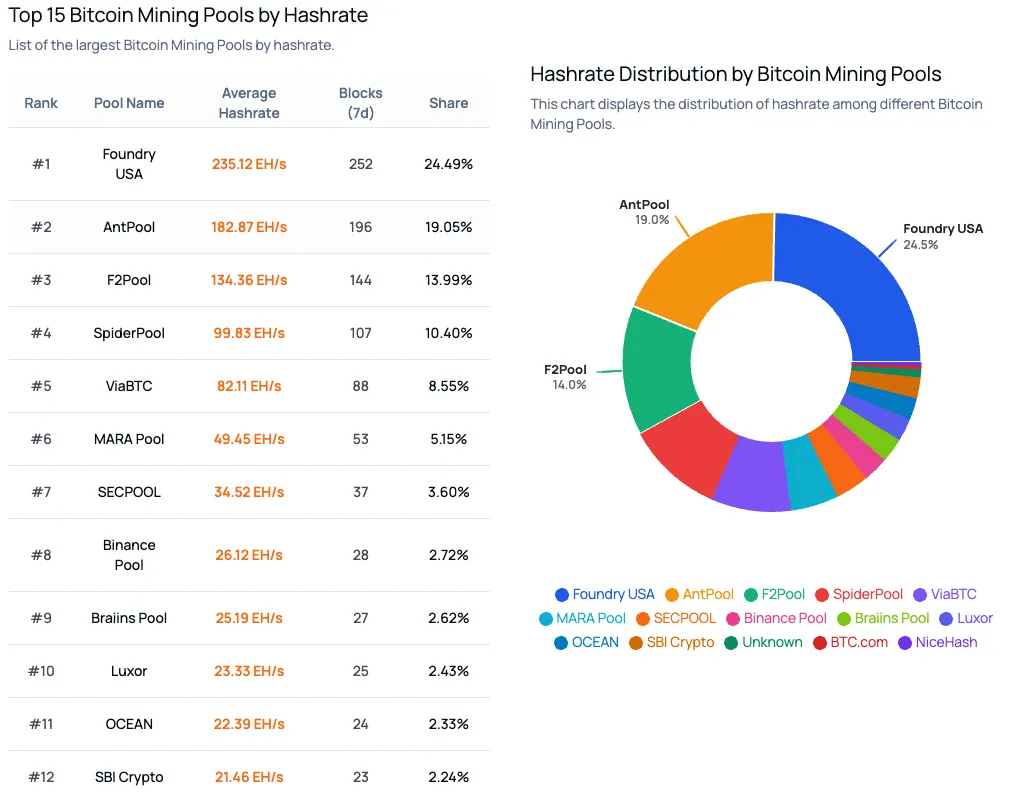
Source: SimpleMining
OFAC sanctions 134 ISIS-K crypto wallet addresses as Tether freezes funds
The US Department of the Treasury’s Office of Foreign Assets Control (OFAC) sanctioned 134 cryptocurrency wallet addresses identified as belonging to terrorist group ISIS-Khorasan (ISIS-K).
ISIS-K has historically solicited crypto through donation campaigns on various websites and messaging platforms. The wallet addresses were added to the OFAC’s Specially Designated Nationals (SDN) list on Wednesday.
Stablecoin issuer Tether has frozen the balances associated with 131 Tron addresses, while the remaining three sanctioned addresses were on the Monero network, blockchain forensics company Chainalysis said in a Wednesday report.
The development comes over a week after the OFAC’s previous round of sanctions against ISIS-supporting financiers using cryptocurrency. On June 22, the OFAC sanctioned three individuals and six entities across Europe, the Middle East and West Africa, including Syria-based MSB Bitcoin Xchange and Turkish MSB Spider.
OFAC said the previous round of sanctions targeted “key facilitators who enable ISIS to move funds among its regional affiliates.”
Metaplanet buys 2,823 BTC, surpasses 43,000 in Bitcoin holdings
Japanese investment company Metaplanet acquired 2,823 Bitcoin during the second quarter at a price below its average purchase price, as its holdings surpassed 43,000 BTC.
The company acquired its latest trove at an average price of about 12.71 million yen ($78,850 at current exchange rates), reducing its average acquisition cost to about $95,117 per BTC from $96,258, according to a Thursday announcement.
Metaplanet now holds 43,000 Bitcoin acquired for about $4.1 billion. It also reported about $10.95 million in revenue from its Bitcoin income generation strategy in the quarter, which earns premiums by selling cash-secured options and employing other Bitcoin-related yield strategies.
Meanwhile Nasdaq-listed South Korean company K Wave Media sold its remaining 88 BTC to repay $6 million in debt, exiting the Bitcoin treasury strategy, according to a Tuesday filing with the US Securities and Exchange Commission.
Dubai crypto market hits 50 licensed firms after new VARA approval
The Virtual Assets Regulatory Authority (VARA), Dubai’s crypto regulator, has granted its 50th virtual asset service provider (VASP) license.
On Thursday, VARA said its latest approval went to tokenized assets platform Tribe Tokenisation FZE.
The milestone provides one measure of the growth of Dubai’s crypto licensing regime, though license totals alone do not show how many firms are operational or the level of business they generate.
Against that backdrop, Dubai’s 50 licensed VASPs exceed the totals reported in Hong Kong (13) and Singapore (37).
Bank of Korea governor outlines tokenized bond vision, unified ledger plan
Hyun Song Shin, the governor of the Bank of Korea, praised tokenization for its ability to simplify the issuance and management of government bonds.
Shin said during a Wednesday panel discussion at the European Central Bank (ECB) Forum on Central Banking in Sintra, Portugal, that tokenized bonds would make it easier to verify collateral, credit the asset provider’s account and reverse transactions at the appropriate time.
“The big prize is tokenizing government bonds,” Shin said, adding that it is “much easier, much less prone to mistakes if you have everything tokenized.”
US Treasury debt is the largest tokenized real-world asset category, representing $14.6 billion, or about 46% of the $31.7 billion RWA market, according to data provider RWA.xyz.
Shin also outlined plans to bring tokenized government bonds, wholesale central bank digital currencies and tokenized commercial bank deposits on a unified ledger, as part of an extension to “Project Hangang,” a Bank of Korea-led pilot project testing a blockchain-based wholesale CBDC system.
Related: South Korea adds token securities to capital market overhaul
Taiwan’s legislature passes crypto, stablecoin regulations
Taiwanese lawmakers have passed a law to establish a regulatory framework for crypto, which includes licensing and rules for stablecoins.
Taiwan’s financial watchdog, the Financial Supervisory Commission (FSC), said that the Legislative Yuan passed the law requiring all virtual asset service providers, or VASPs, to get approval from the regulator to operate.
The law also says stablecoins issued in Taiwan must get approval from the central bank and the FSC, and issuers must maintain sufficient reserves with a trustee and undergo regular audits.
The law is the first to regulate crypto and stablecoins in Taiwan, bringing it in line with other governments in the region, such as Japan, Singapore and Hong Kong, that have long passed laws to regulate the sector in a bid to attract the industry.
Solana Company to back Kazakhstan’s $6B crypto megacity ambition
Nasdaq-listed crypto treasury firm Solana Company signed an agreement to support the development of Alatau City, Kazakhstan’s planned digital-first megacity.
The company signed an MOU to help build Alatau City’s blockchain and crypto infrastructure during the Alatau City Roadshow in Shenzhen and Hong Kong in June, which reportedly secured 30 cooperation agreements with a combined investment potential of over $6 billion.
“We look forward to deepening this partnership and expanding the Solana ecosystem’s footprint across the region,” said Solana Company chair and CEO Joseph Chee.
The deal further pushes Kazakhstan into Solana’s corner. Last year, Kazakhstan launched Central Asia’s first Solana Economic Zone in the country’s capital of Astana with the Solana Foundation.
The Kazakhstan Stock Exchange (KASE) launched its first Solana ETF last week, giving investors regulated exposure to Solana (SOL) through one of the biggest stock exchanges in Central Asia.
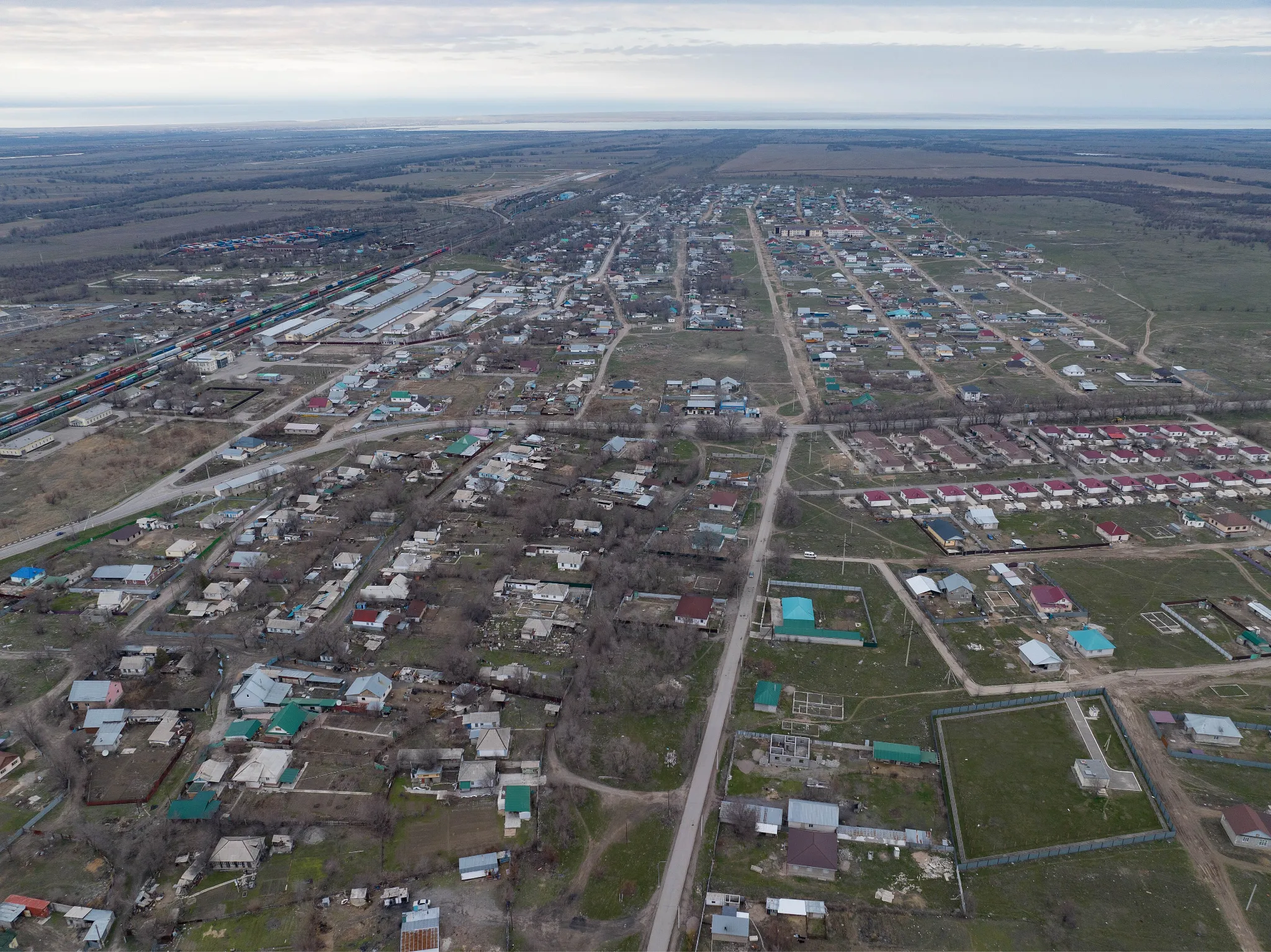
The village of Zhetygen will become Alatau. Source: Wikimedia Commons
Features: Has Strategy’s capital overhaul put an end to ‘death spiral’ fears?
