
 JuicyTalk
Stanford Researchers Introduced MedAgentBench: A Real-World Benchmark for Healthcare AI Agents
A team of Stanford University researchers have released MedAgentBench, a new benchmark suite designed to evaluate large language model (LLM) agents in healthcare contexts. Unlike prior question-answering datasets, MedAgentBench provides…

MoonshotAI Released Checkpoint-Engine: A Simple Middleware to Update Model Weights in LLM Inference Engines, Effective for Reinforcement Learning
MoonshotAI has open-sourced checkpoint-engine, a lightweight middleware aimed at solving one of the key bottlenecks in large language model (LLM) deployment: rapidly updating model weights across thousands of GPUs without…
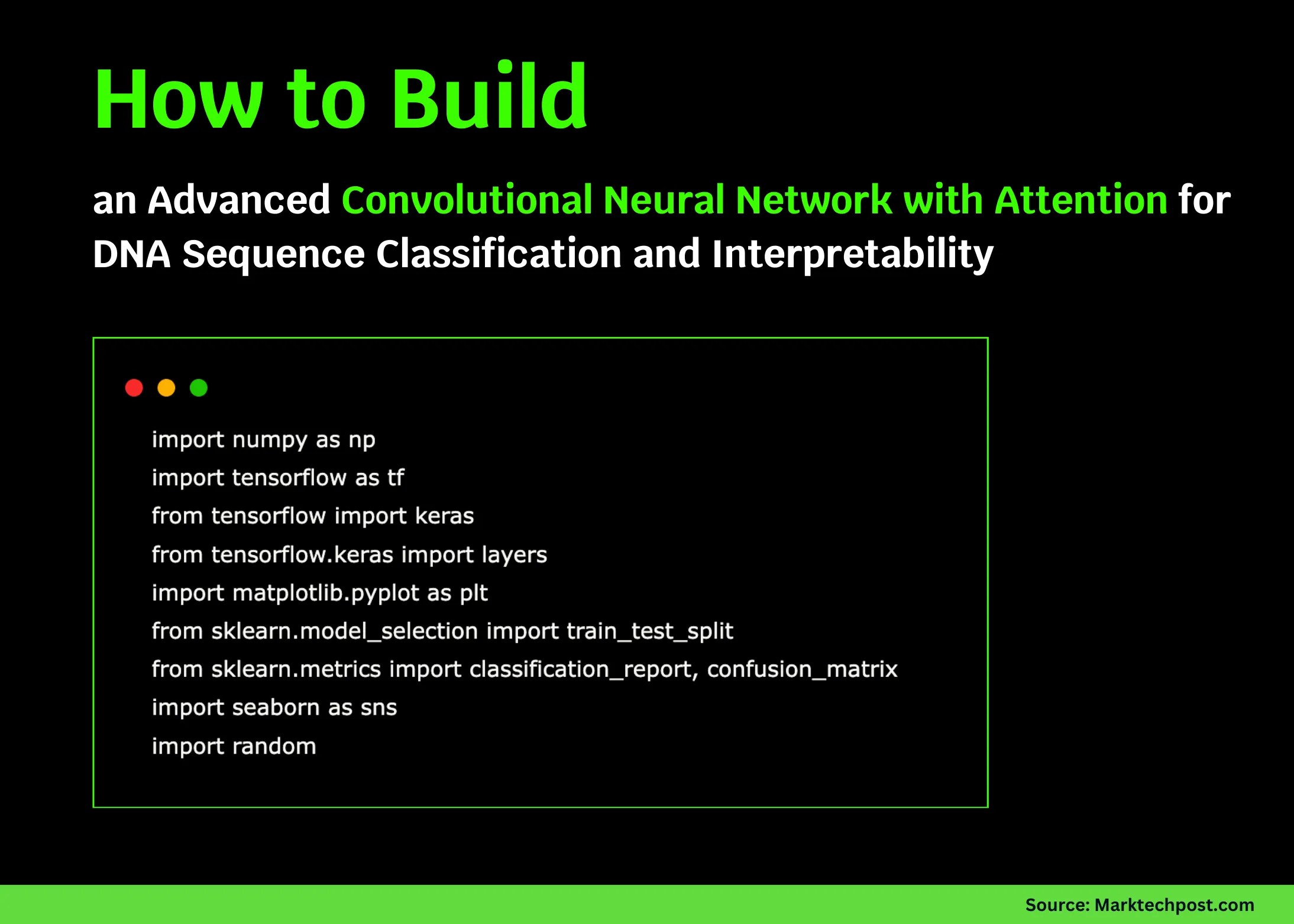
Building an Advanced Convolutional Neural Network with Attention for DNA Sequence Classification and Interpretability
class DNASequenceClassifier: def __init__(self, sequence_length=200, num_classes=2): self.sequence_length = sequence_length self.num_classes = num_classes self.model = None self.history = None def one_hot_encode(self, sequences): mapping = {‘A’: 0, ‘T’: 1, ‘G’: 2, ‘C’:…

OpenAI Introduces GPT-5-Codex: An Advanced Version of GPT-5 Further Optimized for Agentic Coding in Codex
OpenAI has just released GPT-5-Codex, a version of GPT-5 further optimized for “agentic coding” tasks within the Codex ecosystem. The goal: improve reliability, speed, and…

NVIDIA AI Open-Sources ViPE (Video Pose Engine): A Powerful and Versatile 3D Video Annotation Tool for Spatial AI
How do you create 3D datasets to train AI for Robotics without expensive traditional approaches? A team of researchers from NVIDIA released “ViPE: Video Pose Engine for 3D Geometric Perception”…
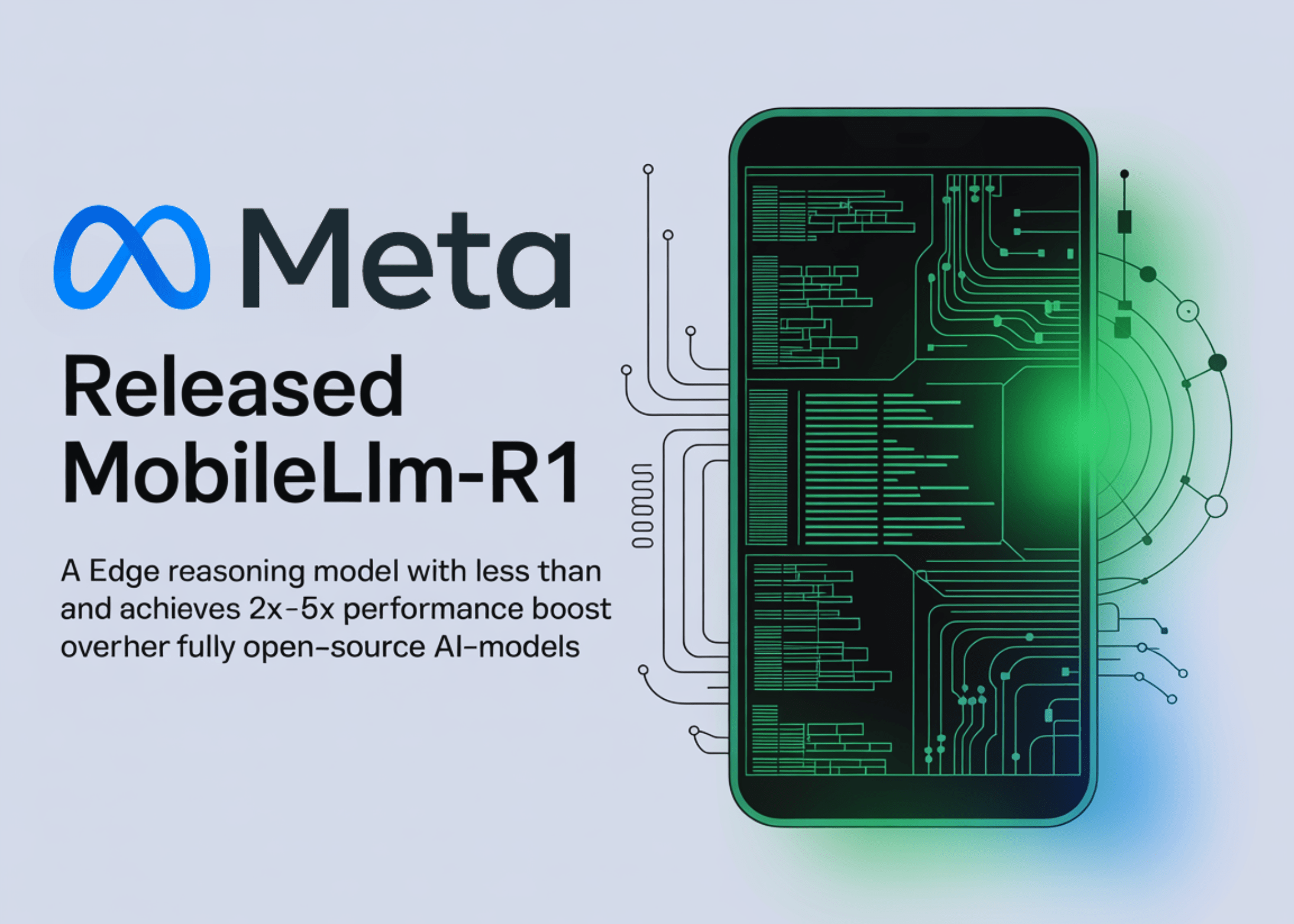
Meta AI Released MobileLLM-R1: A Edge Reasoning Model with less than 1B Parameters and Achieves 2x–5x Performance Boost Over Other Fully Open-Source AI Models
Meta has released MobileLLM-R1, a family of lightweight edge reasoning models now available on Hugging Face. The release includes models ranging from 140M to 950M parameters, with a focus on…

A Comprehensive Coding Guide to Building Interactive Experiment Dashboards with Hugging Face Trackio
In this tutorial, we walk through Hugging Face Trackio step by step, exploring how we can track experiments locally, cleanly, and intuitively. We start by installing Trackio in Google Colab,…

Beyond the Black Box: Architecting Explainable AI for the Structured Logic of Law
The Epistemic Gap: Why Standard XAI Fails in Legal Reasoning The core problem is that AI explanations and legal justifications operate on different epistemic planes. AI provides technical traces of…

Top 5 No-Code Tools for AI Engineers/Developers
In today’s AI-driven world, no-code tools are transforming how people create and deploy intelligent applications. They empower anyone—regardless of coding expertise—to build solutions quickly and efficiently. From developing enterprise-grade RAG…

Software Frameworks Optimized for GPUs in AI: CUDA, ROCm, Triton, TensorRT—Compiler Paths and Performance Implications
Deep-learning throughput hinges on how effectively a compiler stack maps tensor programs to GPU execution: thread/block schedules, memory movement, and instruction selection (e.g., Tensor Core MMA pipelines). In this article…

Trump-Linked Crypto Tokens Face Renewed Scrutiny After Plummeting in Price
 JuicyTalk
- April 11, 2026
- 1 views

Mikel Arteta delivers triple injury update after Arsenal loss
- JuicyTalk
- April 11, 2026
- 1 views


Messaging Push Notification Logs Can Breach User Privacy: Pavel Durov
- JuicyTalk
- April 11, 2026
- 1 views

