 JuicyTalk
Shōnen Jump’s “Big Three” (Naruto, One Piece, and Bleach) won’t ever be replicated—and that’s a good thing for shōnen and anime writ large. 2026 offers a better time than ever to reopen the Big Three conversation, as all three series have received major updates that show their ongoing cultural importance in the anime sphere.
Naruto is set to finally receive the four anniversary episodes that have been promised for years. Meanwhile, the final season of Bleach‘s concluding Thousand-Year Blood War arc has kicked off, incidentally showcasing Studio Pierrot at the top of their game. Perhaps most consequentially, the trailer for Netflix’s One Piece remake has officially launched, and it’s looking fantastic.
It’s become an irresistible exercise to try to figure out who Shōnen Jump’s next torchbearers will be, with endless iterations of the new Big Three pouring out from year to year as the conversation is recycled. But the Big Three were a product of their time, and their dynamic can’t be recycled as easily as that conversation. Ironically, that’s precisely why shōnen and anime in general are in the healthiest place they’ve ever been.
Anime’s Big Three Was A Product Of A Different Time
There’s no shortage of tantalizing conversations over the importance of how shifting anime consumption has changed Big Three dynamics, and how anime’s westward expansion—”Big Three” is a term deriving from Western fanbases, after all—played a role in the three franchises’ respective dominance.
However, the thrust of the Big Three’s dominance is found on the other side of things: the ways anime and manga were produced are just as important as the ways they were consumed. It’s true that Shueisha (and Shōnen Jump) have been cultural powerhouses for years, and that Shueisha’s intentional efforts to build a Western audience contributed to anime’s globalization, but that’s only part of the story.
For the singular dominance of One Piece, Naruto, and Bleach to occur in the first place, there’s an essential backdrop that’s all-too-often forgotten: the fact that Shueisha, and the manga industry in general at the time, tried to squeeze all that they could out of a successful series by heavy-handedly encouraging that it run as long as possible.
This worked in tandem with anime production of the time, a trend that adapted well as cable television in the West (and, of course, the internet on a global scale) exploded. The weekly programming slots of the period meant a certain rhythm of experience to anime that mirrored the pulsing release of weekly manga chapters. Manga worlds, and their anime counterparts, represented something which could be lived in; in a sense, the Big Three also worked spectacularly for that purpose, with One Piece, Naruto, and Bleach all being hallmark examples of manga world-building.
While fanbases were cultivated across the globe, the reality remained that studios and publishers had limited resources, stores had limited shelves for manga volumes and merch, and network slots were limited by time itself. The Big Three served to crystallize and synchronize the experience of anime itself during its crucial period of growth.
Once one realizes that, it becomes clear that the environment that cultivated the Big Three represented a totally different set of relationships with time and space, both in terms of production and consumption, compared to what fans experience now.
Behind The Scenes, Anime Is Changing

While the conversation at this point often shifts to things like how fans consume anime and manga today—and it truly is easier than ever with simulpubs, streaming, and so forth—what’s often missed is how anime’s ever-growing global popularity and the growth of new media have changed how they’re actually made. That’s the key thing which differentiates the Big Three’s climate from today’s own.
For example, it’s become possible for mangaka to retain control over their stories’ progression and endings, even when the series are absolutely massive. Demon Slayer ended at its peak popularity; Jujutsu Kaisen famously ended on its own terms with a heart-wrenching farewell in its final volume; My Hero Academia reached a long-planned conclusion; the list could go on. Rather than being forced to keep popular series running forever, mangaka are now permitted the space to exert control over how and when their stories develop, even if there might be editors discouraging them behind the scenes.
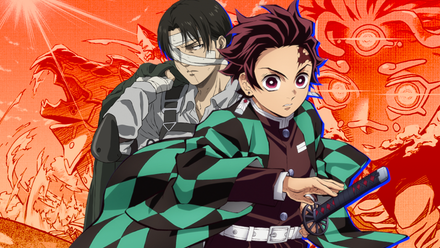
Shonen Jump’s Last New Summer Series Is Demon Slayer Meets Attack on Titan
The last of Shonen Jump’s three-series wave just unleashed a sprawling world for its readers to enjoy in Cannon Master.
Meanwhile, the expectation that stories can be tighter-written, and the loosening of expectations that a performing series will run indefinitely, runs hand-in-hand with how streaming has promoted seasonal anime releases rather than traditional long-running releases.
At the same time, the industry’s global growth has provided the production committees, publishers, and studios behind anime production with room to take risks. Anime’s growth now means that different approaches to anime production can coexist, moving beyond the era where anime production was tied to certain success or metrics like manga volume sales. MAPPA’s decision to self-produce Chainsaw Man perfectly demonstrates how the capital—and profit—now exists for independent opportunities to be taken in a way they weren’t before.
The Big Three Are Here To Stay, But They’ll Have To Share

The point here isn’t to undermine the importance of the Big Three—it’s just the opposite. The Big Three remain a genre-defining and intergenerationally important trio. Their importance, influence, and impact are, in fact, key to the whole argument here.
But the simple fact remains that no new anime series is likely to be long-running or singularly dominant in the same way Naruto, One Piece, or Bleach were. Another fact, too, is that in a world where one click can buy an acrylic stand or a T-shirt, the shelf space at places like Hot Topic no longer needs to be reserved for the most popular series on air; in a world where the forums of the early 2000s don’t exist, discussion over major franchises has fragmentized.
Believe it or not, this is a wonderful thing for the anime and manga sphere. There’s now an active revolving door for series to come and go on their own terms, and it’s visible in action in real-time: stories that are tightly-written, or which come from outsiders to the industry, or which work with ideas that are too risky for a traditional publication like Shōnen Jump (Jump+ is a shining example here), or ones which cohabit the anime/manga space from different spheres like manhwa.
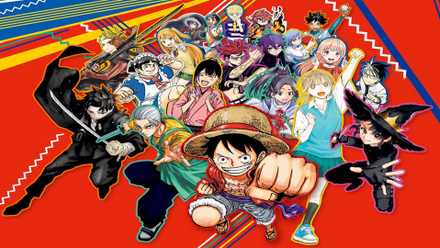
Shonen Jump’s Most Underrated Manga Of 2023 Is Finally Getting The Anime It Always Deserved
Not every Shonen Jump manga is destined to be a hit, and that makes it even better to see this underrated gem get such a fantastic anime.
Although the change from long-running to seasonal release schedules has received its fair share of criticism, it reflects an entirely new relationship to anime and manga that exists for fans: one where good stories can come and go, where one is no longer bound by whatever anime airs on Toonami, and where word-of-mouth is just a fact of life.
Shōnen Jump’s Big Three are, and will remain, legendary, but anime doesn’t need another. Its existence depended on a time when the growth of anime itself needed giants, but now the industry has the capacity for the many stories out there to be told.

- Created by
-
Takashi Isono, Kazuhiko Torishima
- First Film
-
Dragon Ball: Curse of the Blood Rubies
- Latest Film
-
One Piece Film: Red
- First TV Show
-
Dr. Slump
- Latest TV Show
-
Kaiju No. 8
- Upcoming TV Shows
-
Dragon Ball DAIMA, Sakamoto Days
Shonen Jump is one of Japan’s most successful manga anthology franchises, published by Shueisha. Launched in 1968, it is the source of some of the most beloved and popular anime and manga series, such as One Piece, Dragon Ball, and Naruto. The franchise has extended into multiple adaptations across various media, including anime, films, video games, and merchandise.


