 JuicyTalk
Peaky Blinders is a landmark TV series in the history of gangster shows. It combines rich period detail with gripping personal drama and pulsating action, as well as effortlessly blending the reality of Birmingham’s historic ganglands with compelling elements of fiction. The show is arguably the closest thing Britain has ever produced to Francis Ford Coppola’s Godfather trilogy.
It’s the kind of gangster series you can instantly tell is a masterpiece from the opening minutes of its first episode. Things only get better from there, however, with many of Peaky Blinders’ best performances arriving in its later seasons.
What’s more, as anyone who’s seen the series in its entirety will know, each season always saves the best till last. Peaky Blinders doesn’t have a single bad finale, and tends to finish seasons with some of the best cliffhangers in modern television.
Given that each story arc is six episodes long, it’s possible to bingewatch a whole season in one sitting, akin to watching a classic gangster epic directed by a New Hollywood auteur. Nevertheless, certain episodes still stand out above the rest as Peaky Blinders’ finest hours of television, and they can only be described as masterpieces.
Season 3, Episode 6
Season 3 is perhaps the most complex in the show’s run in terms of plot, as it interweaves storylines featuring exiled Russian aristocrats, a shadowy organization called the Economic League, and the expansion of Shelby Company Ltd’s criminal enterprise. Peaky Blinders boss Tommy Shelby suffers the death of Grace, his wife, too, as she’s assassinated by Italian gangsters.
The final episode of the season ties all these threads together in typically spectacular fashion, culminating in three simultaneous action set-pieces involving a jewelry heist, the rescuing of Tommy’s infant child, and a train explosion. This finale has it all, and only a curious ending which sees Tommy facilitate the arrest of his entire family prevents it from ranking higher.
Season 2, Episode 4

Polly’s long-lost son Michael Gray becomes a new addition to the Shelby family tree in Peaky Blinders season 2, and he proves to be the catalyst for a classic Arthur Shelby arson attack in the final moments of this eventful episode. Arthur is rampant throughout, in fact, as his drug habit begins to become a serious problem for the family.
He leads the Peaky Blinders in smashing up the club of a rival gang in London, which inadvertently pushes its proprietor, Darby Sabini, into the arms of Jewish mobster Alfie Solomons. This episode marks a key turning point in the series, as Tommy and Arthur’s actions broaden the scope of their family’s criminal ambitions.
Tommy’s designs on trading liquor abroad are a factor in his approach to handling Solomons, in a storyline that’s reminiscent of Michael Corleone’s attempt to expand his family’s enterprise in Cuba. The Peaky Blinders are entering the big leagues on an international scale, and here we see the bigger problems this development creates within the Shelby family.
“Mr. Jones”
Season 5, Episode 6

Peaky Blinders is full of real-life historical figures, the most prominent of which both feature extensively in this episode. First, there is Winston Churchill, whom Tommy Shelby meets to discuss the rise of fascism in 1930s Britain. Then, there is the leader of British fascism, Oswald Mosley.
Tommy infiltrates Mosley’s movement during season 5 of the show, and this climactic season finale ought to end with his assassination at the hands of the Peaky Blinders. The failure of this attempt to assassinate Mosley is a stunning twist that leaves us in shock. If that’s not enough, we’re kept in the dark about what happens next to Tommy.
“Mr. Jones” is unquestionably one of the great Peaky Blinders season finales. The staging and cinematography in the fascist rally scene is some of the most breathtaking work of the entire series.
Season 1, Episode 6
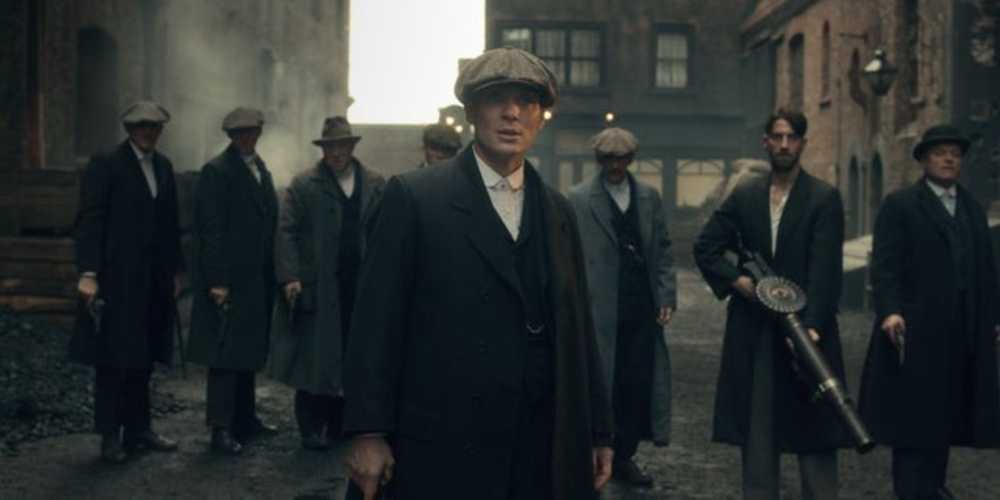
Among the saddest facts about Grace in Peaky Blinders is that she’s forced to choose between betraying everything her family stood for, and betraying the man she loves. In this epic episode, which first showcased creator and writer Steven Knight’s penchant for a season finale, Grace begs Tommy to leave his criminal life behind and run away with her.
The final shots of Grace meeting Inspector Campbell at the train station, and Tommy flipping a coin to decide whether he’ll join her, constitute one of Peaky Blinders’ most powerful moments. This was the sequence when it became clear that the show wasn’t just a flash in the pan. It was an all-time great in the making.
“Heathens”
Season 4, Episode 2

Jessie Eden is Peaky Blinders’ most controversial character for good reason, as her real-life heroism is completely misrepresented in the climactic episodes of season 4 and season 5. However, here we see Eden at her best, as a hardened trade union leader uncowed by Tommy Shelby’s threats.
Alongside the industrial struggles at factories owned by Shelby Company Ltd, “Heathens” gives us one of the show’s most entertaining subplots, in the form of Bonnie Gold’s boxing career. Meanwhile, it also demonstrates to us just how terrifying Adrien Brody’s New York gangster Luca Changretta can be.
The episode excels at spinning plates, serving up authentic multiple storylines that immerse us even deeper within the slums of interwar Birmingham. It’s as Small Heath as Peaky Blinders gets.
Season 2, Episode 5

Besides the explosive ambush by Alfie Solomons and his enforcers at a Passover feast the Shelby family’s gang and their allies have been invited to, the penultimate episode of Peaky Blinders season 2 centers on Tommy’s multiple love interests. The moment Grace walks back into his life, in particular, is a poignant scene that’s rendered skilfully and sensitively.
But the most affecting scene in the episode is the harrowing assault of Polly by Major Campbell, as he extorts sexual favors out of her in return for her son’s release from prison. This horrifying subplot sets up one of the most satisfying payoffs in the series, in the season 2 finale.
