 JuicyTalk
There have been 47 and counting Marvel superhero cartoons on television since the format began airing in 1966, and while you may know titles like What If…? The Spectacular Spider-Man, and X-Men: The Animated Series, there are plenty of shows that even hardcore fans will probably struggle to remember.
When it comes to live-action movies and TV shows, Marvel has had a leg up on its DC counterpart, but in animation, it’s the DC cartoons that have seemed to find more success and wider audiences. Perhaps that’s why there are a significant number of Marvel animated shows that seem to have been completely lost to time.
The Marvel Super Heroes (1966)
The Marvel Super Heroes is the first TV show based on Marvel characters and aired on local stations in 1966 in half-hour segments split up into shorts centered on the various heroes in the Marvel universe. The shorts were almost exact copies of comic strips from the artists and writers behind Marvel.
Calling the series an animation is almost a stretch. The series primarily consisted of crude and limited animation that essentially gave the feeling of motion to still comic strips. Characters were still, except that their mouths would occasionally move to say their lines, and would blink and wobble on occasion.
The New Fantastic Four (1978)

The second animated series based on the Fantastic Four, The New Fantastic Four (titled: The Fantastic Four in the intro screen) was made for NBC in 1978 and only ran for one season. The show follows the general outline of the comics, beginning with the cosmic radiation of Reed Richards, Susan Storm, the Thing, and… their robot H.E.R.B.I.E.
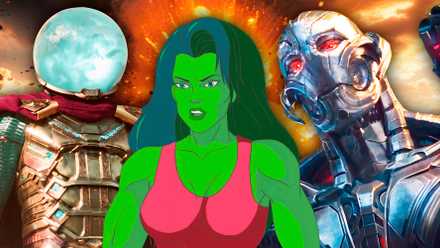
10 Iconic MCU Events That Already Happened Years Earlier In Marvel’s Animated Shows
Some of the most iconic moments from the Marvel Cinematic Universe have been depicted years prior as part of Marvel’s shared animated universe.
Due to a licensing issue with the Human Torch, The New Fantastic Four was unable to use the character. Stan Lee conceived of H.E.R.B.I.E. to replace him. This little robot possesses various generators and lasers and can connect to any computer. He ended up becoming a part of the larger Marvel universe, even appearing in The Fantastic Four: First Steps, with Matthew Wood voicing the character.
Fred And Barney Meet The Thing (1979)

In Fred and Barney Meet the Thing, would you be shocked to learn that Fred Flintstone and Barney Rubble do not, in fact, meet the Thing of Fantastic Four fame? This one-season spin-off of The Flintstones consisted of two segments that were separate and featured no crossovers.
The characters of the title only appear together in the title sequence. The Flintstones characters got up to their usual prehistoric shenanigans, but the Thing storylines were much different than what the comics had traditionally depicted. For example, Benjy Grimm is a scrawny teen who can turn into the Thing by speaking secret words into his two magic rings.
The Incredible Hulk (1982-1983)

There have been a lot of Incredible Hulk-related shows and movies over the years, so many that some tend to get lost in the shuffle. The Incredible Hulk is a 1982 animated series that ran on NBC for one season and was part of a combined hour with Spider-Man and His Amazing Friends.
Unlike the famed live-action series starring Lou Ferrigno, The Incredible Hulk adhered much more closely to the comic incarnation of the character. It wasn’t the most beautifully animated series, and it didn’t last long, but it’s about as comic-accurate a Hulk as you will find on television or in movies.
Ultraforce (1994-1995)

The short-lived Ultraforce series premiered in 1995 and only ran for 13 episodes, following the adventures of Marvel’s Ultraforce superhero group, an equally unknown group of individuals who only debuted a year earlier. Malibu Comics debuted the Ultraforce, which was later purchased by Marvel.
The series depicts the pre-Marvel acquisition group of Contrary, Ghoul, Hardcase, Pixx, Prime, Prototype, and Topaz. After Marvel bought Malibu, Black Knight, who Kit Harington plays in Eternals, takes over the group. Ultraforce has since disbanded, and its characters don’t officially appear in modern Marvel iterations. Though a character named Topaz does appear in Thor: Ragnarok, played by Rachel House, with similar powers to Ultraforce’s Topaz.
Iron Man (1994-1996)

Also known as Iron Man: The Animated Series, Iron Man was part of The Marvel Action Hour, which also included episodes featuring the Fantastic Four and the Hulk. The first season of the series is composed mostly of standalone stories, with the Mandarin as a season-long villain appearing in multiple episodes.
The second season saw a major overhaul, with the change of production studios. This led to the premise, tone, and general idea of the show in season 2 being completely different from the one shown in season 1. It’s almost a completely different series between both seasons, with the second being a substantial improvement.
Silver Surfer (1998)

The Silver Surfer TV series, also called Silver Surfer: The Animated Series, is centered on the titular Marvel superhero, pulling storylines from the various comic book stories. The series alters the character’s mythos and origins in some key ways, such as removing the Fantastic Four, and making the Silver Surfer the guardian of Earth against Galactus.
Many characters from the cosmic side of Marvel appear in the show, including The Watcher, Ego, Pip the Troll, Drax the Destroyer, and Adam Warlock. The show was unafraid to tackle some heavy themes like slavery, environmental problems, and imperialism, and would reference complex media like the novels of Isaac Asimov and Joe Haldeman.
Spider-Man Unlimited (1999-2001)

Spider-Man Unlimited premiered in 1999 and was originally conceived as a low-budget adaptation of the first 26 issues of The Amazing Spider-Man comic book, but complicated rights issues led to the show being unable to adapt the early comics or even use the traditional Spider-Man suit.
This version of Spider-Man appears in Spider-Man: Across the Spider-Verse as a member of the Spider-Society, suggesting he survives the season 1 cliffhanger.
The series primarily takes place on Counter-Earth, where Peter Parker has traveled to in order to rescue John Jameson. He elects to stay on Counter-Earth. It’s an ambitious series with a unique take on the story but suffers from some writing and pacing problems along with a big cliffhanger ending that was never resolved.
Fantastic Four: World’s Greatest Heroes (2006-2007)

Fantastic Four: World’s Greatest Heroes is a short-lived animated series made for M6 and Cartoon Network Europe, released on Nicktoons in the US. The series is unconnected from any previous iterations of the Fantastic Four, telling its own tale with a new origin story.
The show was intended to capitalize on the success of the 2005 Fantastic Four movie, with some elements taken from the film. While the animation is strong and the art is impressive, the storytelling doesn’t gel, and the original tales aren’t as exciting as the ones from the comic books.
Hulk And The Agents Of S.M.A.S.H. (2013-2015)

Hulk and the Agents of S.M.A.S.H. premiered on Disney XD in 2013 and ran for two seasons. The show’s conceit is that it’s a reality show being filmed by Rick Jones to help elevate the public image of the Hulk. This show within a show is filmed with drones that accompany “S.M.A.S.H.”, the Supreme Military Agency of Super Humans.
Hulk is joined by She-Hulk, Red Hulk, A-Bomb, and Skaar as they tackle threats that even other superheroes are incapable of taking on, frequently going up against Hulk’s archnemesis, Leader. It’s about as forgettable a Marvel animated show as you’re going to find, despite being a recent entry.


