 JuicyTalk
Few hobbies inspire storytelling quite like Dungeons & Dragons. Every campaign is built around unlikely heroes, dangerous quests, memorable companions, and worlds filled with monsters, magic, and impossible choices. It’s no surprise that many fantasy novels capture the same feeling, whether through party dynamics, dungeon crawls, morally gray adventurers, or richly imagined settings that seem ready to host a tabletop campaign.
The best books for D&D fans don’t necessarily follow the game’s official lore. Instead, they recreate the excitement of rolling initiative, discovering ancient ruins, negotiating with dragons, and watching a mismatched group slowly become a family. These seven fantasy novels each offer a different flavor of adventure while delivering the kind of character-driven storytelling that has made tabletop role-playing games a global phenomenon.
7
The Blacktongue Thief by Christopher Buehlman
Christopher Buehlman’s The Blacktongue Thief feels remarkably close to a classic Dungeons & Dragons campaign from its opening chapters. The story follows Kinch Na Shannack, a trained thief burdened by enormous student debt to a guild of professional criminals. His attempt to rob a lone traveler quickly backfires when the target turns out to be Galva, an accomplished knight whose abilities vastly exceed his own.
Rather than remaining enemies, Kinch and Galva embark on a dangerous journey across a kingdom still recovering from devastating goblin wars. Along the way they encounter giant ravens, terrifying witches, sea monsters, magical assassins, and forgotten civilizations. Every stop introduces a new challenge that could easily serve as the centerpiece of a tabletop adventure.
One reason the novel is perfect for D&D players is its worldbuilding. Buehlman constructs cultures, religions, languages, and histories that extend far beyond the immediate plot. Magic exists, but it comes with consequences, making spellcasters feel powerful without becoming invincible. The balance between wonder and danger mirrors many long-running role-playing campaigns.
Kinch also embodies the charismatic rogue archetype. He’s witty, deeply flawed, and survives as often through clever improvisation as swordplay. His narration adds humor even during grim situations, creating a tone that alternates between epic fantasy and the playful banter found around many gaming tables. Fans who enjoy campaigns driven by personality as much as combat will find plenty to appreciate here.
6
Gideon the Ninth by Tamsyn Muir

Tamsyn Muir’s Gideon the Ninth combines fantasy, science fiction, gothic horror, and murder mystery into one of the most distinctive novels and series released in recent years. The story centers on Gideon Nav, an irreverent swordswoman forced to accompany the necromancer Harrowhark Nonagesimus to a deadly competition held within an ancient palace occupied by rival necromantic houses.
The novel immediately establishes a party-like structure. Each house arrives with unique magical specialties, personalities, strengths, and secrets, creating a cast that resembles competing adventuring groups. As contestants begin dying under mysterious circumstances, cooperation becomes just as important as magical ability.
For D&D lovers, the appeal lies in the intricate magic system and constant problem-solving. Instead of endless battles, many encounters revolve around deciphering ancient puzzles, researching forbidden knowledge, and uncovering clues hidden inside crumbling laboratories. The experience feels similar to an investigation-heavy campaign where every discovery changes the players’ understanding of the world.
Despite its dark atmosphere, Gideon the Ninth thrives on sharp dialogue and unforgettable character interactions. Gideon’s sarcastic observations balance the grim setting, while Harrow’s obsession with perfection creates constant friction. Their evolving relationship becomes the emotional core of the novel, giving readers both spectacular magical confrontations and surprisingly heartfelt character development.
5
Kings of the Wyld by Nicholas Eames

Few fantasy novels embrace the spirit of a tabletop campaign as enthusiastically as Nicholas Eames’ Kings of the Wyld. The novel follows Clay Cooper, a retired mercenary who reunites with his legendary former adventuring party after decades apart. Their mission is simple in theory but nearly impossible in practice: rescue the daughter of their old leader from a city surrounded by monsters.
The retired heroes must overcome aging bodies, old rivalries, fractured friendships, and an ever-growing army of creatures before reaching their destination. The structure resembles an epic high-level D&D campaign, with each stop introducing new allies, enemies, and increasingly dangerous encounters.
Eames cleverly blends classic fantasy with the culture of rock bands. Mercenary companies enjoy celebrity status, fans follow their exploits, and famous adventuring groups tour kingdoms much like musicians touring arenas. This playful concept helps the novel stand out while still delivering emotional stakes beneath the humor.
Every member of Saga, the legendary mercenary band, fills a familiar tabletop role. There’s the dependable fighter, powerful wizard, fearless leader, and other recognizable fantasy archetypes, yet each possesses enough personality to avoid feeling predictable. Their chemistry captures the camaraderie that keeps many Dungeons & Dragons campaigns memorable long after the dice stop rolling.
4
Throne of the Crescent Moon by Saladin Ahmed

Saladin Ahmed offers a refreshingly different type of story from traditional medieval European fantasy in Throne of the Crescent Moon. Set in the city of Dhamsawaat and the surrounding Crescent Moon Kingdoms, the novel draws heavily from Middle Eastern folklore, Islamic mythology, and the tales of One Thousand and One Nights.
The story follows Doctor Adoulla Makhslood, an aging ghul hunter who longs for retirement but finds himself confronting a growing supernatural conspiracy. Joined by the young dervish Raseed bas Raseed, shape-shifter Zamia Badawi, and several unlikely allies, he assembles a party capable of facing magical forces threatening the kingdom.
For D&D players seeking fresh campaign inspiration, Ahmed’s setting feels wonderfully original. Instead of familiar castles and dragons, readers encounter ghuls, djenn, enchanted deserts, mystical marketplaces, and political conflicts rooted in cultures rarely explored in mainstream fantasy. The result broadens the possibilities of what epic fantasy can look like.
Although the novel features exciting battles, its greatest strength lies in its characters. Doctor Adoulla stands apart from many fantasy heroes because he’s already old, experienced, and occasionally exhausted by adventure. His wisdom, humor, and compassion create a protagonist whose leadership comes from experience rather than youthful ambition.
3
Legends & Lattes by Travis Baldree

Not every Dungeons & Dragons campaign revolves around defeating world-ending villains. Many players enjoy quieter role-playing sessions focused on friendships, businesses, and community building. Travis Baldree’s Legends & Lattes perfectly captures that side of fantasy through an unexpectedly comforting story.
The novel follows Viv, an orc mercenary who retires from adventuring after years of monster hunting. Instead of searching for treasure, she opens the first coffee shop in the city of Thune. Convincing customers to embrace an unfamiliar beverage proves nearly as challenging as surviving battlefields.
Viv gradually assembles a wonderfully diverse supporting cast that includes craftspeople, bakers, magical assistants, and other lovable personalities. Watching relationships develop through shared work rather than combat creates a slower pace that emphasizes collaboration over conflict. The atmosphere resembles the downtime many gaming groups create between major quests.
Despite its cozy reputation, Legends & Lattes never forgets its fantasy roots. Criminal organizations, magical artifacts, and lingering threats from Viv’s previous life eventually interrupt her peaceful retirement. Those moments add enough tension to remind readers that heroes can never fully escape adventure, even when chasing a quieter dream.
2
Nine Goblins by T. Kingfisher

T. Kingfisher’s novella Nine Goblins proves that memorable fantasy doesn’t require sprawling page counts. The story begins when a troop of goblin soldiers and their animal companions become stranded behind enemy lines after an unexpected accident. Survival depends on cooperation rather than military strength.
Separated from their army, the goblins must navigate unfamiliar forests while avoiding dangerous predators and hostile forces. Their journey is focused on teamwork, resourcefulness, and improvisation, all qualities that frequently define successful Dungeons & Dragons parties facing impossible odds.
Kingfisher takes creatures often portrayed as disposable enemies in fantasy games and gives them remarkable humanity. Each goblin possesses a distinct personality, creating an ensemble cast that readers quickly grow attached to. Their conversations mix humor with genuine emotion, transforming familiar monsters into sympathetic protagonists.
The novella also demonstrates that heroism comes in many forms. Rather than relying on overwhelming magical power, the goblins succeed through loyalty, practical thinking, and determination. For players who enjoy campaigns centered on underdogs instead of legendary champions, Nine Goblins offers an especially satisfying perspective on classic fantasy storytelling.
1
Tusk Love by Thea Guanzon

Originally introduced as a fictional romance novel within the world of Critical Role, Tusk Love eventually became a real publication written by bestselling fantasy author Thea Guanzon. What began as an in-universe joke evolved into one of the franchise’s most anticipated literary releases, giving fans the opportunity to finally read the story referenced throughout Campaign 2.
The novel follows Guinevere, a noblewoman seeking independence, and Oskar, a rugged half-orc whose life differs dramatically from her privileged upbringing. Their growing relationship unfolds against a fantasy backdrop filled with travel, political complications, and the cultural divides that separate their worlds.
While romance drives the narrative, Tusk Love still embraces many hallmarks of tabletop fantasy. Exotic locations, magical encounters, dangerous journeys, and colorful supporting characters all contribute to a setting that feels compatible with countless homebrew Dungeons & Dragons campaigns. Readers familiar with Critical Role will also appreciate the numerous connections to Exandria’s wider lore.
Even newcomers can enjoy the novel without extensive knowledge of Critical Role. Guanzon crafts fully realized protagonists whose emotional journeys stand on their own, making the story accessible beyond its origins. For Dungeons & Dragons fans who enjoy character-driven adventures with heartfelt romance alongside fantasy worldbuilding, Tusk Love provides an enjoyable and fitting addition to their reading list.
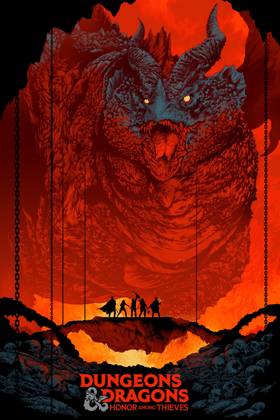
- Created by
-
E. Gary Gygax, Dave Arneson, Jonathan Goldstein, John Francis Daley
- Latest Film
-
Dungeons & Dragons: Honor Among Thieves


