 JuicyTalk
In an increasingly divided literary world, there is something everyone can agree on: the books listed here are certified modern masterpieces. From Cormac McCarthy’s crime classic No Country For Old Men, to Train Dreams‘ author Denis Johnson’s Vietnam-era spy novel Tree of Smoke, to undisputed GOAT Toni Morrison’s A Mercy, and beyond, the novels here are all peak 21st-century literature.
There’s a definite “changing of the guard” vibe to the literature of the last 25 years. Many of the greatest authors of the mid-to-late 20th century have remained active well into the new millennium; at the same time, vital new voices have arisen to define the true meaning of “contemporary” fiction.
Like any literary era, the best 21st-century novels can roughly be divided into two camps: 1) the boundary-pushers, convention-breakers, risk-takers, the books that make readers reconsider what a novel can be; 2) the ones that take “conventional” to a whole new level, in the process raising the stakes of what fiction can achieve. Then, of course, there are the books that refuse to fit neatly into one single category.
To be clear, this is not a “best of” list, or a ranking. This is a survey of the most wonderful and mind-bending fiction of the 21st-century, but it’s only meant to scratch the surface of what contemporary fiction has been doing since the year 2000.
Going through this list, readers will encounter examples of each. They will find old literary forms being adapted to new ideas and perspectives, and they’ll find old ideas being challenged in groundbreaking new ways. Most of all, though, readers will find breathless page-turners that will keep them hooked until the very last sentence.
Disappearing Earth
Julia Phillips; Published In 2019
Julia Phillips’ debut novel Disappearing Earth is as enchanting at the sentence-level as it is emotionally exhausting, in the best possible way. That is, it’s a technical masterwork of prose, but that’s only a means to an end to ensure that the story packs as much of a punch as possible. That mix of skill and success earns it a claim to the “modern masterpiece” title.
Disappearing Earth starts with the abduction of two young girls in Kamchatka, Russia. The rest of the book follows the aftermath of the kidnapping and the search for the girls. Except Phillips focuses more on the mental and psychological toll this incident takes on the people involved, rather than the procedural details of the search. The novel’s POV routinely shifts, offering different angles and perspectives on the case. Sometimes the missing girls are front-and-center in the storm, and sometimes they’re a nagging background detail, but they always loom over the story no matter where it goes.
Disappearing Earth was a finalist for the National Book Award, and several other prestigious literary awards, in its release year. It’s a novel for readers who are more interested in hauntingly beautiful writing than plot, or action. With her debut, Julia Phillips delivered effortlessly brilliant prose, and this continued with her 2024 follow-up, Bear.
Lincoln In The Bardo
George Saunders; Published In 2017

Up until 2017, George Saunders was widely considered one of America’s greatest living short story writers, if not #1 outright. With his first novel, Lincoln in the Bardo, Saunders proved he could be just as flawless in long-form. Bardo is a stylistically avant-garde work of fiction set in an idiosyncratic version of the afterlife. Or, more accurately, the space life and death.
“Bardo” is the Tibetan Buddhist word for this space. The “Lincoln” of the title, meanwhile, is Abraham Lincoln’s young son, Willie, who has just died. Willie finds himself in a cemetery full of strange characters, spirits like himself, except there’s a catch: they don’t know they are dead. In fact, realizing this triggers a violently beautiful transition into the afterlife Saunders dubs “matterlightblooming.” This is one of the many strange and spectacular bits Saunders commits to in the book.
As much as Lincoln in the Bardo is full of the signature flare that has made Saunders a leading voice in American fiction, though, it is also a work of historical fiction. The “action” of the novel is centered around multiple visits Abraham Lincoln made to Willie’s crypt on a single night after his burial. And while the story is about a group of ghosts learning to accept their fates, the older, living Lincoln’s grief is the messy, tragic, beating heart of the book.
A Visit From The Goon Squad/The Candy House
Jennifer Egan; Published In 2010 & 2022

Jennifer Egan’s A Visit From the Goon Squad is a novel from one angle, but stand a little bit to the left and you’ll see a collection of linked short stories instead. Goon Squad tested the meaning of “novel,” and when the results came back, it showed that theme and characters are just as good at binding a book together as plot.
Similarly structured novels had run this test before, but Egan went a step further with her book. A chapter late in Goon Squad comes in the form of a Powerpoint presentation, “Great Rock and Roll Pauses by Alison Blake,” named for the character Alison’s brother Lincoln, who obsessively fixates on pauses in rock and punk tracks. It’s as wild as it sounds; not just because it will change how readers listen to loud music forever, but because it manages to pack the emotional fraughtness of a family drama into its Powerpoint format.
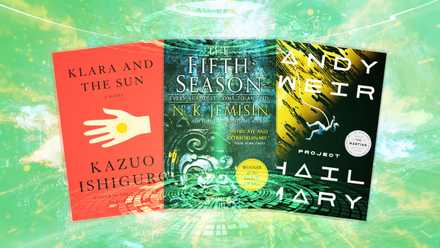
10 Best Sci-Fi Books Of The Last 10 Years
There are many excellent science fiction books released in the last decade, but there are 10 sci-fi books in particular that stand out as the best.
Egan won the Pulitzer Prize for Goon Squad; 15+ years after its publication, the novel’s literary influence is just starting to fully manifest in the current generation of writers. Jennifer Egan published a sequel, The Candy House, in 2022. Candy House utilizes the same structure, and some of the same characters as Goon Squad, while furthering the first book’s themes. As of 2025, a screen adaptation of both novels is reportedly in development at A24.
The Three-Body Problem
Liu Cixin; Published In 2008

As Game of Thrones author George R.R. Martin likes to say, some novelists are gardeners, while others are architects. There’s another category though, that Martin neglects: the engineer. That’s Liu Cixin, author of The Three-Body Problem, an absolute mechanical masterpiece of a book. Three-Body is simply a flawlessly constructed text.
Readers might have had the plot of Three-Body Problem spoiled for them by the Netflix adaptation, but what the show couldn’t replicate was the experience of reading the book. Liu Cixin’s methodical prose keeps readers constantly on the hook, and unlike the show, it saves its biggest reveals for later in the story. And the true climax of the book, one character’s stunning act of misanthropy, simply wasn’t done justice on screen.
Three-Body Problem is undeniably the work of a master. It’s a novel of huge ideas, but they are made easily digestible for the audience. That becomes less the case with the book’s two sequels, The Dark Forest and Death’s End, which take the story into the future, and then to the literal end of the universe and back, all the while throwing some truly mindbending modern sci-fi ideas at the reader.
A Mercy
Toni Morrison; Published In 2008

A Mercy is Toni Morrison’s ninth of eleven novels. It’s a late-period work from one of the most singular talents American literature has ever produced. Like so many of her earlier masterpieces, A Mercy is all about rendering overlooked stories in an extraordinary manner, making them so they can’t be ignored. It once again proved Morrison to be a stylistic genius, as well a guiding intellectual light.
Toni Morrison embodied what it meant for a literary author to be a cultural force, an increasingly rare phenomenon in modern life. A Mercy came fifteen years after she was awarded the Nobel Prize in Literature in 1993. It tells the story of Florens, an enslaved young woman working for the Vaark family. It’s an extension of Morrison’s career-long project of unpacking the generational trauma of American slavery.
To tackle such a grave subject with objectively beauty in her prose was a testament to Toni Morrison’s exceptional nature as a writer. Like Beloved, The Bluest Eye, and all Morrison’s work before it A Mercy is more than just a moving novel; it is essential reading for understanding the mortal sins of American history.
No Country For Old Men/The Road
Cormac McCarthy; Published In 2005 & 2006

No Country For Old Men is remarkable because it is one of the best books of the past 25 years, and also one of the best films of the century so far. The Coen brothers delivered a perfect literary adaptation with their 2007 big screen version of No Country. In large part, this is because they managed to make a highly entertaining movie out of a challenging text.
No Country was published in 2005, and Cormac McCarthy followed this with his equally stunning post-apocalyptic father-son story The Road in ’06. The two novels represented a living legend of American fiction at the zenith of his creative powers. Both books can be difficult to get through, but that makes extremely rewarding reads.
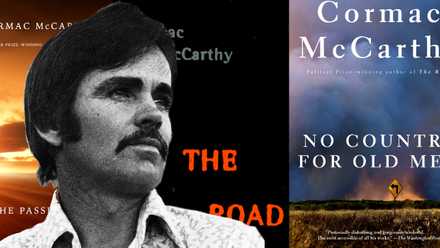
All 12 Cormac McCarthy Books Ranked
The late, great, American novelist, Cormac McCarthy wrote 12 books over his long career and each one has reason to be considered his best work.
Like No Country For Old Men, The Road was quickly and effectively adapted into a beloved movie. The Road also finally earned McCarthy a previously elusive Pulitzer Prize. Though many readers will point to his 1986 novel Blood Meridian as his true magnum opus, No Country for Old Men are undeniable heavyweights of 21st-century literature.
On Beauty
Zadie Smith; Published In 2005

Zadie Smith is best known for two books: her 2000 debut White Teeth, and her third novel, 2005’s On Beauty. Whereas White Teeth is beloved because it is brimming with the wild “I might never get to write another book” energy of a debut novelist, On Beauty is the elite-level work of an established author.
On Beauty is a family saga of the highest order. Loosely based on E.M. Forster’s Howard’s End, On Beauty follows its own Howard, his wife Kiki, and their three children. The protagonists are a mixed-race family, and On Beauty centers the interlocking questions of racial identity and family identity as its major themes. The book is profound, but just as importantly, it is effortlessly funny.
That’s a signature part of Zadie Smith’s style. Plenty of authors balance gravity and levity in their work, but Smith takes it to another level artistically. She’s naturally funny, and it comes through consistently in her work, even as she puts her protagonists through the ringer and confronts uncomfortable truths about life in the 21st century.
2666
Roberto Bolaño; Published In 2004

2666 is probably the greatest novel you’ve never heard of. It is Chilean writer Roberto Bolaño’s great literary achievement. Sadly, the book was published posthumously. Bolaño passed away in 2003, in the late stages of writing 2666; the manuscript was assembled by his literary estate and published in 2004. Originally written in Spanish, an English translation of the novel followed a few years later in ’08.
2666 is a crime novel unlike any other. It is also a tale of obsession, which comes in many different forms. The book starts with “The Part About the Critics,” following a group of academics who are fixated on an elusive and obscure author. The section introduces the town of Saint Teresa, on the Mexico/U.S. border. Subsequent sections of the book stay in Saint Teresa and come to focus on a set of gruesome ongoing murders there.
This reaches its apex in “The Part About the Crimes,’ while the novel’s final part loops back to Archimboldi, the novelist from part one. The book’s major threads ultimately tie together, but there’s no big “lightbulb” moment, like in a more conventional crime novel. Instead, the reader is left to sit with longing and lack of resolution, a feeling made more unsettling by the real-life death of the author.


