JuicyTalk
We may receive a portion of sales if you purchase a product through a link in this article.
I can pinpoint the moment I began to rethink living room design. I was standing in my new, empty apartment, staring at four very stark walls. The space felt impossibly small—like the room was shrinking the longer I stood there. Tiny, constricting, and completely limiting. And then something shifted. What if the room wasn’t lacking at all? What if it was simply asking me to be more thoughtful?
Truthfully, many of us fall into a living room rut. The TV goes there, the sofa goes here, and a lamp fills the corner. But when square footage is limited—as it so often is in city apartments and smaller homes—creativity becomes less optional and more essential. A compact space forces you to consider every inch.
“Smaller spaces require a little more thought and planning, especially multi-functional spaces such as a living room,” says San Francisco–based interior designer Regan Baker. “It’s important the room feels inviting and comfortable, given the space constraints, but also because it is so high-use.”
Featured image from our interview with Chloé Crane-Leroux by Michelle Nash.
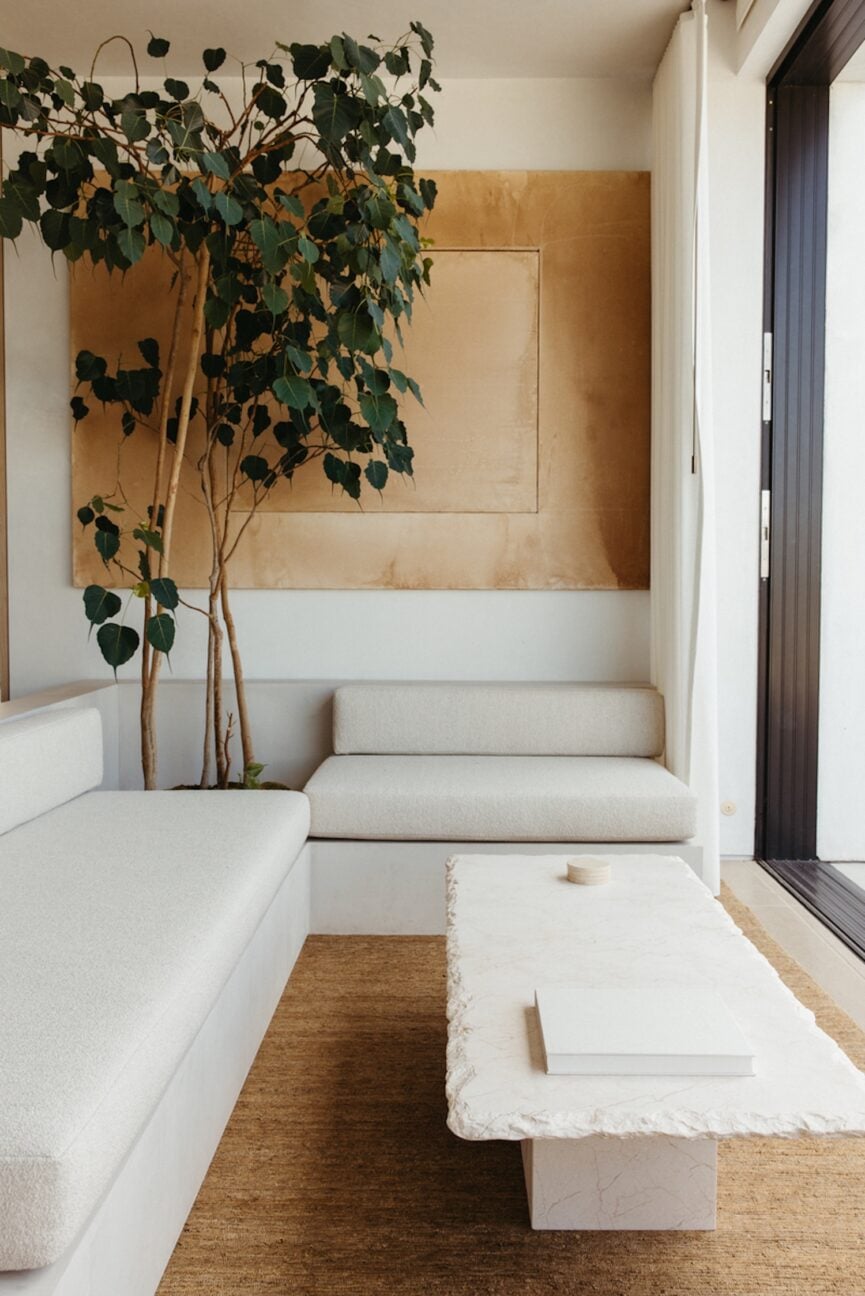
Designer-Approved Ways to Maximize Your Space
So, where do you begin when space is at a premium? According to Baker, it starts with function, flow, and proportion. And as the designers below echo, the best small living room ideas aren’t about squeezing in more—they’re about being intentional with what you choose to bring in.
With a few thoughtful shifts, even the smallest living room can feel calm, airy, and beautifully composed.

Start With Light
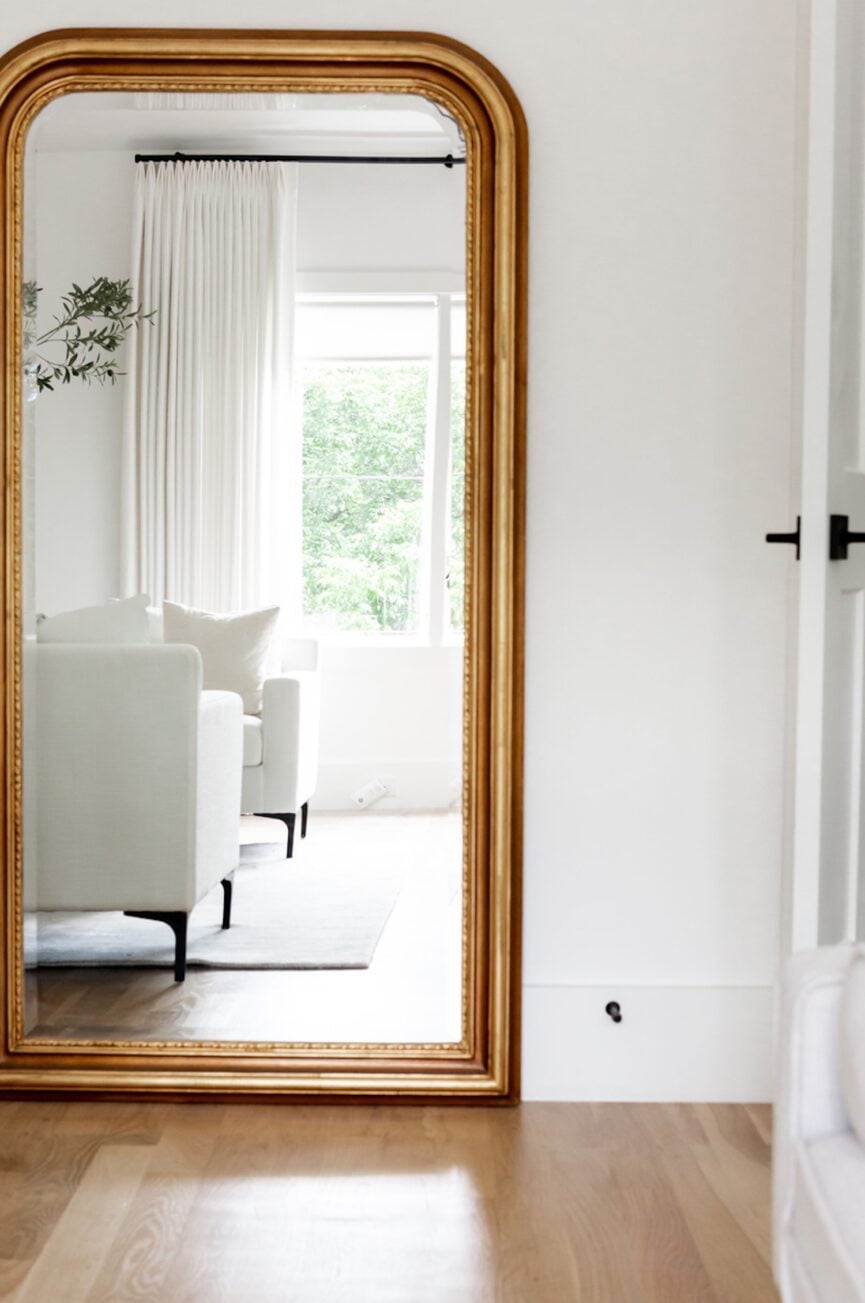
If a small living room feels tight, light is usually the first thing to reconsider. Nearly every designer pointed to the same starting place: look up. Floor-to-ceiling drapery, especially in sheer or lightweight fabrics, can instantly make a room feel taller and more expansive. Architect Trisha Snyder of Butler Armsden Architects recommends mounting window treatments higher than the window frame to draw the eye upward. The result is subtle, but transformative—the walls feel elongated rather than boxed in.
Color plays a similar role. This doesn’t mean everything has to be stark white, but maintaining cohesion is essential. Karen Harautuneian of Hub of the House Studio leans into natural tones in smaller spaces, drawing inspiration from wood finishes and textiles to create a palette that feels unified rather than cluttered. When everything speaks the same language, the room feels calmer.
And then there’s reflection. A mirror placed thoughtfully—across from a window or near a light source—can bounce brightness around the room and visually double the depth. It’s one of the simplest ways to make a small living room look bigger without adding another piece of furniture. In compact spaces, light doesn’t just illuminate. It defines the mood.

Choose the Right Scale
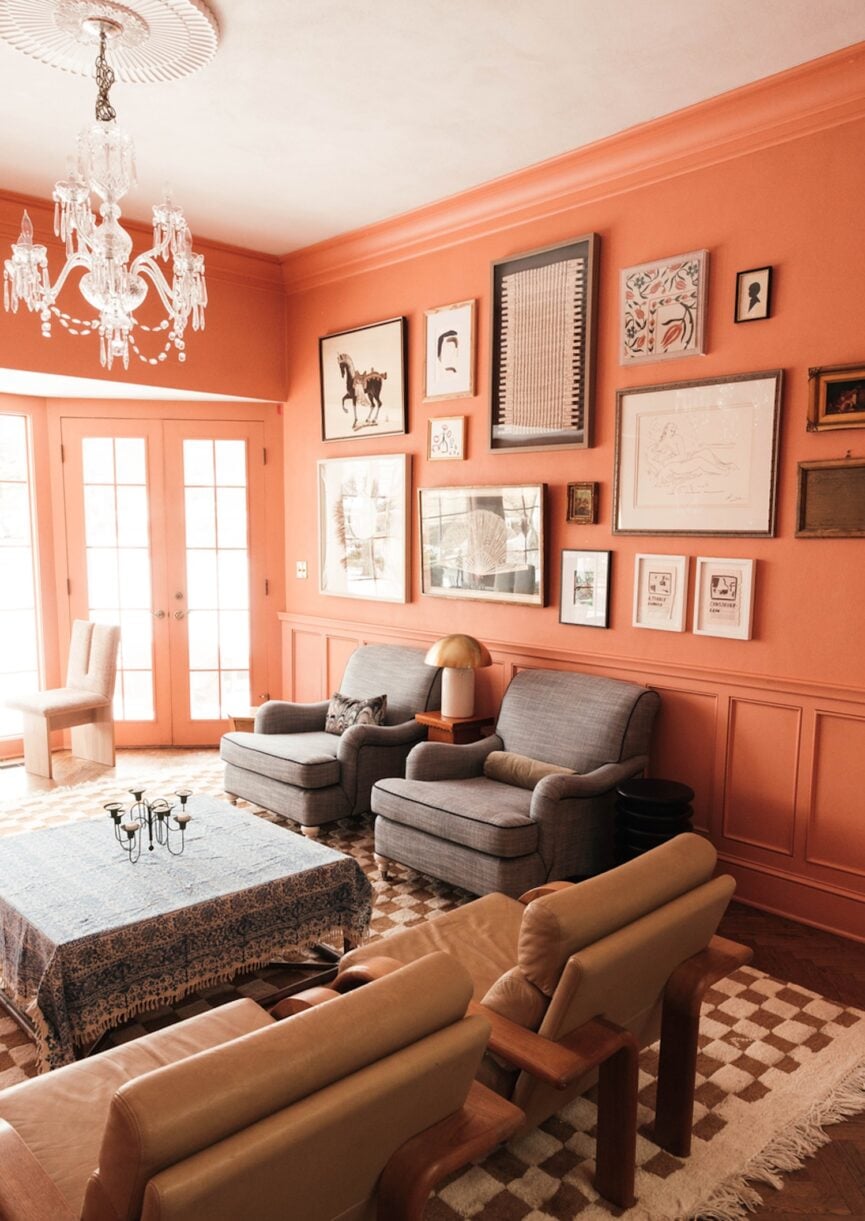
It’s tempting, in a small living room, to think bigger is better. A deep sectional feels cozy. A large coffee table feels substantial. But scale can quietly make or break a compact space.
“Too much furniture—or pieces that are too large or too small—can really alter the overall feel of a home and whether or not it is inviting,” says Baker. In a high-use space like the living room, flow matters just as much as comfort.
When space is limited, proportion becomes your anchor. A medium-scale sofa with visible legs feels lighter than a bulky sectional that hugs the floor. Leaving negative space around furniture—even just a few inches—allows the room to breathe.
Planning also saves you from expensive mistakes. Amy Youngblood, principal designer of Amy Youngblood Interiors, stresses the importance of mapping out your layout before purchasing anything new. “Taking into account the flow and size will help you determine which furnishings to choose,” she says. Even a simple sketch can clarify whether a piece will enhance the space—or overwhelm it.

Create Intentional Zones
One of the biggest myths about small living rooms is that they can only serve one purpose. In reality, compact spaces often work the hardest. They host movie nights, morning coffee, work-from-home hours, and quiet evenings when you finally put your feet up. The key is definition.
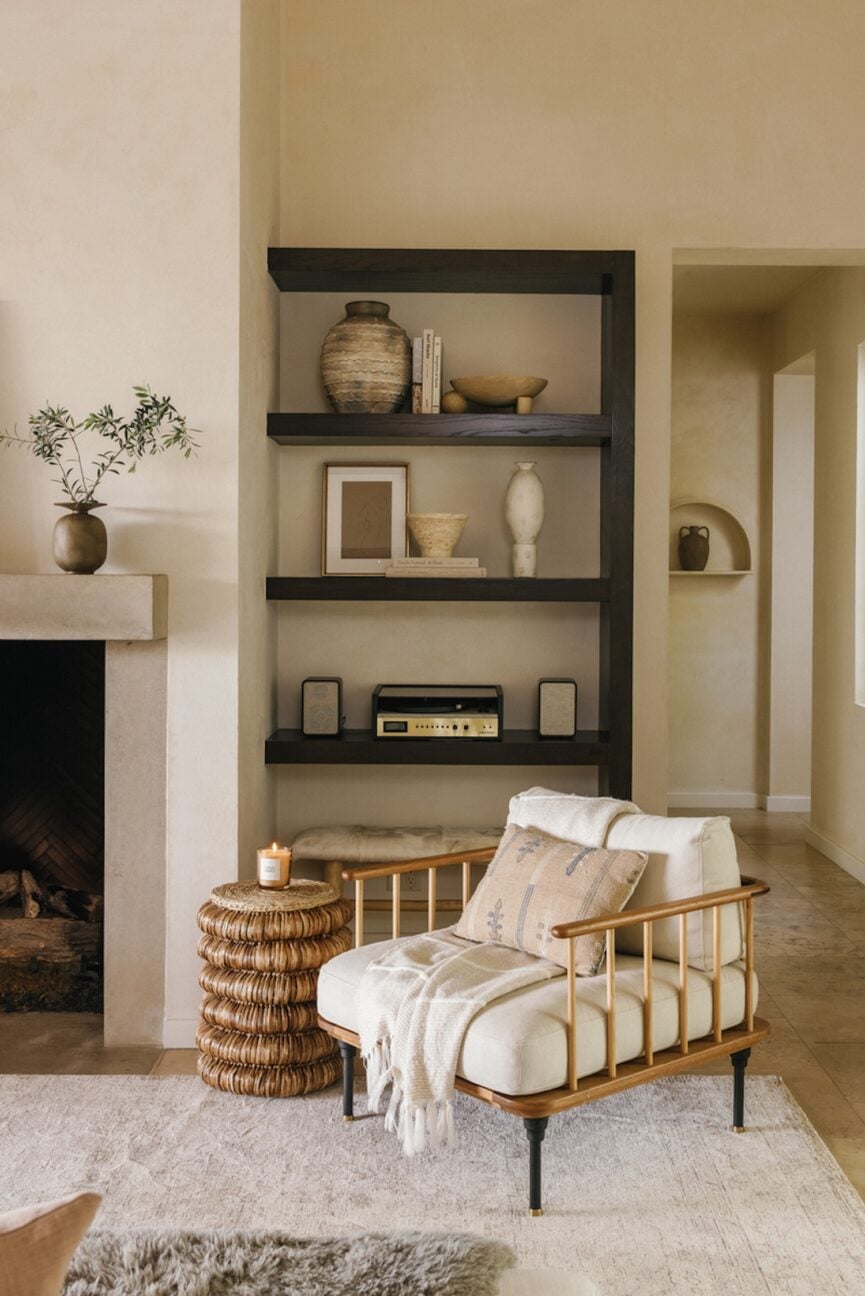
Rather than letting everything blur together, create subtle zones within the room. A rug can anchor the main seating area. A console or bookshelf can gently separate a workspace from a lounge space. Even a single lounge chair placed near a window can carve out a reading corner without overwhelming the layout.
Multifunctionality becomes essential here. Baker recommends choosing pieces that serve more than one role—like a built-in bookshelf that doubles as a desk or a substantial ottoman that can act as both coffee table and additional seating. “It’s important the room feels inviting and comfortable,” she says, “but also functional, given how high-use it is.”
When each zone has a clear purpose, the room feels less chaotic and more composed. Even a small living room can hold multiple moments beautifully.

Layer Texture, Not Clutter
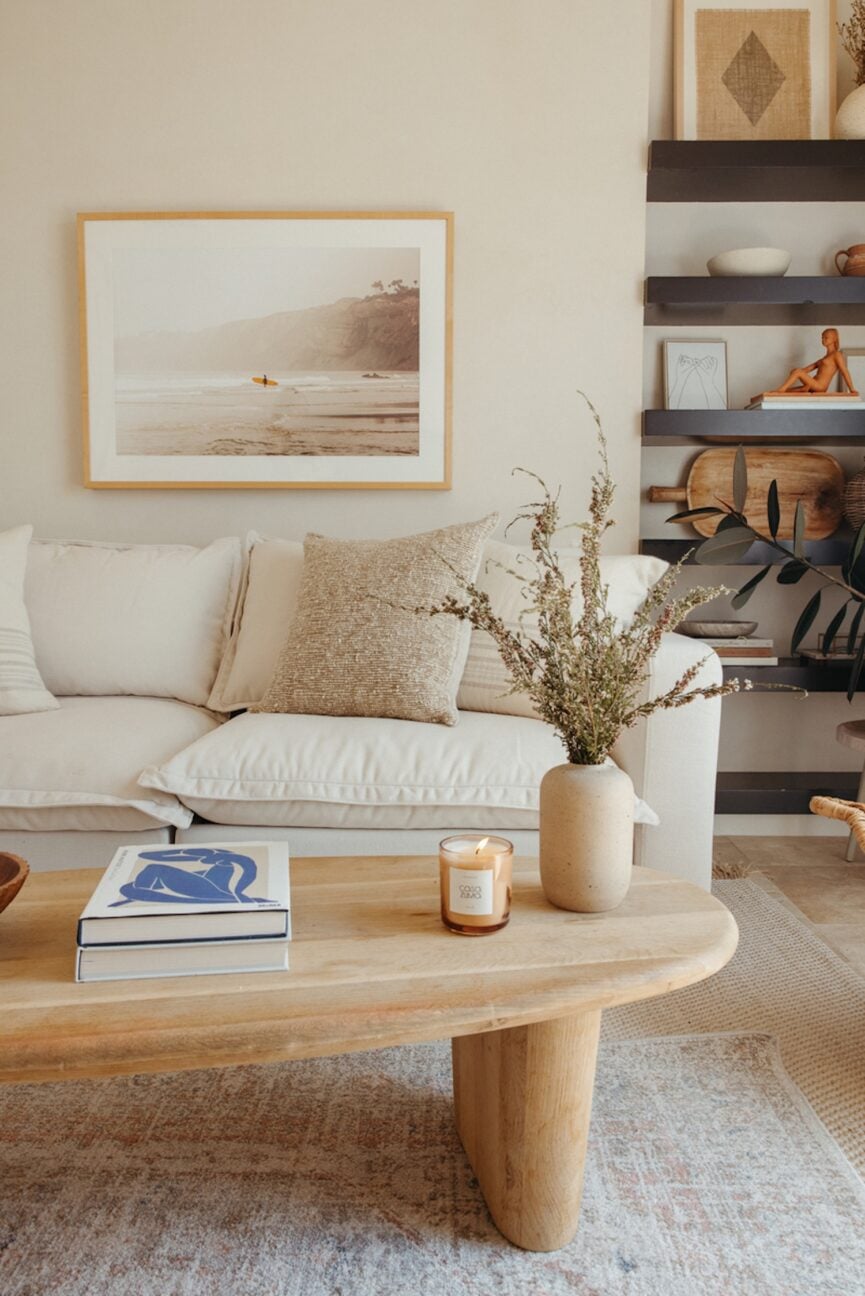
When a small living room feels cramped, the instinct is often to remove things entirely. But the answer isn’t sparseness—it’s selectivity. Texture adds depth without adding visual noise. Think linen upholstery, a woven basket, a wool rug underfoot. Natural materials create warmth in a way that multiple decorative objects never can. Instead of layering more “things,” layer contrast—smooth next to rough, soft next to structured.
Harautuneian often advises deriving your palette from foundational elements already in the room—wood tones, upholstery, architectural details—so everything feels cohesive rather than competing. When color and texture feel connected, the space naturally feels calmer.
Youngblood recommends concentrating decorative moments rather than scattering them. A single oversized piece of artwork anchors a wall more effectively than a busy gallery. A stack of books and one sculptural object feels more intentional than five small accessories fighting for attention.
In a small living room, fewer, better objects create more impact. When texture replaces clutter, the space feels considered—not crowded.

Use Height + Vertical Space
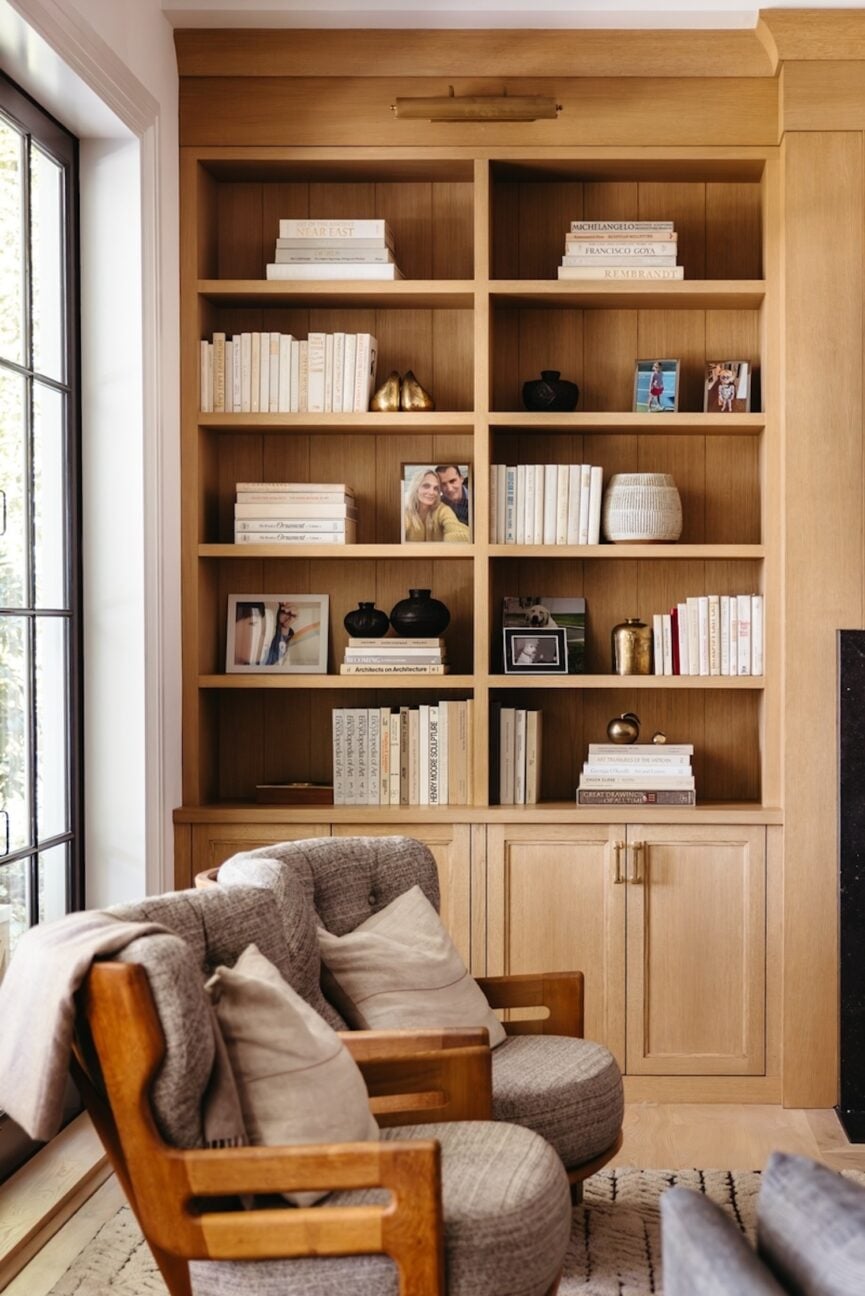
When square footage is limited, the walls become your greatest asset. One of the most effective small living room ideas is simply to think vertically. Tall bookshelves draw the eye upward and create storage without expanding the footprint. Art hung slightly higher elongates the wall. Drapery mounted closer to the ceiling subtly stretches the room.
Youngblood often reminds clients that a small living room still has volume—and that volume shouldn’t go unused. Vertical storage, layered lighting, and elevated shelving all help maximize space without crowding the floor. “It’s about using every inch thoughtfully,” she notes.
Layered lighting is especially important. A combination of overhead fixtures, floor lamps, and table lamps adds dimension and warmth. When light exists at multiple heights, the room feels dynamic rather than flat.
In a small living room, thinking upward changes everything. The space may be compact, but it doesn’t have to feel confined.
Edit With Intention
When I think back to that first apartment—the one that felt impossibly small—I realize the shift wasn’t about square footage. It was about perspective. A small living room doesn’t need to be “fixed.” It needs to be understood.
Editing becomes less about removing and more about refining. Choosing pieces you truly love. Leaving space where space is needed. Letting the room support the way you actually live, instead of forcing it to match a layout you’ve seen elsewhere.
The best small living room ideas don’t try to disguise the size of the space. They honor it, and when you work with the room instead of against it, something unexpected happens.
The walls stop closing in. The room softens. And what once felt limiting begins to feel entirely your own.
This post was last updated on February 27, 2026, to include new insights.