 JuicyTalk
Learning how to get ketchup out of clothes is one of those skills you pick up the hard way, usually at a summer barbecue, usually on something you care about, always at the worst possible moment.
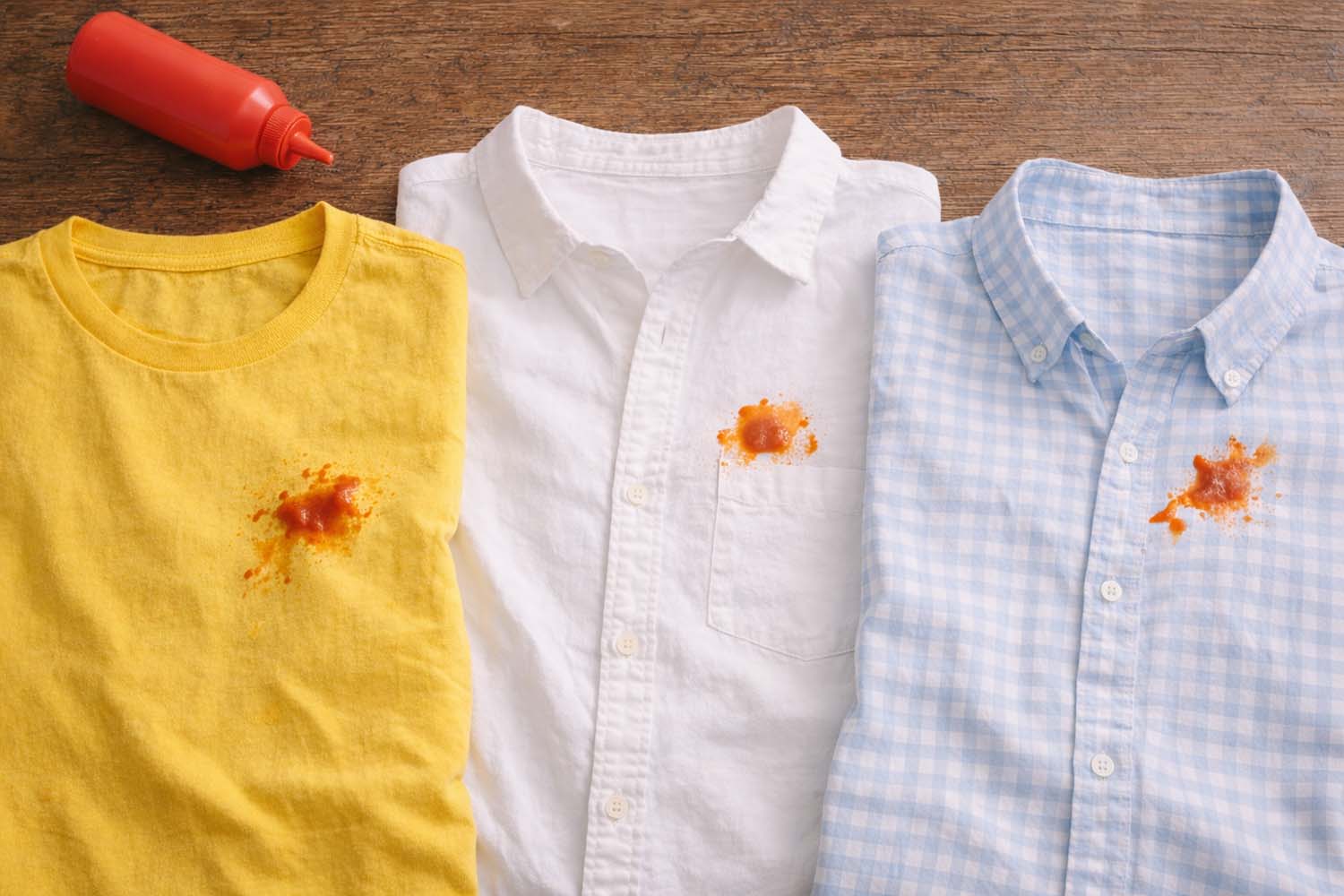
Mine was a July Fourth burger. One squeeze too many, a broken bottle seal, and suddenly my white Oxford had a bright red stripe across the chest. I grabbed a napkin and rubbed. That was mistake number one.
Here’s the thing about ketchup stains that most guides don’t bother to explain: ketchup isn’t just watery tomato sauce. It behaves differently on fabric, sets faster, and has one component that most tomato-based stains don’t have. If you treat it the same way you’d treat marinara, you’ll get worse results. I know because I tested both, deliberately, on the same fabrics, side by side.
I ran the same systematic testing I used for tomato sauce and red wine: stained fresh shirts, let some dry, put some through the dryer, tested every method I could find, and ranked them honestly.
Here’s what I learned.
Quick Answer: How to Get Ketchup Out of Clothes: Scrape off the excess. Don’t rub. Flush cold water through the back of the fabric immediately. Apply dish soap directly to the stain and work it in gently for two minutes. Soak in a white vinegar and cold water solution for 20 to 30 minutes. For white fabrics, follow with hydrogen peroxide and dish soap. Launder in cold water. Never put it in the dryer until the stain is completely gone. Ketchup’s sugar content means heat sets it fast and hard.
Why Ketchup Stains Differently Than Tomato Sauce
Most people assume ketchup and tomato sauce are essentially the same stain. They share the same lycopene pigment, the same red color, the same basic tomato base. But ketchup has two ingredients that change how it behaves on fabric, and understanding them changes how you treat it.
Sugar: Ketchup contains significantly more sugar than tomato sauce. Most commercial ketchups are around 25% sugar by weight. A single tablespoon of Heinz contains 4 grams of sugar, which adds up quickly when a real spill hits fabric. Sugar is hygroscopic, meaning it pulls moisture from the air and bonds tightly with fabric fibers. More critically, sugar caramelizes when exposed to heat, which means a ketchup stain that goes through a warm or hot wash, or any time in the dryer before it’s fully removed, can turn brown and bond to fabric at a molecular level. This is why speed matters more with ketchup than almost any other condiment stain.
Vinegar: Ketchup already contains acetic acid, the same compound as white vinegar. This slightly aids the breakdown of the lycopene pigment, but it also means the stain’s pH is already working against you, accelerating how quickly the pigment cures into natural fibers like cotton and linen.
Lycopene (the red pigment): Shared with tomato sauce. Fat-soluble, water-resistant, requires a surfactant like dish soap or an oxidizer like hydrogen peroxide to break the bond with fabric fibers. The same orange ghost stain you see after washing tomato sauce is the same residual lycopene you’ll get with ketchup if you don’t treat it properly.
According to the American Cleaning Institute, ketchup and tomato-based stains should be treated by running cold water through the back of the stain as quickly as possible to force it back out through the fabric, not from the front, which drives it deeper. Understanding the sugar and lycopene chemistry is what makes that advice make sense.
The practical upshot: ketchup needs faster action and is less forgiving of heat than tomato sauce. Everything else carries over directly: the scrape-first rule, the cold water flush, the method hierarchy.
Scrape First: The Golden Rule for Every Ketchup Stain
This is where most people go wrong. Ketchup lands on your shirt and the instinct is to grab whatever’s nearby and wipe. Don’t. Wiping spreads the stain sideways and pushes it deeper into the fabric weave, turning a manageable spot into a much larger problem.
Instead, scrape. Use a spoon, the dull edge of a butter knife, or the edge of a credit card. Lift the ketchup off the surface rather than pressing it in. Work from the outside edge of the stain toward the center so you’re not pushing it outward as you go.
Then run cold water through the back of the stain, not the front. Pushing water from behind forces the ketchup back out through the fibers the same way it entered. This is the single most effective physical step you can take before applying any treatment.
My time test: I stained five shirts and treated them at 2 minutes, 10 minutes, 30 minutes, 2 hours, and 6 hours. The 2-minute shirt came out completely clean with dish soap alone. The 6-hour shirt still had a faint pink-orange tinge after three full treatment cycles. With ketchup specifically, every minute counts more than with tomato sauce because of that sugar content.
How to Get Ketchup Out of Clothes: 5 Methods Tested and Ranked
⚠ Important: Don’t Mix OxiClean and VinegarIf you’re using OxiClean, don’t use white vinegar in the same treatment session. OxiClean breaks down into hydrogen peroxide on contact with water. Combining hydrogen peroxide with vinegar creates peracetic acid, which can irritate skin and eyes and may damage fabric fibers. Use one or the other per session. If you want to try vinegar after an OxiClean soak, rinse the garment completely first, launder, and treat with vinegar only if the stain persists in a separate session.
Pro Tip for Tough Stains: For particularly stubborn stains on white fabrics, oxygen bleach powder added to a soak can break through what the hydrogen peroxide treatment loosened. And an enzyme-based stain remover applied before washing gives the treatment one more pass at the organic compounds in the ketchup before they hit the machine.
How to Get Dried Ketchup Out of Clothes
Dried ketchup is harder to remove than fresh but not impossible. The sugar content is what changes the equation. Dried ketchup has essentially become a sticky, partially caramelized film on top of the fabric, and you need to rehydrate it before any treatment will work.
Step 1: Scrape off the dried crust carefully with a spoon or butter knife. Lift rather than press down. Dried ketchup is brittle and will flake off if you’re patient.
Step 2: Soak the stained area in cold water for 15 to 20 minutes to rehydrate the stain fully.
Step 3: Apply dish soap and work it in firmly. You can be more aggressive with a dried stain than a fresh one. Let it sit 10 minutes, then rinse.
Step 4: Apply your main treatment: hydrogen peroxide and dish soap for white fabrics, or a one to three hour OxiClean soak for colors. Extend your soak time compared to a fresh stain.
Step 5: Be prepared to repeat the full cycle two to three times. Dried ketchup rarely comes out in one pass.
For stains that have been sitting more than a day, I’ve had the best results doing an initial dish soap pass, letting it air dry, then going back in with the hydrogen peroxide treatment on white fabrics or a longer OxiClean soak on colors. The two-pass approach consistently outperforms a single aggressive treatment on old stains.
What If It Already Went Through the Dryer?
This is the hardest scenario and the one most people quietly give up on. The dryer’s heat has caramelized the ketchup’s sugar content and set the lycopene pigment more deeply into the fabric. You’re dealing with a fundamentally different stain chemistry than what you started with.
The honest truth: heat-set ketchup stains have about a 60% removal rate in my testing, lower than heat-set tomato sauce because of the sugar component. But it’s worth trying before you write the garment off.
Step 1: Scrape off any surface residue. Apply dish soap and work it in firmly for three to five minutes, longer than you’d spend on a fresh stain.
Step 2: Soak the entire garment in an OxiClean solution overnight, eight hours minimum. The extended soak time gives the oxygen ions maximum time to work through the set stain.
Step 3: For white fabrics, apply the hydrogen peroxide and dish soap mixture after the soak, before washing. This second oxidation pass often breaks through what the OxiClean loosened.
Step 4: Air dry only. Never back in the dryer until the stain is definitively gone. For heat-set stains, expect two to four treatment rounds.
If you’re still seeing a ghost stain on white fabric after all of this, hang the damp garment in direct sunlight for two to four hours. UV light acts as a natural oxidizer and can clear residual lycopene that chemical treatments have already weakened.
How to Get Ketchup Out of White Clothes
White fabrics are both the easiest and the most unforgiving ketchup scenario. Easiest because you have the full arsenal available: hydrogen peroxide, extended soaks, and sunlight. Most unforgiving because any residual pink or orange tinge is immediately obvious against white.
The hydrogen peroxide and dish soap combination (3 parts peroxide, 1 part blue Dawn) is your primary weapon. Apply it as soon as possible after the initial cold water flush and dish soap pre-treatment. If you catch the stain within two minutes, one treatment is often all you need.
For a stain that’s been sitting longer, apply the hydrogen peroxide mixture and extend the soak to 45 minutes before rinsing and laundering. Check carefully in good light before drying, as the stain may look gone when wet but reveal a faint ghost once dry.
For ghost stains that survive washing, hang the garment damp in direct sunlight for two to four hours. UV light acts as a natural oxidizer and is remarkably effective at breaking down residual lycopene that chemical treatments have already weakened. This is the same trick that works on tomato sauce, and it works for the same reason: lycopene is sensitive to UV oxidation. It only works while the fabric is still damp, so don’t let it dry first.
One thing to avoid on white cotton: chlorine bleach. It can yellow white fabric over time and is far more aggressive than the stain requires. Hydrogen peroxide gets there without the risk.
How to Remove Ketchup Stains by Fabric Type
The method matters, but the fabric matters just as much. Here’s what I found works best per fabric:
Cotton and cotton blends: The most forgiving. Handles hydrogen peroxide, OxiClean, and vinegar soaks equally well. Multiple treatment cycles won’t damage the fabric, so you can be persistent.
See also

Jeans and denim: Denim’s tight weave keeps ketchup closer to the surface than open-weave fabrics, which actually helps. Dish soap and a vinegar soak usually handles fresh stains. Avoid hot water, which fades denim unevenly on top of setting the stain.
Linen: Linen’s open weave allows ketchup to penetrate quickly. Act immediately. Extended OxiClean soaks (three to five hours) work best for colored linen. Hydrogen peroxide and sunlight for white linen.
Polyester and synthetics: Synthetic fibers don’t absorb liquid as readily, so ketchup tends to sit closer to the surface. Dish soap alone often handles a fresh stain on polyester. Add a vinegar soak for anything that resists.
Silk: Avoid hydrogen peroxide entirely, as it can permanently damage silk fibers. Don’t scrub. Blot as much as possible, then take it to a dry cleaner. If treating at home: cold water with a very small amount of gentle detergent (like Woolite), soak no more than five minutes, rinse very gently.
Wool and cashmere: Hand wash only in cold water with a specialty wool detergent. No agitation. For anything valuable, professional cleaning is the safest call. Never put wool in the dryer.
Ketchup vs. Other Condiment Stains: What Changes
If you’ve landed here after a broader condiment disaster, here’s how ketchup compares to its table companions. The chemistry differences are real and change what you reach for first.
🟡 Mustard: The hardest condiment stain to remove, by a significant margin. Mustard contains turmeric, which is literally a fabric dye that has been used for centuries. Once mustard dries and sets, especially through heat, it can be near-impossible to remove completely. Treat it even faster than ketchup, and use hydrogen peroxide on white fabrics immediately. Don’t wait for the dish soap pass first.
🟤 BBQ Sauce: Ketchup’s more complicated cousin. BBQ sauce shares the lycopene and sugar components but adds a smoke and molasses layer that makes it stickier and harder to lift. The double stain (tomato pigment plus caramelized sugars) means an enzyme cleaner or OxiClean soak is almost always necessary. Dish soap alone won’t get there.
🔴 Hot Sauce: Easier than ketchup overall. Hot sauce is mostly capsaicin and vinegar with minimal oil and less lycopene, which means it responds well to dish soap and a vinegar soak. The main variable is artificial food coloring, which some hot sauces contain. If the sauce is an unnatural red or orange, treat it as a dye stain and reach for OxiClean.
What Definitely Doesn’t Work
Warning: Never Do These Things: According to Consumer Reports and the American Cleaning Institute, these are the most common mistakes that turn a treatable ketchup stain into a permanent one:
- Hot water at any stage: Heat caramelizes the sugar in ketchup and sets the lycopene pigment. Cold water only, from the first rinse through the final wash.
- Rubbing the stain: Spreads it sideways and pushes it deeper into the fiber weave. Scrape, then blot only.
- Dryer before the stain is gone: The single most common way a treatable ketchup stain becomes a permanent one. Check in good light before drying, every time.
- Chlorine bleach on colors: Will pull the stain and your garment’s color simultaneously. Use oxygen bleach like OxiClean instead.
- Waiting to treat it: More so than most food stains, ketchup punishes delay. Every 15 minutes matters, especially in warm conditions where the sugar sets faster.
My Step-by-Step Emergency Protocol
Based on everything I tested, here’s the exact sequence I follow now. I keep a version of this taped inside my laundry room cabinet alongside the one for tomato sauce and red wine.
Step 1: Scrape off excess ketchup with a spoon or card edge. Don’t rub. If you’re away from home, blot gently with a napkin from the outside edge inward.
Step 2: Run cold water through the back of the stain immediately. This is the most important physical step and the one most people skip when they’re flustered.
Step 3: Apply blue Dawn directly to the stain, work in gently with fingertips for two minutes. Rinse with cold water.
Step 4: White fabric gets the hydrogen peroxide and dish soap mixture (3:1 ratio), left to sit 20 to 30 minutes. Colored fabric gets a white vinegar soak (one part vinegar, two parts cold water) for 20 to 30 minutes, or an OxiClean soak if the stain has been sitting longer than 30 minutes.
Step 5: Launder in cold water with your regular detergent.
Step 6: Check the stain in good light with the fabric stretched flat before drying. Any trace remaining? Repeat Steps 4 and 5 before it goes anywhere near the dryer.
The Stain-Fighting Kit Worth Keeping Stocked
The same kit I assembled after my red wine testing handles ketchup, tomato sauce, and pretty much every other food stain I’ve thrown at it. Here’s what’s in it:
- Hydrogen peroxide (3%, standard drugstore bottle)
- Blue Dawn dish soap (small dedicated bottle for stain use)
- White vinegar (in a spray bottle for easy targeted application)
- OxiClean Versatile Stain Remover (for colored fabric soaks and stubborn stains)
- Enzyme-based stain remover spray (for on-the-go treatment and older stains)
- Clean white cloths or old t-shirt scraps for blotting
- A dull-edged spatula or old credit card for scraping
Total cost: under $20. If you’re looking to expand your cleaning approach with natural, non-toxic solutions around the home, this kit doubles as a starting point for that too.
Frequently Asked Questions
Does ketchup stain permanently?
Not if you treat it quickly. Fresh ketchup stains caught within the first few minutes are very removable. The risk of permanence increases significantly with time, heat, and especially if the garment goes through the dryer before the stain is fully gone. Ketchup’s sugar content makes it more heat-sensitive than most food stains, so the dryer warning is especially important here.
Can I get ketchup out after it’s dried?
Yes, often. Rehydrate the dried stain with a cold water soak for 15 to 20 minutes before applying any treatment. Don’t try to apply soap or vinegar to a completely dry, crusted stain. It won’t penetrate properly. Once rehydrated, follow the dried stain protocol above. Expect two to three treatment rounds.
Why does ketchup leave an orange stain after washing?
That orange residue is lycopene, the fat-soluble pigment that gives ketchup its red color. Regular washing won’t remove it because laundry detergent alone can’t break down a fat-soluble compound bonded to fabric fibers. You need an oxidizer to target the lycopene specifically: hydrogen peroxide for white fabrics, OxiClean or an enzyme remover for colors.
Is it safe to use hydrogen peroxide on colored clothes?
No. Hydrogen peroxide has a bleaching effect and will permanently lighten or spot colored fabrics. For anything that isn’t white or near-white, use the white vinegar soak or an OxiClean soak instead. If you’re unsure whether a fabric is colorfast, test a hidden area first.
Does the treatment change for different types of ketchup?
Slightly. Low-sugar or no-sugar ketchups set a little more slowly, so you have a slightly larger time window. Organic ketchups without added vinegar may respond even better to the vinegar soak since there’s less acid already in the stain. Spicy or flavored ketchups sometimes contain oil-based additives, in which case a more aggressive dish soap pre-treatment is worth the extra minute.
What about ketchup on jeans or dark clothes?
Dark clothes are actually somewhat forgiving because the stain is less visible. Treat with dish soap first, then a white vinegar soak. Avoid hydrogen peroxide entirely. OxiClean is labeled as color-safe but test a hidden seam first on dark fabrics. The main risk with dark clothing is that repeated soaking can slightly fade the fabric over time. Act fast so you need fewer treatment rounds.
Final Thoughts
Ketchup stains feel urgent because they are urgent. The sugar content means the window between “easily treatable” and “this is going to take real effort” is shorter than with most food stains. But the chemistry isn’t complicated once you understand it, and the treatment sequence is straightforward.
Scrape first. Cold water always. Dish soap for the surface, vinegar or OxiClean for colors, hydrogen peroxide for whites. Check before you dry. That sequence handles the overwhelming majority of ketchup stains completely.
The bigger lesson from testing: the method matters less than the timing. I got better results treating a five-minute-old stain with dish soap alone than I did treating a two-hour-old stain with hydrogen peroxide. Act fast and you’ll almost never lose a shirt to ketchup.
Keep that kit stocked. It takes five minutes to put together and has already saved more shirts in my house than I’d like to admit.
Have a method that worked, or a stain that beat everything you tried? Drop it in the comments. I’m always looking to update these guides.
Better Living uses affiliate links. If you make a purchase through them, we may receive a small commission (for which we are deeply grateful) at no cost to you.


