 JuicyTalk
We may receive a portion of sales if you purchase a product through a link in this article.
In my ideal world, I’d have a full vegetable garden—raised beds overflowing with tomatoes, greens, and herbs that I could wander out and snip from while cooking dinner. But right now, I live in an apartment in Portland with very little outdoor space, which means my gardening ambitions have had to get a little more creative.
Luckily, herbs are incredibly forgiving. You don’t need a backyard—or even much space at all—to grow them. A single planter on a balcony, a few pots by the kitchen window, or a small corner of a garden bed can produce more fresh herbs than you’ll know what to do with. And once you start cooking with herbs you’ve grown yourself, it’s hard to go back. A handful of basil tossed into pasta, mint tucked into sparkling water, or dill scattered over roasted vegetables somehow makes everyday meals feel a little more special.
If you’ve been curious about herbs to grow at home, these are five of the easiest to start with—whether you’re planting them in a backyard garden, a patio planter, or a sunny kitchen window.
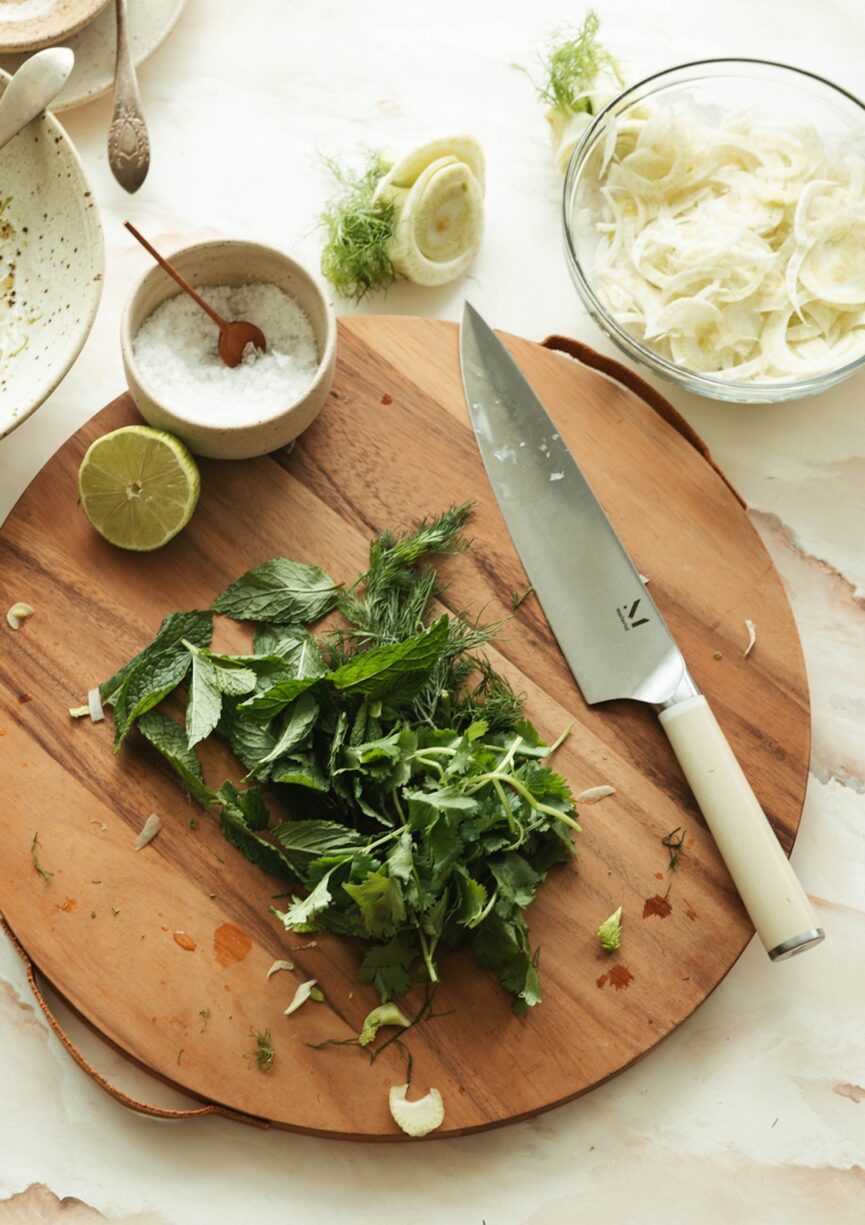
The Best Herbs to Grow at Home—Even in a Small Space
If you’re starting an herb garden at home, the goal is simple: choose herbs that are easy to grow and that you’ll actually use in your cooking. These five herbs are incredibly versatile, forgiving for beginners, and adaptable whether you’re planting a garden bed, filling a planter, or growing herbs indoors.
Basil
If there’s one herb that makes summer cooking feel complete, it’s basil. It thrives in warm weather and grows quickly, which means you can harvest it often throughout the season.
Best for: Garden beds or sunny outdoor planters
How to use it: Basil is best enjoyed fresh. Think pesto, caprese salads, sandwiches, and pasta tossed with olive oil and tomatoes.
What to make:
Mint
Mint is one of those herbs that almost grows too well. In a garden bed it will happily spread anywhere it can reach, which is why many gardeners prefer growing it in containers. The upside? Once it gets going, you’ll have more mint than you know what to do with.
Best for: Outdoor planters or pots
How to use it: Mint instantly brightens drinks and salads. I love adding it to sparkling water with citrus, tossing it into grain bowls, or using it in sauces like tzatziki.
What to make:
Rosemary
Rosemary is one of the most resilient herbs you can grow. It’s woody and shrub-like, which means once it’s established it can last for years with very little maintenance.
Best for: Backyard gardens or large outdoor pots
How to use it: Rosemary shines when cooked. Add it to roasted vegetables, marinades, or infuse it into olive oil or honey.
What to make:
Cilantro
Cilantro is a little polarizing—some people love it, others think it tastes like soap (it’s not their fault… genetics play a role)—but if you’re in the first camp, it’s one of the most useful herbs to grow at home.
Best for: Small garden beds or outdoor planters
How to use it: Cilantro is best added fresh at the end of cooking. Sprinkle it over tacos, grain bowls, soups, or hummus.
What to make:
Dill
Dill feels very spring to me. It’s light, fresh, and pairs beautifully with vegetables, fish, and creamy sauces.
Best for: Garden beds or sunny kitchen windows
How to use it: Chop dill into yogurt sauces, scatter it over roasted potatoes, or add it to salads and seafood dishes.
What to make:
How to Grow Herbs at Home (No Matter Your Space)
If you have a garden: Plant herbs along the edges of raised beds or alongside vegetables. Most herbs love full sun and well-draining soil.
If you have a small outdoor space: A single planter can support multiple herbs. Basil, mint, and cilantro are especially happy growing in pots.
If you’re growing herbs indoors: Choose a sunny window and pots with drainage holes. Basil, mint, and dill tend to adapt well to indoor growing.
The Takeaway
Growing herbs at home is one of the easiest ways to bring more freshness into everyday cooking. Even a few small plants can completely change the way you cook—suddenly you’re reaching for fresh basil, snipping mint for drinks, or scattering dill over dinner.
Start with one or two herbs you use most often. Once you see how easy they are to grow, it’s hard not to keep adding more.
This post was last updated on March 21, 2026, to include new insights.
