JuicyTalk
There’s no shortage of great sci-fi shows on Apple TV. From the unsettling corporate nightmare of Severance to the dystopian intrigue of Silo, Apple’s science fiction output covers nearly every conceivable subgenre without ever seeming to dip in quality. That consistency makes the fact that Foundation stands out among the platform’s sci-fi lineup all the more impressive.
Adapted from the legendary novels by Isaac Asimov, Foundation tracks the fall and rebirth of galactic civilization across centuries. It mixes political drama, cosmic spectacle, and speculative philosophy into a sprawling narrative. In scale and ambition, it’s arguably the most daring science fiction show Apple has attempted since entering the original-content arena.
With three seasons and counting, Foundation has delivered premium sci-fi from its 2021 debut onward. Few current series, even on the sci-fi-heavy Apple TV, match its willingness to tackle massive timelines and dense concepts. Its success is even more remarkable considering how notoriously difficult its source material was to translate to screen, yet Foundation takes that risk and complexity in its stride.
Foundation Has Been A Flawless Sci-Fi Show So Far
Big Budgets And Bold Ideas Keep The Series Operating At A Stellar Level
By the time its third season arrived in July 2025, Foundation had already proven itself a cornerstone of Apple’s sci-fi lineup. The renewal for season 4 that September was welcome but, in some ways, unsurprising. Spending roughly $10 million per episode (via CBR), the streamer clearly views the series as prestige sci-fi worth sustaining.
That investment is visible in every frame of Foundation. The show delivers cinematic visuals rarely matched on TV, from sprawling planetary cities to desolate frontier worlds. Instead of relying on spectacle alone, it uses that scale to support layered storytelling. Its galaxy feels lived-in, complex, and constantly in motion.
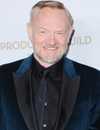
The performances of the Foundation cast also go a long way toward it being such an incredible-yet-accessible sci-fi viewing experience. Hari Seldon (Jared Harris) immediately grounds the premise through calm intellectual authority, making complex concepts like psychohistory comprehensible. Gaal Dornick (Lou Llobell) provides the audience’s perspective on vast historical stakes, ensuring human vulnerability never disappears behind conceptual grandeur.
Meanwhile, the Cleon Dynasty storyline introduces a fascinating dynamic through Brother Day (Lee Pace), whose presence emphasizes power’s fragility despite apparent permanence. These characters are all integral to one of Foundation’s greatest strengths. The show balances abstract theory with personal conflict like no other sci-fi series, letting audiences engage with ideas through relatable arcs.
Structurally, Foundation excels at weaving multiple timelines without sacrificing clarity. Rather than treating chronology as a puzzle, it emphasizes thematic continuity. Questions about legacy, identity, and destiny connect disparate plotlines, creating cohesion where lesser shows might splinter.
Like many of the best Apple TV sci-fi shows, Foundation also refuses to talk down to its audience. The writing embraces science fiction’s intellectual tradition, and the show is all series is all the better for it. Concepts like mathematical prophecy or societal entropy aren’t watered down. Instead, they’re dramatized through consequences and ethical dilemmas. This approach preserves depth while ensuring accessibility, a delicate balance that Foundation consistently maintains.
Ultimately, Foundation succeeds at delivering 10/10 sci-fi in every episode because its ambitions are matched by execution. Visual polish, well-rounded characters, and high end concepts combine into something rare: a blockbuster sci-fi epic that never feels hollow. Apple’s confidence in continuing the story feels entirely justified by what Foundation has already delivered.
Apple TV Took A Risky Approach With Foundation
Transforming Dense Novels Into Action Driven Television Was A Massive Gamble

Adapting Asimov’s Foundation novels was never a safe creative bet. The books span millennia, frequently abandon characters, and prioritize dialogue over action. Translating that structure to episodic television required reinvention. Rather than direct replication, Apple embraced transformation as the guiding philosophy when making Foundation.
One of the most significant changes involved addressing the timeline’s scale. The Genetic Dynasty concept in Apple’s Foundation adaptation reimagines imperial continuity through cloned rulers, allowing Lee Pace’s Brother Day and his counterparts to function as narrative anchors across centuries. This innovation gives viewers emotional familiarity amid the historical leaps in Asimov’s work.
Character expansion was another necessity when adapting Foundation. For example, Gaal Dornick, a minor figure in the novels, becomes central to the series. Her arc provides continuity and stakes that serialized TV demands, offering a protagonist audiences can follow even as Foundation’s settings and eras shift dramatically.
The Foundation TV show also leans into physical conflict and spectacle more than the source material. Asimov’s books frequently depict decisive events off-page, focusing on aftermath and discussion. Apple’s show instead dramatizes crises directly, staging battles and escapes that translate philosophical tension into cinematic immediacy.
Another key obstacle Apple had to overcome was streamlining Asimov’s original narrative. Separate literary storylines had to be merged or rearranged to sustain momentum. Religious and political elements receive heightened emphasis, connecting plot threads into ongoing arcs rather than isolated episodes. This restructuring reinforced engagement without discarding thematic foundations, but it wasn’t easy.
The creative risks with Foundation were matched by financial ones. Funding elaborate sets, visual effects, and expansive casting demanded substantial resources before any audience response existed. Investing heavily in such an untested adaptation was bold, especially given the intellectual density involved.
All in all, the success of Foundation was never guaranteed. Far from it. Dense concepts can alienate casual viewers, while major deviations might disappoint longtime readers. Apple had to balance accessibility with respect for legacy, a challenge that could easily have resulted in lukewarm reception or niche appeal.
Instead, the gamble paid off. By embracing reinterpretation over strict fidelity, Foundation achieved something distinctive. It demonstrates that respecting spirit over letter can preserve essence while ensuring viability on screen. The resulting series stands as proof that calculated risk can yield lasting rewards.

- Release Date
-
September 23, 2021
- Network
-
Apple TV+
- Showrunner
-
David S. Goyer
- Directors
-
Alex Graves, Roxann Dawson, Jennifer Phang, Mark Tonderai, Andrew Bernstein
- Writers
-
Jane Espenson, Leigh Dana Jackson, Liz Phang, Eric Carrasco, David Kob, Addie Manis, Marcus Gardley, Lauren Bello, Olivia Purnell