 JuicyTalk
In the late 1980s and early ’90s, three pop culture icons all wanted to adapt one of the greatest newspaper comic strips of all time for the screen. Steven Spielberg, George Lucas, and Muppets creator Jim Henson each kicked the tires on the same project, and each would have been a perfect fit in their own way.
Yet despite their respective resumes, the notoriously branding-shy creator of the comic turned them all down. To this day, the beloved cartoon has never been turned into a film, and it might never be. If it is ever adapted, though, the movie would have to be adapted by a filmmaker on the level of Denis Villeneuve, or Paul Thomas Anderson, to live up to the Spielberg, or Lucas, or Henson version that never materialized.
Which comic strip were these three iconic creators so charmed by? It wasn’t Garfield, and it wasn’t Gary Larson’s The Far Side. It was Calvin and Hobbes, the madcap tale of a boy and his (debatably imaginary) best friend, a tiger.
The comic’s creator, Bill Watterson, wasn’t interested. Watterson refused to sell the film rights, and reportedly declined to even meet with the Hollywood legends who wanted to bring his work to the big screen. Decades later, this stands out as a massive pop culture “What If?”
Calvin And Hobbes Creator Bill Watterson Said No To Adaptations From Three Of The 20th Century’s Greatest Filmmakers
Jim Henson is the famous creator who seems like the most natural fit for a Calvin and Hobbes adaptation. There is a lot of overlap between Henson and Watterson’s artistic sensibilities. That’s evident not just with The Muppets, but also everything from Fraggle Rock to his film work, like The Dark Crystal and Labyrinth. (Henson would have nailed the spirit of strips where Calvin’s imagination goes into full-on fantasy mode.)
Yet Henson passed away in 1990, right around the time Watterson was being courted to sell the film rights to Calvin and Hobbes, meaning he wouldn’t have worked on the project long, even if Watterson had greenlit it. With Steven Spielberg and George Lucas, it is a different story. With Spielberg and Lucas, the question is how Calvin and Hobbes would have fit into their filmographies, and how it might have changed the trajectories of their careers.
Spielberg and Lucas expressed interest in Calvin and Hobbes around when the third Indiana Jones movie, The Last Crusade, was coming out. That was in 1989. If either or both of them acquire the rights to Calvin and Hobbes at this time, and make it their next project, it creates a ripple effect in pop culture history that is worth considering in a little more depth.
The What If: George Lucas’ Career If He Had Made Calvin And Hobbes In The ’90s

Let’s start with George Lucas. The Star Wars creator started seriously working on the Prequel Trilogy around 1993, at the same time he was prepping the re-release of the Original Trilogy for its ’97 theatrical run. But what if he had spent 1990 to ’93 making a Calvin and Hobbes movie. What if that had been his first directorial effort since Star Wars, rather than The Phantom Menace? What if Calvin and Hobbes is a huge success and Lucas wants to make another one? Does that delay the re-release? Does it push back the Prequels?
Yes, there’s an alternate reality where The Phantom Menace doesn’t come out until like 2002 (when Attack of the Clones was released) because George Lucas was busy making Calvin and Hobbes movies in the ’90s. Or, perhaps, Phantom Menace comes out in ’99, but Lucas taps someone else to direct it. (That’s a whole other counterfactual can of worms we don’t have time to get into here.)
The What If: How Steven Spielberg’s Filmography Might Look Different If He’d Directed Calvin And Hobbes
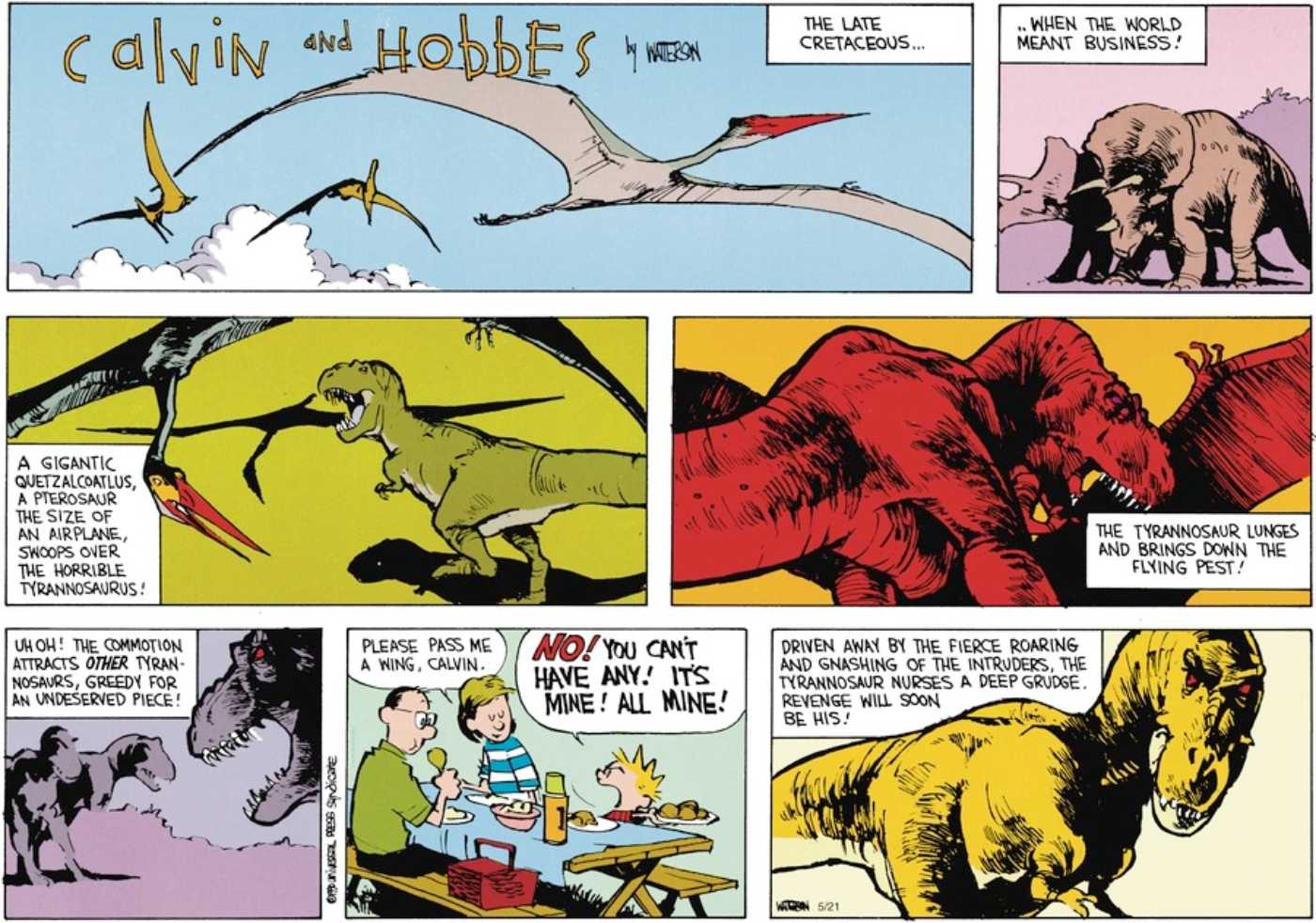
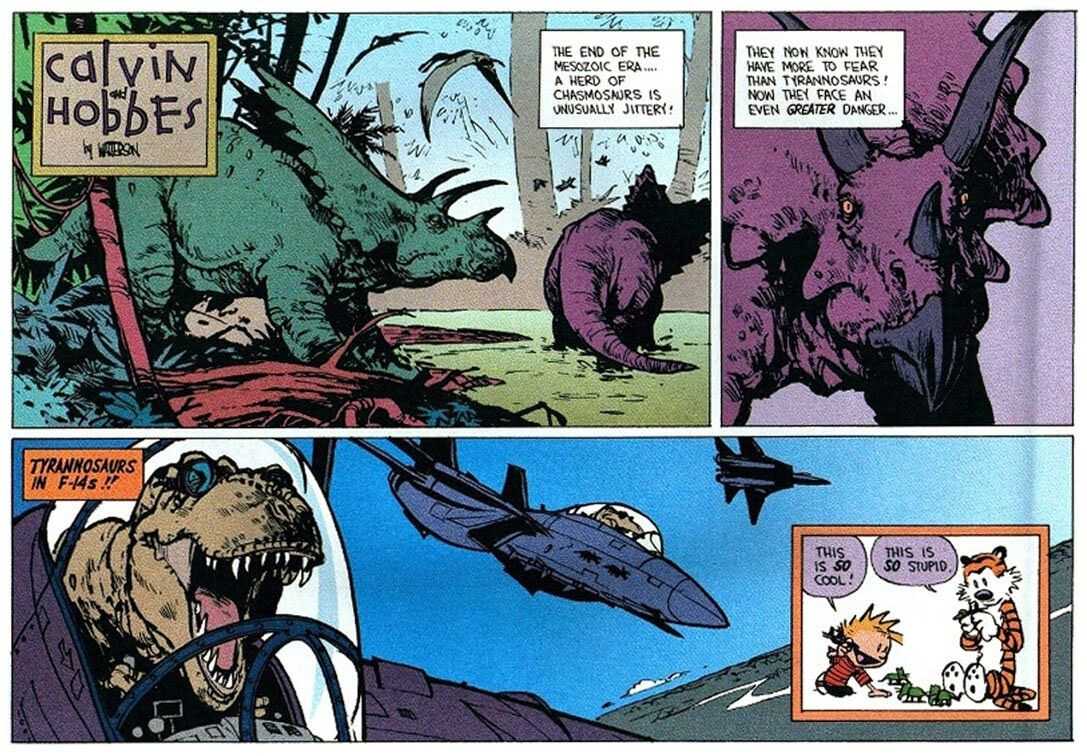
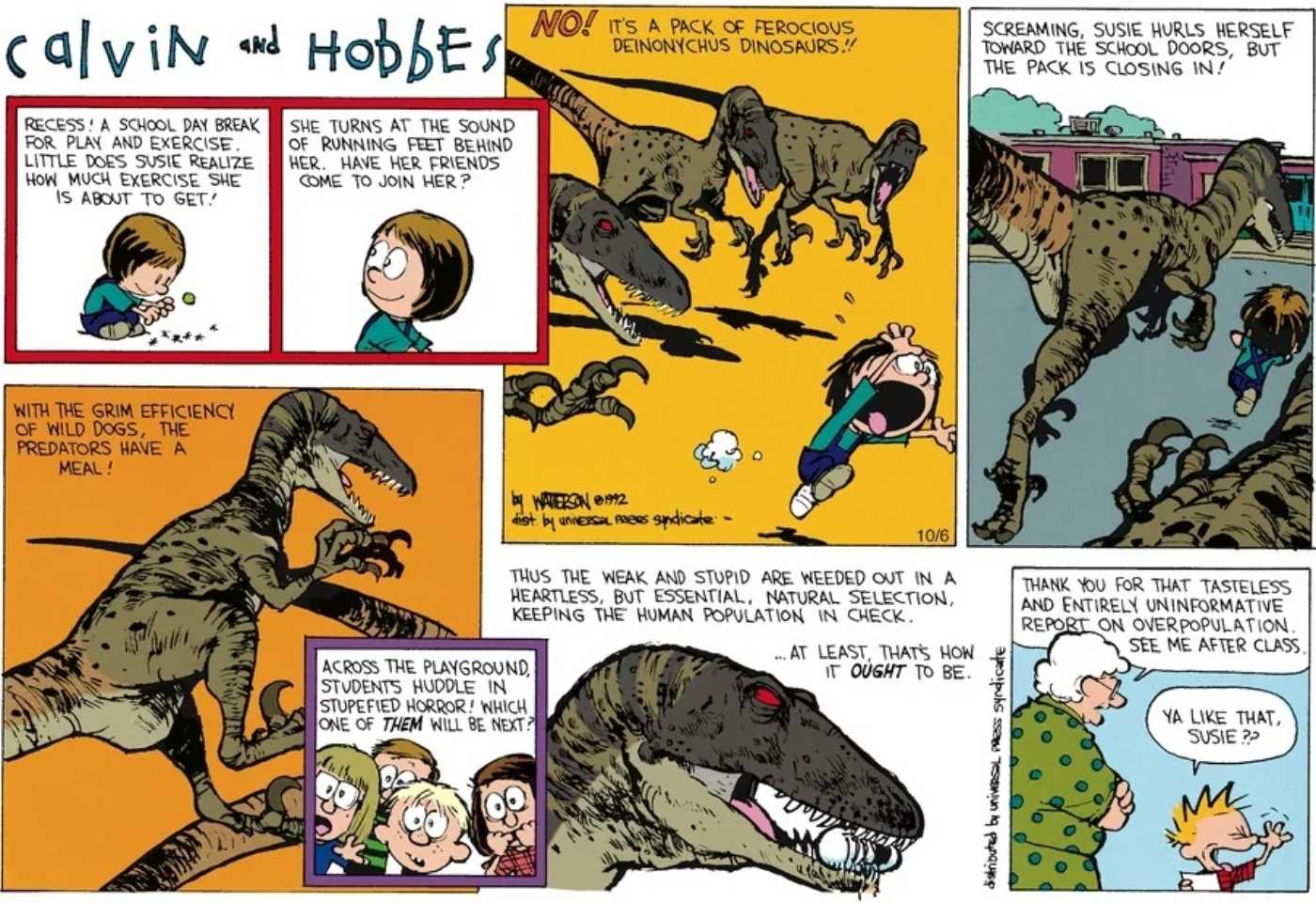
With Steven Spielberg, the “What If?” is a bit trickier. Start by imagining a world in which Spielberg makes Calvin and Hobbes instead of Hook. That’s easy enough. But then it gets complicated. 1993 was the year Spielberg released both Jurassic Park and Schindler’s List, dominating the box office and the awards circuit to an unparalleled degree, at least up to that point.
It is hard to fathom Spielberg giving up either of those projects. But maybe they are delayed. Maybe Calvin and Hobbes comes out in 1993, Jurassic Park in ’94, and Schindler’s List in ’95. Maybe Spielberg doesn’t make The Lost World, and has to pass on Amistad to make Saving Private Ryan, which comes out in 1999 instead of ’98, and beats American Beauty for Best Picture, instead of losing to Shakespeare in Love.
You can keep this thought experiment going through A.I., Minority Report, Catch Me if You Can, and the rest of Steven Spielberg’s filmography right up through Disclosure Day. There are countless variables to consider. George Lucas and/or Steven Spielberg could have bought the rights to Calvin and Hobbes and then produced, not directed, for example.
It’s fun, but it also illustrates a point: Lucas and Spielberg were seriously interested in Calvin and Hobbes at a critical juncture in both of their careers. And Bill Watterson was serious about sticking to his guns: there would be no Calvin and Hobbes movie, no matter who wanted to make it.
The Lack Of A Calvin And Hobbes Adaptation Hasn’t Stopped It From Being A Pop Culture Institution

The story goes that people from Jim Henson, George Lucas, and Steven Spielberg’s production companies all independently reached out to Bill Watterson, through his editor, to inquire about the film rights to Calvin and Hobbes. This was at the time when Calvin and Hobbes was skyrocketing in popularity. Whether Bill Watterson was thrilled about it or not.
Watterson was never comfortable with fame, nor was he willing to license his work, his characters, to maximize their value. (Something even Far Side creator Gary Larson was willing to do to some extent.) He declined to even meet about selling the rights to Calvin and Hobbes. When you think about it, though, this makes the legacy of Calvin and Hobbes that much more remarkable.
Even The Far Side had a TV special, albeit briefly. Calvin and Hobbes ran just just ten years, far shorter than most of its peers on the “Best Comic Strip Ever” shortlist. It never made official merchandise. (Those infamous Calvin stickers are all bootlegs.) It has never been adapted into a TV show or movie. And yet Calvin and Hobbes is as beloved today as it was 35+ years ago, and it didn’t need Steven Spielberg, George Lucas, or Jim Henson to get that way.
Calvin and Hobbes fans, whose adaptation would you most wanted to have seen?
- Writer
-
Bill Watterson
- Colorist
-
Bill Watterson
- Publisher
-
Andrews McMeel Publishing
