 JuicyTalk
Peanuts is a beloved childhood comic for many, yet it features strips that tackle mature themes and that might leave adult readers wondering how Charles M. Schulz managed to include them as punchlines. Likewise, Peanuts develops storylines that span multiple strips and extend over weeks, offering a different perspective when viewed as a whole, as readers are able to interpret their deeper nuances.
While Peanuts is certainly filled with philosophical reflections and existential angst, some stories in the comic strip series went further by adopting a heavier tone. These Peanuts storylines reveal the dark layers of Charlie Brown, Snoopy, and the rest of the gang, addressing serious themes, morbid humor, or references to adult content that went completely unnoticed by innocent children.
Peppermint Patty’s Insecurities and Guilt at Camp
June 9th, 1972 to June 24th, 1972
Peppermint Patty is a quirky character from the Peanuts comic strip, yet also one of the most complex when considering how she views herself. Peanuts managed to portray real-life issues with subtlety, and this particular storyline offered glimpses of Peppermint Patty’s low self-esteem when, at camp, Marcie tells her about the little red-haired girl Charlie Brown is always talking about, and she can’t hide her jealousy.
Charlie Brown is sent away from camp as a “troublemaker” for causing a disturbance at the girls’ camp, and Peppermint Patty eventually tells Linus what really happened. Patty had wanted to confront the Little Red-Haired Girl, only to end up crying in front of her. She couldn’t help but compare herself to the other girl, viewing herself as inferior. But what makes this story particularly heartbreaking is how Peppermint Patty belittles herself, thinking that no one will ever love her because of how she looks.
Peppermint Patty’s breakdown stems from more than just unrequited love. It was born from guilt over having made Charlie Brown unwittingly shoulder the blame for something, showing how beauty standards can affect self-image even in a character known for her independence and strong personality. This demonstrates how the seemingly lighthearted Peanuts comic strip also deconstructs societal expectations over self-worth and physical ideals.
Lila and Snoopy
June 3rd, 1968 to June 8th, 1968 and August 20th, 1968, to August 31st, 1968

It feels natural for Peanuts fans to see Snoopy and Charlie Brown together, but the comic strip also featured a heart-wrenching story in which the little beagle is tormented by memories of his past. This two-part story begins when Charlie Brown hands Snoopy a letter from Lila. Snoopy gets upset because he’s trying to forget Lila; he even hides when he finds out she is coming to visit.
Snoopy’s true feelings are revealed when he receives a letter stating that Lila is in the hospital and rushes out to see her, while Linus explains to Charlie Brown that she is Snoopy’s former owner. They had to give him up because they didn’t have enough space in her house. Although it might not seem particularly dark, Snoopy’s comments suggest that the experience left him emotionally scarred.
In the end, Snoopy returns to Charlie Brown, but this story is Peanuts‘ way of illustrating how goodbyes leave a wound that takes time to heal. It is a powerful allegory of past relationships that encapsulates first love, heartache, and memories one would rather avoid, as well as the experience of reconnecting with someone in need before returning to one’s present life. Though, admittedly, this storyline became even sadder when it was adapted into the movie Snoopy, Come Home.
Rerun Is Accused and Suspended
January 13th, 1997 to January 20th, 1997

One of Peanuts‘ major highlights is that the children grapple with heavy or absurdly cynical adult concepts, which can give the strip’s humor a somewhat dark tone at times. However, some punchlines have become dated and can be problematic. This is the case with a storyline featuring Rerun Van Pelt, who makes a joke to a classmate by suggesting they run away to Paris because she no longer wants to attend kindergarten. The situation, however, escalates after the girl tells her mother.
The little pigtail girl didn’t take Rerun’s joke seriously, but she told her mother because she found it funny. The mother ended up reporting him to the principal, who later suspended Rerun. This Peanuts storyline aims to mock zero-tolerance policies in schools and how adults can’t take a joke, leading to blown-out-of-proportion conversations between kindergartners.
The fact that the comic strip plays the situation as a workplace harassment scenario involving HR scrutiny makes for a weird type of humor for Peanuts, trivializing real-world debates where inappropriate behavior or offensive remarks come from miscommunication or are brushed off as “just a joke.” Even so, the story maintains the Peanuts characters’ tendency to be detached from the weight of the words they use.
Lucy Points Out Charlie Brown’s Faults
January 23rd, 1964 to February 8th, 1964

Lucy generally treats Charlie Brown poorly, but the countless times she pulled the football away are dwarfed by the time she subjected him to psychological distress as a twisted form of improvement therapy. In this Peanuts storyline, Lucy tells Charlie Brown he needs his shortcomings pointed out, insisting that she will do it herself and claiming it is for his own good.
Lucy puts together a slideshow presentation covering all of Charlie Brown’s faults, ranging from his appearance and personality to even his inherited flaws, apparently to console him in some way. There are so many faults that the presentation even needs intermissions, leaving the boy quite shaken as he realizes just how many he has. To make matters worse, Lucy charges him her own fee, as well as the cost of the rental setup and supplies.
Charlie Brown ends up having an emotional outburst, feeling miserable and with a bill to pay. Although the boy is accustomed to bleak existential musings and berating himself for his flaws, using such torment as a punchline is a bit more cruel than usual for the comic strip. It mocks the cold, clinical systems and pseudoscience that break people’s self-worth under the guise of “help,” but it is certainly a heavy blow to Charlie Brown‘s confidence.
Snoopy Failed in His Rescue Mission
October 4th, 1972 to October 14th, 1972

Peanuts comics often use adult-oriented humor, and one of the best storylines demonstrating this is “Thompson Is in Trouble.” In it, Snoopy receives a coded message and sets out to investigate the disappearance of a beagle named Thompson, conducting the search in the style of a film noir detective.
While the premise itself is not grim, the story handles violence subtly, as Snoopy discovers he arrived too late to save Thompson, who was facing 10,000 rabbits. It is implied that there was an extreme threat and that Thompson had no choice but to comply, finding himself outnumbered thanks to Snoopy’s line, “Those rabbits made him an offer he couldn’t refuse,” which serves as a direct nod to The Godfather.
Tackling the brutality and extortion typical of gangster movies with the dry humor of Peanuts, in the form of Snoopy’s deadpan stare and the rivalry between the beagles and the rabbits, creates an ironic contrast that reveals just how surprisingly crude the comic strip can be.
The School Building’s Depression
January 5th, 1976 to January 15th, 1976

Among Peanuts‘ best running gags featuring Charlie Brown’s sister, Sally, are the strips where she converses with the school building because it interacts with her hilariously through thought bubbles. However, after several strips where they created a special bond, a storyline was released in which Sally tried to help the school building cope with depression.
The school building was mired in a spiral of self-destructive thoughts and despair. Its self-esteem problems even brought it to the verge of tears when it recalled how it had once dreamed of becoming an art or music institute, as well as the inspector’s criticisms. The building also lamented that no one had ever featured it on a postcard and complained about the smell of peanut butter. Despite its absurdity, this Peanuts story sought to portray how depression can become so overwhelming that it leads someone to give up.
The school building collapsed overnight because it could no longer bear its existence. Sally mourns the loss when she sees the pile of rubble, noting in her report the “suicide of her former school building.” Possessing a personality and thoughts, the school building can be considered a living entity. Consequently, it’s the only confirmed death depicted in Peanuts. Peanuts demonstrated its ability to tackle dark themes, such as clinical depression and the immense dread and isolation that accompany it, offering readers subject matter for reflection even decades later.
- Created by
-
Charles M. Schulz
- First Film
-
The Peanuts Movie
- Cast
-
Christopher Shea, Kathy Steinberg, Bill Melendez, Sally Dryer, Peter Robbins, Noah Schnapp, Hadley Belle Miller, Mariel Sheets, Lisa DeFaria, Venus Omega Schultheis
- TV Show(s)
-
The Snoopy Show, Peanuts by Schulz
- Movie(s)
-
The Peanuts Movie, A Charlie Brown Christmas, A Boy Named Charlie Brown, Charlie Brown’s All Stars!, A Charlie Brown Thanksgiving, It’s the Great Pumpkin, Charlie Brown, It’s the Easter Beagle, Charlie Brown
- Character(s)
-
Charlie Brown, Snoopy, Lucy van Pelt, Linus van Pelt, Sally Brown, Pig-Pen, Marcie (Peanuts), Peppermint Patty, Woodstock
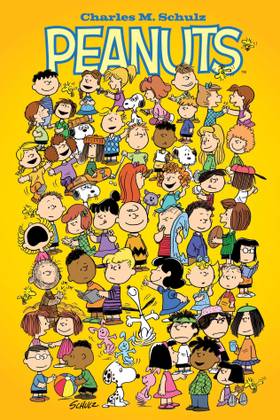
Created by Charles M. Schulz, Peanuts is a multimedia franchise that began as a comic strip in the 1950s and eventually expanded to include films and a television series. Peanuts follows the daily adventures of the Peanuts gang, with Charlie Brown and his dog Snoopy at the center of them. Aside from the film released in 2015, the franchise also has several Holiday specials that air regularly on U.S. Television during their appropriate seasons.
