JuicyTalk
Protein powder has come a long way from the chalky, artificial-tasting tubs that lived exclusively in gym bags. Today—for better or for worse—you’ll find it basically anywhere you want a protein boost without having to cook another chicken breast. As a nutrition consultant, most women I work with aren’t eating enough protein to support their hormones or their goals. But good news! A quality protein powder is one of the simplest ways to close that gap. But with hundreds of options on the market, choosing the right one matters more than ever. Below, we’re breaking down what to look for and what to avoid, plus my honest picks for the best protein powders for women right now.
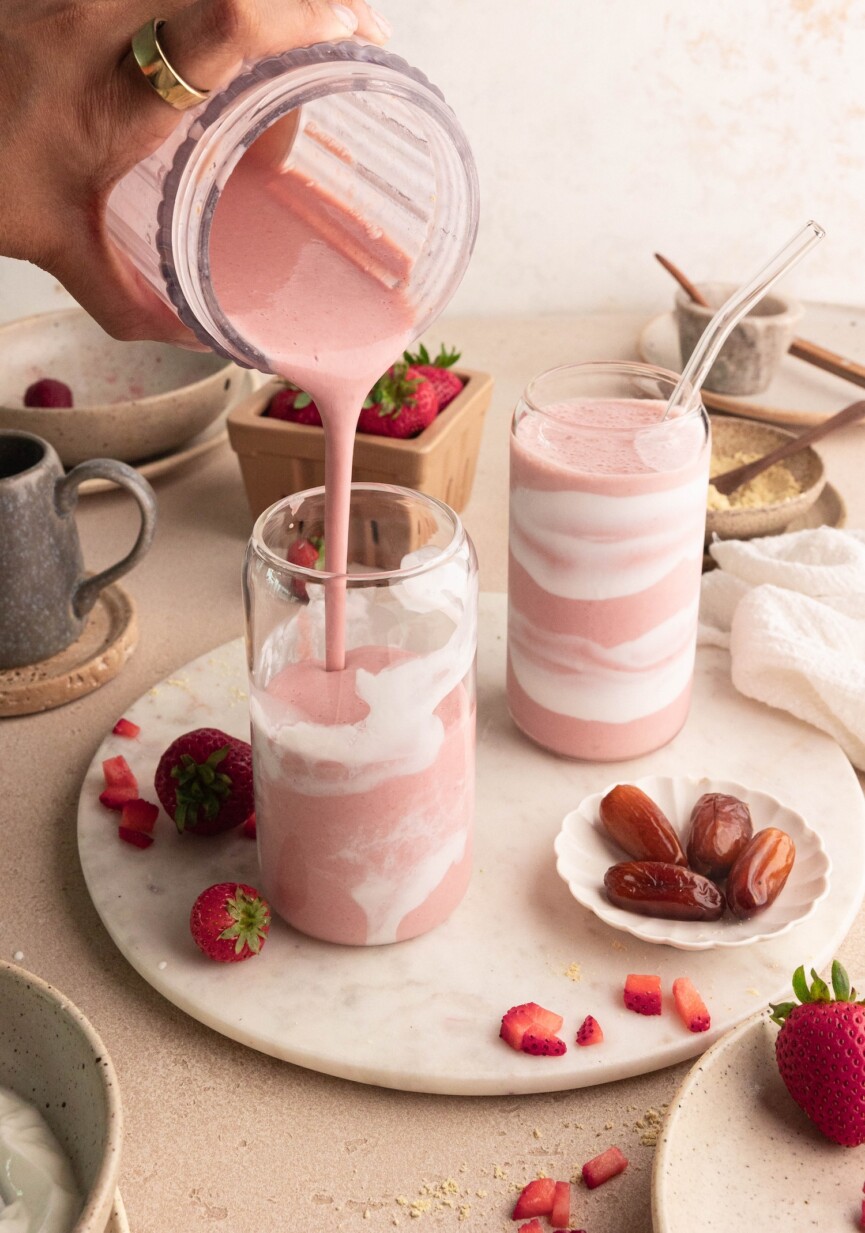
image from our interview with inge theron by teal thomsen
Why Protein Powder Deserves a Spot in Your Routine
Let’s start with why protein matters in the first place. Protein is the building block for muscle, bone, hormones, and pretty much every repair job your body runs behind the scenes. It’s what keeps you full between meals, stabilizes your blood sugar, and supports recovery after exercise. And yet, so many of us aren’t getting enough (particularly those who skip breakfast). Beyond muscle growth, protein helps your body repair and stay resilient. It supports everything from hormone production and immune health to keeping you energized and satisfied throughout the day. Protein is truly one of those nutrients that impacts nearly every system in your body.
How Protein Powder Changed My Body Composition
For context, I’ll share my own experience. Between my two pregnancies, I shifted my nutrition and training. I started eating significantly more protein (and carbs!) and swapped cardio for strength training. Over about 15 months, I gained nine pounds of muscle. Protein powder wasn’t the whole story, of course, but it made hitting my daily targets realistic in a way that whole foods alone never did—especially on the days when cooking felt like the last thing I had energy for.
What the Research Says
Speaking of daily targets, the latest research suggests that women benefit from consuming 1.2-2.0 grams of protein per kilogram of body weight per day, depending on activity level and life stage. That’s a lot more than the baseline RDA of 0.8 grams. Which, spoiler alert, was never designed for active women. Or, for that matter, women who want to build muscle, support fertility, or maintain bone density during perimenopause. Getting there through whole foods alone is ideal, but protein powder makes it significantly more realistic on a busy Tuesday.
The key is using it as a supplement to a solid diet, not a replacement for your meals. On any given day, you’ll find me stirring chocolate collagen into a yogurt bowl, blending Garden of Life’s vanilla whey into a pre-workout smoothie, or shaking a scoop of protein into grain-free oatmeal before my kids wake up. It’s one of the lowest-effort, highest-impact tools in my nutrition toolkit.
Before we dive into the best protein powders for women, let’s talk about heavy metals. In late 2025, Consumer Reports published an investigation that tested 23 popular protein powders for heavy metals—specifically lead, cadmium, arsenic, and mercury. The findings made headlines: more than two-thirds of the products tested contained more lead per serving than CR’s food safety experts consider safe for daily consumption. Plant-based protein powders, on average, had higher heavy metal levels than dairy-based options. While this is worth knowing, it’s also worth putting in context. There are currently no federal limits on heavy metals in protein powders or dietary supplements. Plus, there are already trace amounts of naturally occurring heavy metals present in many everyday foods (think kale to chocolate).
Choose Protein Powders That Do Third-Party Testing
Here’s my take: the conversation isn’t about panicking; it’s about being an informed consumer. None of the levels that Consumer Reports found were high enough to cause immediate harm. And occasional use of most products is fine! But if you’re using protein powder daily (which many of my clients do), it’s worth choosing products from brands that conduct third-party testing and are transparent about their results. The brands that invest in quality control absolutely stand out.
How to Shop for a Protein Powder in 2026
Again, the protein powder aisle is really overwhelming. But once you know what to look for, it gets simpler! Here’s what I tell my clients:
Prioritize third-party testing. This is non-negotiable in 2026. Look for certifications like NSF Certified for Sport or Informed Choice, which verify that what’s on the label is what’s in the tub — and that the product has been tested for contaminants. Brands that voluntarily submit to independent testing are signaling that they take quality seriously.
Check the protein content per serving. You want at least 20 grams per serving to make a meaningful impact on your daily intake. Some powders look impressive on the front of the package but deliver 10-12 grams per scoop, which won’t move the needle.
Bonus! When choosing a protein powder, look for one that provides around 2.5 grams of leucine per serving. Leucine is the key amino acid that helps trigger muscle protein synthesis, making it especially important for building and maintaining lean muscle, supporting recovery, and promoting healthy aging. This meal plan makes getting your leucine a breeze.
Read the ingredient list. Fewer ingredients are almost always better. A quality protein powder should have a recognizable protein source (whey isolate, pea protein, collagen peptides, egg white) and minimal fillers. Watch for excessive added sugars, artificial sweeteners, and long lists of ingredients you can’t pronounce.
Consider your digestion. Whey protein isolate and hydrolyzed options tend to be easier on the stomach. If dairy doesn’t work for you, pea protein and egg white protein are strong alternatives. Collagen is gentle and mixes well but isn’t a complete protein on its own. In other words, it’s better as a complement than a standalone.
Think about how you’ll use it. If you’re blending it into smoothies, texture matters less. If you’re mixing it into water or coffee, you want something that dissolves cleanly without clumps. Read the reviews before committing to a full tub.
The Best Protein Powders for Women
I’ve tested dozens of protein powders over the years—and made plenty of my clients try them too. But in 2026, my recommendations start with safety data. Every product below has been independently verified as clean by either Consumer Reports’ heavy metal testing or Clean Label Project’s Clean 16 list (non-detect for lead, cadmium, mercury, and arsenic). From there, I filtered for ingredient quality, taste, and what makes sense for women specifically. These are the ones I keep in my own pantry for myself and my family, recommend to clients, or both!
Camille’s Top Pick: Pique Carrara Marine Collagen Peptides
I was slow to get on the collagen train, but this one has earned a permanent spot in my morning coffee. Two scoops, dissolves clean, and I love the subtle flavor it adds (it has organic Madagascar vanilla and coconut cream that promotes collagen absorption). What makes it superior is that it combines Type I marine collagen for skin radiance and smoothness with Type II collagen to support joints, elasticity, and connective tissue. And clinical studies show it promotes smoother, more radiant skin while reducing the biological age of your immune cells.
You can use my link to get 15% off for life.
Edie’s Top Pick: Vital Proteins Collagen Peptides
This earned a spot on Clean Label Project’s Clean 16 with non-detectable levels of all 4 heavy metals. The unflavored version dissolves seamlessly into coffee or smoothies, and provides 20 grams of collagen protein per serving. Personally, I stir the chocolate flavor into pretty much every yogurt bowl I make! It adds a subtle richness without making it taste like a supplement. As mentioned, collagen isn’t a complete protein on its own (it’s missing tryptophan), so I recommend pairing it with another protein source rather than relying on it as your only supplement. But for an easy daily add? This is the one I reach for most.
- Protein source: Grass-fed bovine collagen peptides
- Protein content: 20g per serving
- Verified by: Clean Label Project Clean 16 (ND all metals)
- Standout: Dissolves invisibly in hot or cold liquids
Best Whey: Garden of Life Certified Grass Fed Whey (Vanilla)
Another Clean 16 pick with non-detectable heavy metals. Garden of Life’s grass-fed whey delivers 21 grams of protein per serving from pasture-raised cows, with no artificial sweeteners or flavors. This is the vanilla whey I reach for in my afternoon smoothie! It blends well and doesn’t have that typical artificial vanilla flavor. I’ve recommended it to clients for years.
- Protein source: Certified grass-fed whey
- Protein content: 21g per serving
- Verified by: Clean Label Project Clean 16 (ND all metals)
- Standout: Grass-fed sourcing, clean ingredient list
Cleanest Tested: Clean Simple Eats Whey Protein
Consumer Reports’ follow-up testing found this to be the cleanest protein powder they’ve ever tested—just 0.21 micrograms of lead per serving (42 percent of CR’s level of concern). It’s whey-based, comes in a wide range of flavors, and is a great option for anyone who wants to minimize heavy metal exposure as much as possible.
- Protein source: Whey protein
- Protein content: 20g per serving
- Verified by: Consumer Reports (lowest lead of all tested products)
- Standout: Lowest heavy metal levels in independent testing
Most Transparent: Puori PW1 Protein
Puori holds the #1 spot on Clean Label Project’s Clean 16 AND is the only protein company in the world with CLP’s Transparency Certification. Their most rigorous standard, which requires publishing lot-by-lot testing results publicly. If transparency is your top priority (and in 2026, it probably should be!), no other brand comes close. Their whey is sourced from grass-fed cows, delivers 24 grams per serving, and uses natural vanilla flavoring with no artificial sweeteners.
- Protein source: Grass-fed whey protein isolate
- Protein content: 24g per serving
- Verified by: Clean Label Project #1 Clean 16 + CLP Transparency Certification (lot-by-lot results published)
- Standout: Most transparent protein brand in the world
Best for Pregnancy and Postpartum: Perelel Triple-Support Protein Powder
Perelel has earned the Clean Label Project’s Purity Award—their highest honor—which means it’s been independently tested and certified for heavy metals, plasticizers, and 200+ contaminants. But what sets it apart from other pregnancy-safe options is the formulation: 20 grams of pea protein plus 3 grams of creatine (emerging research suggests creatine may support fetal brain development) and prebiotic fiber for gut health.
- Protein source: Pea protein
- Protein content: 20g per serving
- Verified by: Clean Label Project Purity Award (tested for 200+ contaminants)
- Standout: Creatine + prebiotic fiber, pregnancy and breastfeeding safe
Best Whey Isolate: Dymatize ISO 100 Hydrolyzed (Vanilla)
A Clean 16 pick that’s been a favorite in the fitness world for good reason. Hydrolyzed whey isolate means it’s fast-absorbing and easy on the stomach (a good option for anyone who has trouble digesting other protein powders!). 25 grams per serving with consistently clean testing results.
- Protein source: Hydrolyzed whey protein isolate
- Protein content: 25g per serving
- Verified by: Clean Label Project Clean 16 (ND all metals)
- Standout: Fast-absorbing, easy to digest
Best Plant-Based: Truvani Plant-Based Protein
Plant-based proteins tend to test higher for heavy metals across the board, which makes Truvani’s results stand out. In Consumer Reports’ follow-up, it tested at just 0.46 micrograms of lead per serving. This is well within the safe-for-daily-use range and the cleanest plant-based option they tested! Made with only 5-7 ingredients, depending on the flavor, sweetened with monk fruit, and includes fiber from chia and pumpkin seeds. Their co-founder has said they test every single lot for heavy metals, which is rare in the industry.
- Protein source: Pea protein
- Protein content: 20g per serving
- Verified by: Consumer Reports (safe for daily use, cleanest plant-based tested)
- Standout: Every lot tested for heavy metals, minimal ingredients
Best Budget: Optimum Nutrition Gold Standard 100% Whey (Vanilla)
There’s a reason this is the world’s best-selling protein powder. And it made the Clean 16 with non-detectable levels of all 4 heavy metals, delivers 24 grams of protein per serving, and costs roughly $0.75 per serving! Available everywhere from grocery stores to Amazon. If you’re just getting started with protein powder and want a reliable, affordable, verified-clean option—this is the one.
- Protein source: Whey protein isolate, concentrate, and peptides
- Protein content: 24g per serving
- Verified by: Clean Label Project Clean 16 (ND all metals)
- Standout: Most affordable verified-clean option, widely available
Best Zero-Carb: Isopure Zero Carb Protein (Unflavored)
Another Clean 16 pick, Isopure’s unflavored whey isolate is as stripped-down as protein powder gets. Zero carbs and non-detectable heavy metals. It’s completely unflavored and mixes into anything—smoothies, soups, even baked goods—without altering the taste. A strong option for anyone following a lower-carb approach or who just wants protein without anything extra.
- Protein source: Whey protein isolate
- Protein content: 25g per serving
- Verified by: Clean Label Project Clean 16 (ND all metals)
- Standout: Zero carb, zero sugar, completely versatile