 JuicyTalk
A dormant Bitcoin address transferred 30 BTC worth about $1.88 million for the first time in almost 15 years.
Bitcoin address “1KV47” made its first outgoing transfer on Saturday since receiving 30 BTC in August 2011, blockchain data shared by Galaxy Research shows.
The address is among 39,069 listed in a New York lawsuit filed by “Noah Doe” and two Wyoming-based companies seeking ownership of dormant Bitcoin holdings. The case could test how inactive cryptocurrency holdings are treated under the state’s lost-property law.
The listed addresses include those widely associated with Bitcoin creator Satoshi Nakamoto and collectively hold an estimated 3.7 million BTC worth about $234 billion, according to Sani, founder of analytics platform Timechain Index.
More dormant Bitcoin addresses tied to the New York lawsuit have been waking up, with 31 of them moving 17,527 BTC in June, up from five that transferred 4,834 BTC in February, according to Galaxy Digital head of research Alex Thorn.
Source: Alex Thorn
Related: Irish authorities seize another 500 Bitcoin, bringing 2026 total to 1,500 BTC
Can dormant Bitcoin holdings be considered “lost” property?
On Friday, a defendant, identifying themselves as “John Doe 33,” who claims to control one of the dormant Bitcoin addresses, filed a motion to dismiss the lawsuit, arguing that Bitcoin addresses are merely data strings that cannot be sued.
A New York court can adjudicate rights in intangible property, but it does not have the authority to convert public addresses into “found” property just because the plaintiff copied these addresses to a hard drive, Edwin Mata, lawyer and CEO of tokenization platform Brickken, told Cointelegraph.
He added:
The core flaw is that inactivity is not abandonment. Under property law, abandonment generally requires intent to relinquish rights, and a dormant Bitcoin address proves none of that.”
The Bitcoin addresses named in the lawsuit may also represent Bitcoin held in long-term cold storage, coins with lost keys, or simply a holder who refuses to move them. Without private keys needed to control the assets, the foundation of the lawsuit remains “very weak,” Mata said.
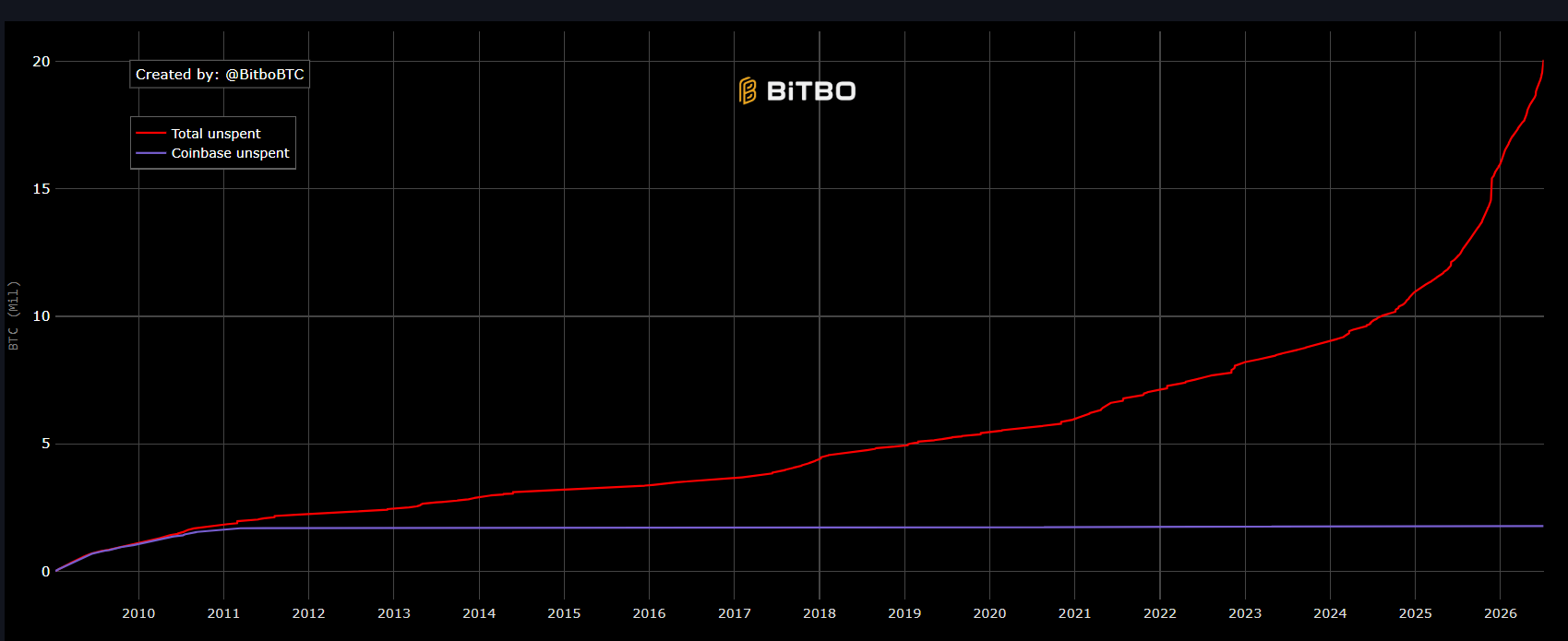
The supply of Bitcoin has been dormant for the past five and 10 years. Source: Bitbo
Magazine: How crypto laws changed in 2025 — and how they’ll change in 2026
