 JuicyTalk
For years, Michael Saylor’s Strategy built its brand around a simple mantra: Buy Bitcoin. Never sell. This week, that narrative changed.
The company authorized up to $1.25 billion in Bitcoin sales under a new capital framework. At current prices, that equates to roughly 21,000 BTC that could eventually hit the market — a reminder that even Bitcoin’s most committed corporate holder isn’t immune to the realities of capital management.
This week’s Crypto Biz explores how the digital asset industry is entering a more pragmatic phase, where ideological purity is giving way to financial discipline. It also examines the intensifying stablecoin race as issuers compete for reserve yield, Fidelity’s latest defense of Bitcoin’s long-term security model and the crypto industry’s growing political influence ahead of the 2026 US midterm elections.
Strategy authorizes $1.25 billion in Bitcoin sales to fund dividends, buybacks
Strategy has authorized up to $1.25 billion in Bitcoin sales under a new capital framework that will fund shareholder dividends, bolster cash reserves and repurchase stock while preserving its long-term Bitcoin strategy.
The company’s new “Digital Credit Capital Framework” raises the annual dividend on its STRC preferred stock from 11.5% to 12%, establishes a formal Bitcoin monetization program and expands capital return initiatives through buybacks of preferred securities and MSTR shares. Strategy also said its dedicated cash reserve has grown to $2.55 billion, enough to cover roughly 17 months of preferred dividends and interest payments.
The framework reflects an evolution in Strategy’s capital allocation. After years of insisting it would never sell Bitcoin, the company has now established a formal monetization program and disclosed selling 32 BTC in June. Strategy made no Bitcoin purchases last week, leaving its holdings unchanged at 847,363 BTC as it places greater emphasis on liquidity management alongside its Bitcoin accumulation strategy.
Source: Michael Saylor
Payments giants back new stablecoin to challenge USDT, USDC
More than 140 financial and crypto companies have joined forces to launch a new US dollar-backed stablecoin that lets participants retain the yield generated by its reserves, marking one of the industry’s biggest coordinated stablecoin initiatives to date.
The Open USD (OUSD) project is backed by major payments companies, including Visa and Mastercard, alongside crypto companies such as Coinbase, Ripple, OKX and Bybit. Unlike traditional stablecoin models, OUSD will allow businesses to mint tokens without fees or volume limits while keeping the reserve earnings — a feature supporters say could help the token gain market share from incumbents Tether’s USDt (USDT) and Circle’s USDC (USDC).
The launch comes as the US adopts a more favorable regulatory stance toward stablecoins following passage of the GENIUS Act. Open Standard plans to roll out OUSD later this year, entering a market already worth more than $300 billion that many analysts expect to expand rapidly over the rest of the decade.

Source: Open Standard
Fidelity says Bitcoin’s long-term security isn’t threatened by halving
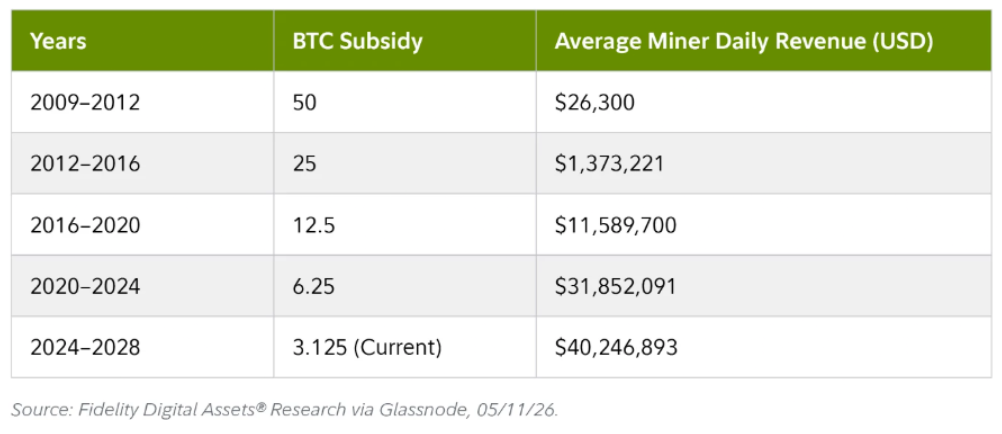
Fidelity Digital Assets is pushing back against claims that Bitcoin’s long-term security will weaken as mining rewards decline, arguing that rising transaction fees, market incentives and Bitcoin’s price appreciation should continue to keep the network secure.
In a new research report, Fidelity said Bitcoin’s economic model extends beyond block subsidies, challenging the view that successive halving events will eventually undermine miners’ incentives. Research analyst Daniel Gray noted that although block rewards have steadily declined, average daily miner revenue has grown from $1.3 million between 2012-2016 to $40.2 million today.
The report comes as Bitcoin miners grapple with mounting financial pressure following the latest halving. Many publicly traded mining companies are expanding into AI and high-performance computing to diversify revenue streams, even as Fidelity maintains that the network’s long-term security model remains intact.
Source: Fidelity Digital Assets
Crypto industry pours $189 million into 2026 US elections
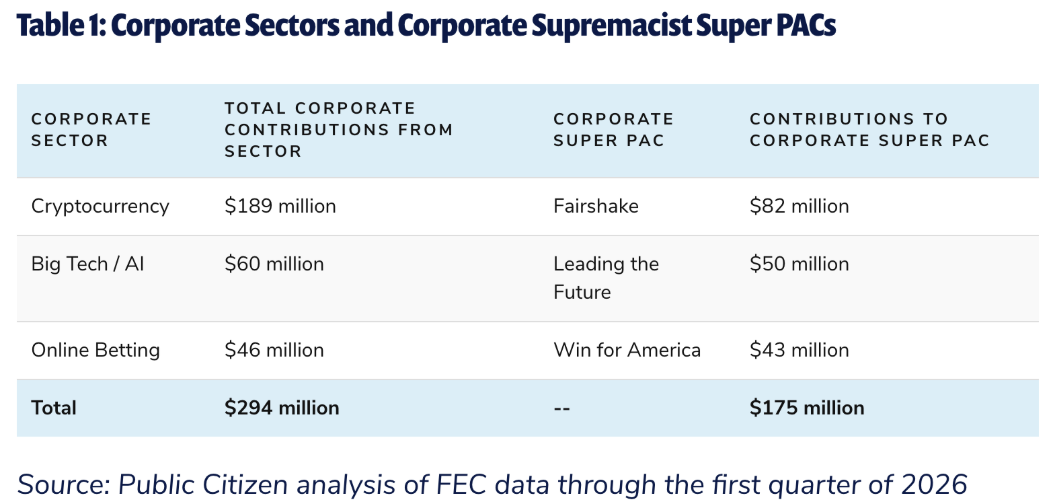
Crypto companies have contributed roughly $189 million to the 2026 US election cycle, accounting for an estimated 37% of all corporate political spending so far, according to a new report by consumer advocacy group Public Citizen.
The report found that crypto-backed political action committees (PACs) are once again driving much of the industry’s political influence. Fairshake has spent more than $82 million this cycle, while the pro-Trump MAGA Inc. Super PAC — heavily backed by Crypto.com — has spent more than $56 million. Public Citizen said the groups are following the same strategy used in 2024, backing candidates from both major parties who support the industry’s policy agenda.
Crypto’s political spending has already surpassed the roughly $170 million deployed during the 2024 election cycle, with more than four months remaining before November’s elections.
Source: Public Citizen
Crypto Biz is your weekly pulse on the business behind blockchain and crypto, delivered directly to your inbox every Thursday.
