 JuicyTalk
Sci-fi shows involving time travel as a narrative device are dime a dozen. Even in the 21st century, many shows have used time travel as a cheap gimmick to undo the past and create a whole new future for characters without any consequences. However, the shows that truly respect time travel and understand the paradoxes and causalities it comes with are the ones that end up leaving their mark.
Time travel storytelling is often packed with Back to the Future-esque tropes where characters merely jump to a past timeline, “fix” the past, and conveniently return to a better future. While this “feel good” approach to time travel is always fun to watch, it often leaves hard sci-fi fans with a bad aftertaste. More often than not, it becomes hard not to notice how such shows end up defying their own logic and rules.
Every once in a while, though, a time travel TV show comes along that not only embraces and respects the complications of the subgenre but also avoids spoon-feeding audiences. Such shows are rare, but they prove that time travel storytelling does not have to sacrifice complexity for accessibility. These shows set a high bar for the subgenre and pave the way for more complex and inventive explorations of time travel.
10
Future Man (2017-2020)
Future Man can initially come off as the embodiment of every time travel trope viewers have grown accustomed to. However, the show truly thrives and etches its identity in the sci-fi genre when it spoofs well-worn tropes. Despite being a non-serious series, Future Man also does an incredible job of maintaining its internal logic.
The show fully commits to its portrayal of the Butterfly Effect and even drops many fascinating pop-culture references to keep viewers entertained. It is further elevated by the performances of its cast, including well-known names like Josh Hutcherson, Derek Wilson, Haley Joel Osment, Eliza Coupe, and Seth Rogen, among others.
9
The Lazarus Project (2022–2024)

Instead of having characters leap through timelines, The Lazarus Project adopts an intriguing plot device where an organization uses a singularity to reset the entire globe back to the nearest July 1st checkpoint. They do this in the hope of saving humanity from an existential apocalypse.
Boasting a perfect Rotten Tomatoes score of 100%, The Lazarus Project is an exceptional time travel show that adopts video game-like “save point” logic to unfold its story. While at it, it also subverts the typical hero’s journey by walking through all the morally complex decisions its main character is forced to make to be able to save the world.
Apart from having a fascinating portrayal of time, The Lazarus Project also appeals to viewers with its gripping action sequences that seem reminiscent of top-notch spy thrillers like the Bourne movies.
8
Undone (2019-2022)

In its two-season runtime, Undone explores how one would see the world if one suddenly gained the ability to see time non-linearly. The show brilliantly walks a thin line between mind-bending sci-fi and psychological drama by making viewers question whether its main time-traveling character is actually floating through timelines or experiencing an inherited mental health condition.
While the inner-workings of time travel in Undone are quite sound and compelling enough to keep viewers hooked, it is the show’s intimate portrayal of family trauma and mental health that truly hits hard. Despite having relatively less techno-babble than most time travel shows, Undone also subtly introduces many complex ideas and concepts through its empathetic portrayal of the sci-fi subgenre.
7
The Melancholy of Haruhi Suzumiya (2006-2009)

Kyoto Animation’s The Melancholy of Haruhi Suzumiya is not your typical time travel series because it mashes many genres together. From slice-of-life to urban fantasy, it has ingredients from them all. Even its time travel sci-fi elements take a while to truly emerge. However, when they do, the anime becomes deeply philosophical with its exploration of one’s desire to not let go of the past.
Even the science fiction anime series‘ setup for the central time travel story is quite intriguing. Instead of wanting to save a dying loved one or change her future, the titular character in the series only ends up using time travel to make her summer vacation with her friends last longer. This alone, however, gradually leads to fascinating consequences.
6
Russian Doll (2019-2022)

When it comes to originality, Russian Doll is not among the most distinct time travel shows out there. It adopts a typical time loop trope where its main character keeps looping back to the same checkpoint in time every time she dies. However, the show’s execution of the time loop and portrayal of how it serves as a metaphor for self-destruction and personal growth is truly exceptional.
Natasha Lyonne is absolutely brilliant as the show’s lead, which further ensures that there are no dull moments in its season 1. Russian Doll‘s season 2 is arguably weaker and far less memorable. The show’s season 1, however, is so good and well-rounded that it makes up for season 2’s shortcomings.
5
11.22.63 (2016)

Based on Stephen King’s book of the same name, 11.22.63 explores a man’s time-traveling journey as he sets out to avert the death of John F. Kennedy. Like many book-to-screen adaptations, 11.22.63 takes many creative liberties and seems significantly different from its source material. Despite this, it proves to be one of the rare few adaptations that carve out their identity.
Many fans of the original book may not like the series if they expect it to be a faithful adaptation. However, those who will see it as a rough reimagining of the Stephen King novel’s spirit and more as a companion piece to the source material will absolutely love it.
4
Travelers (2016-2018)

Netflix canceled quite a few ambitious sci-fi shows in the late 2010s and early 2020s. Unfortunately, Travelers, too, was one of them. Despite earning high acclaim from viewers and critics, the show struggled to last beyond three seasons. Even in three seasons, though, Travelers does enough to land a place among the best time travel shows out there.
It unfolds more as a reverse post-apocalyptic series where the titular “travelers” are sent back in time to prevent a world-ending event. However, instead of having them physically travel, the series shows how the characters only transfer their consciousness to the past in “host” bodies. The show establishes a fixed set of rules for its time travel and brilliantly sticks to them throughout its runtime.
3
12 Monkeys (2015-2018)
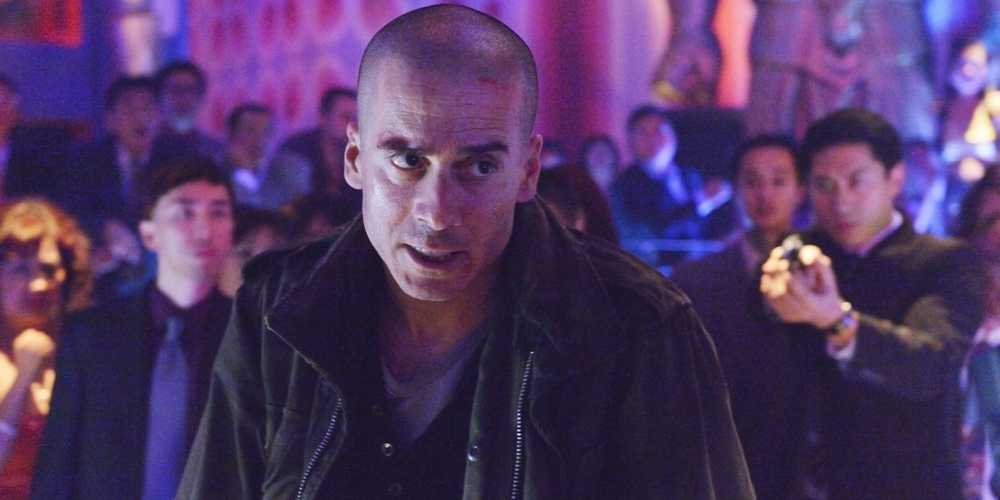
Small-screen remakes and reboots of highly acclaimed movies often feel forced and unnecessary. However, 12 Monkeys is an exception that, at times, even proves to be better than its parent film. Serving as a reboot to Terry Gilliam iconic 1995 movie, the show does not merely emulate the film’s formula. Instead, it enhances its lore by expanding its established set of time travel rules.
12 Monkeys also seems meticulously planned from the beginning because it brilliantly pays off developments from early seasons in its final arc. The show’s narrative almost comes off as a snake eating its own tail, where a giant, loopy bootstrap paradox seals the fate of its characters. Arguably, 12 Monkeys has the best portrayal of a closed loop in the history of sci-fi TV.
2
Steins;Gate (2011)

The 2011 anime, Steins;Gate, may not be as mainstream as shows like Attack on Titan and Naruto. However, it easily has one of the greatest and most meticulous portrayals of time travel in the history of TV because of how it merges everything from physics concepts to urban legends in its sci-fi storytelling.
Considering how carefully it sets up its time travel dynamics and devices in its early moments, some viewers might struggle to get past its slower early arcs. However, once one manages to get past its early chapters, Steins;Gate turns into a genius portrayal of closed-loop storytelling. The show’s references to real-world events further immerses one in its sci-fi drama before it eventually drops one of the best endings in anime history.
1
Dark (2017-2020)

Baran bo Odar and Jantje Friese’s Dark on Netflix arguably serves as the peak of time travel storytelling. Ever since the show wrapped its run on Netflix, no other time travel movie or series has felt quite as ambitious and rewarding. The show’s multi-generational exploration of uncompromising determinism and trauma is almost perfect from start to finish.
Although the Netflix sci-fi show can seem a little slow in its opening season, the series becomes beautifully complex in season 2. It never cheats on its own established rules, and, even from a visual standpoint, it immerses viewers with its gothic and bleak cinematography. Dark‘s portrayal of its characters’ lack of free will might seem a little too bleak compared to other sci-fi shows, but that in itself adds to its overall appeal.


